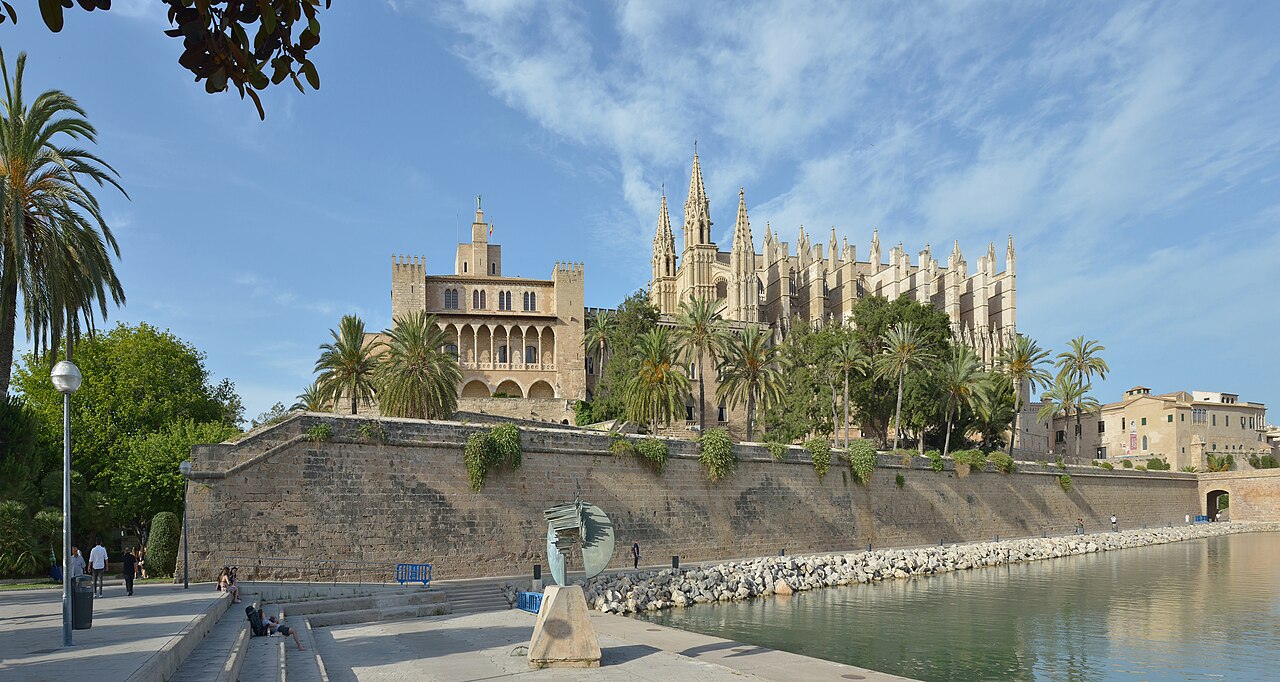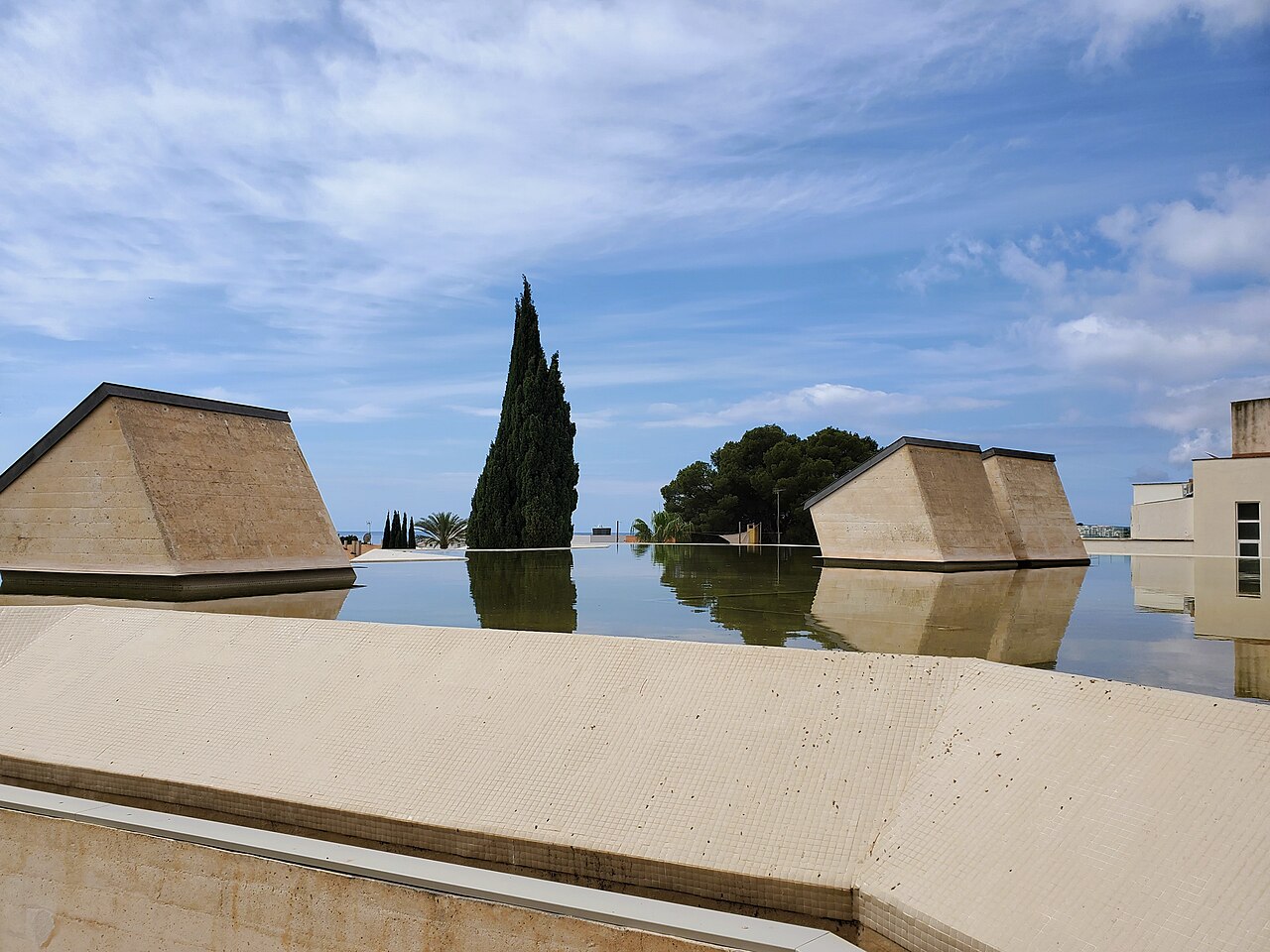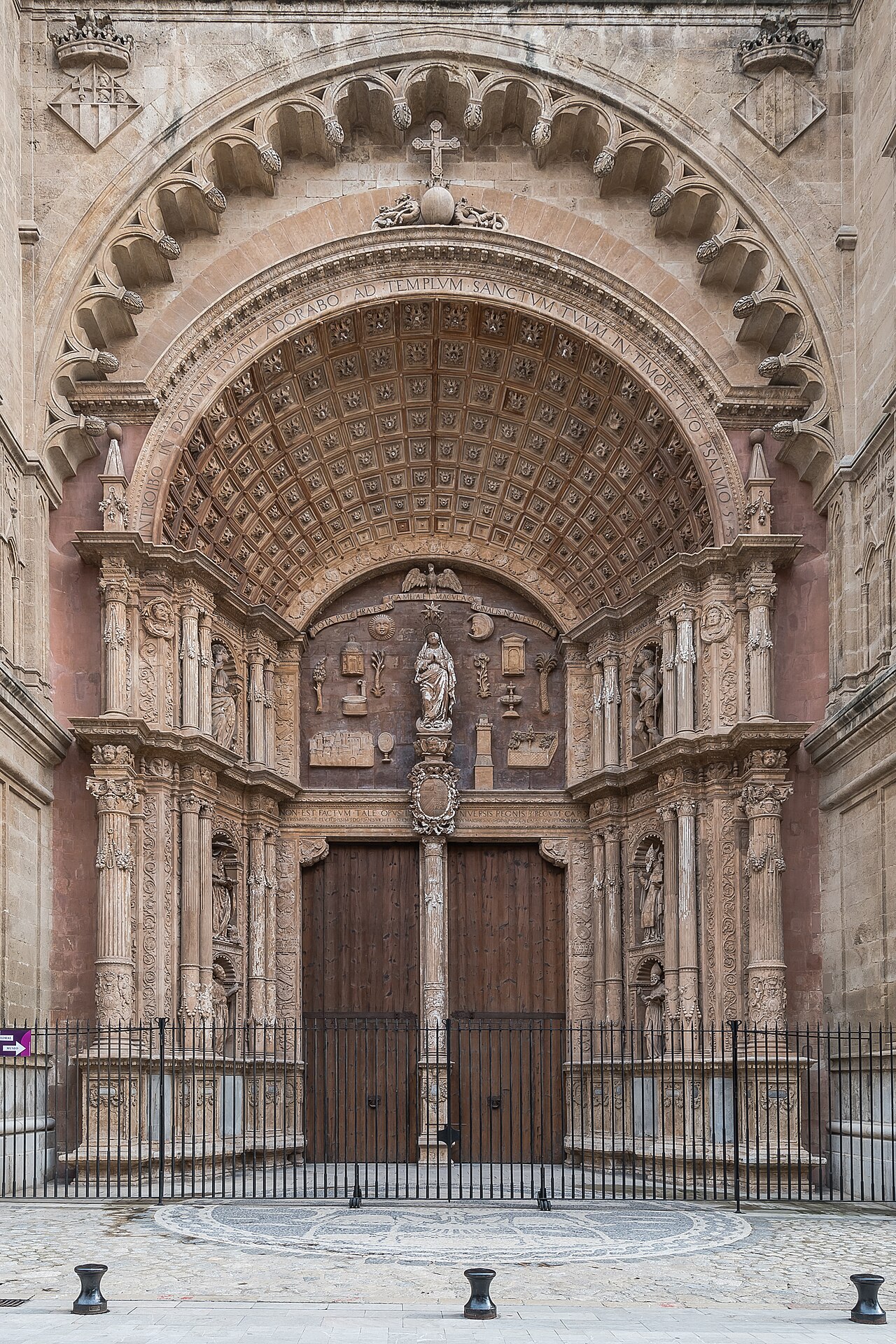
Palau March is the elegant mansion that stands on the old city walls right beside Palma Cathedral. It was built in the twentieth century for the financier Joan March, one of the richest men in Spain, and it is now a museum run by the March family foundation. The house is a delight for several reasons. Its terrace is lined with modern sculptures by artists such as Henry Moore, Auguste Rodin and Eduardo Chillida, set against the Gothic cathedral and the open sea, which is one of the most striking pairings in the city. Inside, the rooms hold fine furniture, paintings and the large wall paintings of the Catalan artist Josep Maria Sert, as well as a famous Neapolitan nativity scene with hundreds of tiny figures from the eighteenth century. The museum also has a collection of Mallorcan art and an old garden with views of the bay. It is smaller and calmer than the cathedral, and many visitors like it all the more for that.
How it works
The entrance is on Carrer del Palau Reial, a few steps from the cathedral and the Almudaina palace, so the museum fits very easily into an old-town morning. A single ticket covers the visit, which follows a clear route through the house and out onto the terrace. Opening hours are shorter at the weekend, and the museum closes on some days of the week, so check the days before you go. The museum is close to the sea wall and easy to find from the Parc de la Mar.
What to expect
A visit takes about an hour. Rooms are formal and the atmosphere is quiet, with a mixture of fine art and domestic detail. The nativity scene is a highlight at any time of year, since it is displayed in a large room and has extremely fine detail.
The terrace is open to the weather, so on wet days some of the sculptures may be difficult to view, and in strong summer sun you will want a hat. The collection is changed from time to time, so you may see different pieces from one visit to the next.
Making the most of it
Arrive in the morning, when the light on the cathedral from the terrace is at its best and the crowds next door are still small. Combine it with the cathedral and the Royal Palace of La Almudaina to make a half-day of the three great buildings on the seafront.
When you leave, wander through the tangle of lanes behind the cathedral to the Arab baths, the courtyards of the old mansions and the cafés of the Plaça de Cort. Photography rules apply in some rooms, so look for the signs and ask the staff if you are unsure.
Good to know
The museum is close to the cathedral's visitor entrance, so you can see both in a single morning and avoid doubling back along the sea wall. Bags and umbrellas may need to be left in the cloakroom, and the staff are used to answering questions about the collection in English.
The route includes some steps and narrow doorways, so allow extra time if you are travelling with someone who finds stairs hard. A short rest on the terrace, with the cathedral rising above the sea wall, is one of the best moments of the visit and costs nothing extra.
What to expect
The experience
A self-paced visit through a palace house of fine art, a nativity scene and a terrace of modern sculpture beside the cathedral.
Best time
Weekday mornings, when the light on the cathedral is best and the museum is quiet.
How long
About an hour.
Tips
Check the opening days, expect shorter weekend hours and combine it with the cathedral next door.
Quick picks
- Best for
- Art lovers and anyone who wants a quiet counterpoint to the cathedral queues.
- Families
- The nativity scene fascinates children, though the rooms are formal and the visit is best kept short.
- Couples
- A calm hour among sculptures with the cathedral as a backdrop, then coffee in the old town.
- Pair with
- Palma Cathedral and the Royal Palace of La Almudaina, which are both steps away.
- Time needed
- About an hour.
Good questions
Where is Palau March?+
It is on Carrer del Palau Reial in the old town, right beside Palma Cathedral and the Almudaina palace.
What is there to see?+
The highlights are the sculpture terrace, with work by artists such as Rodin and Henry Moore, the Neapolitan nativity scene and Josep Maria Sert's wall paintings.
How long does a visit take?+
About an hour is enough for the rooms and the terrace.
Is it open every day?+
No. Opening days and hours vary, with shorter hours at the weekend, so check before you plan your visit.
Is it good for a rainy day?+
Yes, the interior rooms and the nativity scene are indoors, although the sculpture terrace is best seen in dry weather.