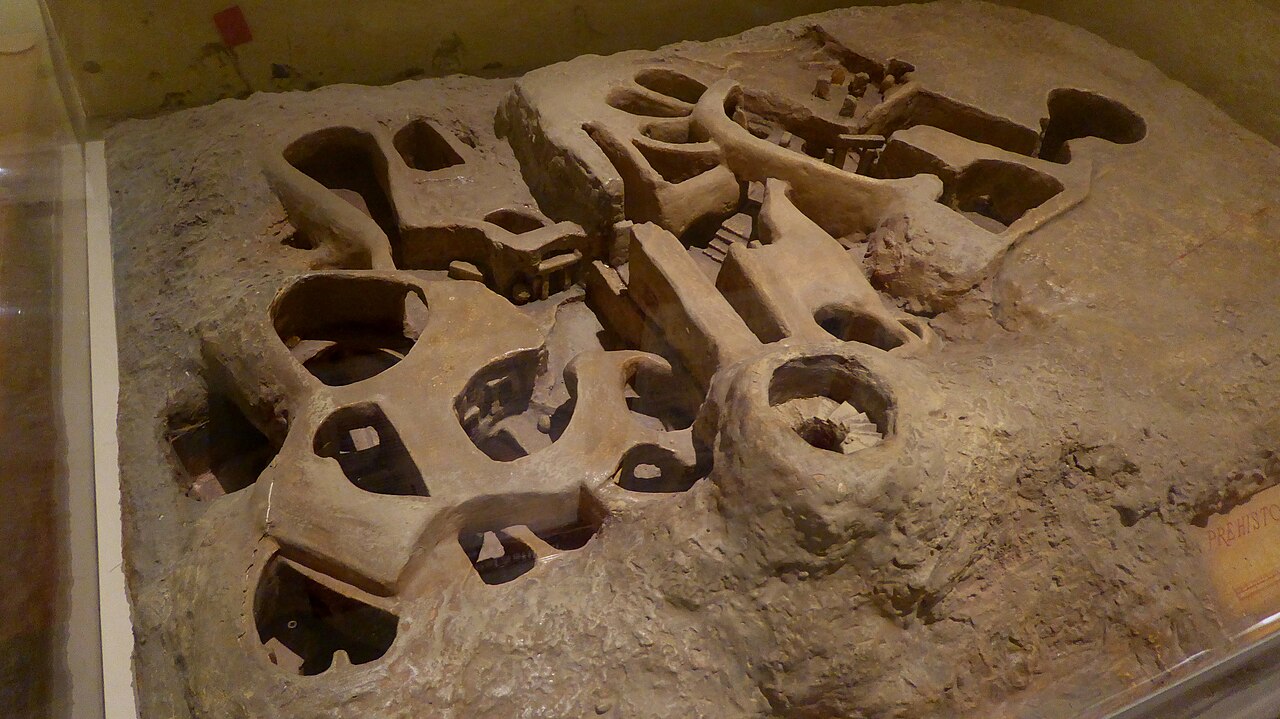
Ġgantija, on a ridge above the village of Xagħra on Gozo, is one of the oldest freestanding stone structures in the world. Its two temples were built between roughly 3600 and 3200 BC, centuries before Stonehenge and the pyramids, and the name comes from the Maltese word for giant, since islanders long believed that only a race of giants could have lifted the enormous blocks. The outer wall of the larger temple rises several metres, built from huge coralline limestone megaliths, some weighing many tonnes, fitted together with smaller stones packed into the gaps. It is a remarkable sight from the car park, and even more so up close, where you can see how the builders shaped the stone and placed it with obvious skill. Inside, the temples are laid out in the clover-leaf plan typical of Maltese prehistory, with a central passage leading to rounded apses on either side. You can still see altars, libation holes, carved decoration and the remains of plastered floors, and traces of red ochre paint have been found on some stones. Thousands of people must have taken part in building and using the complex over many generations, and archaeologists believe the temples served as places of ritual, perhaps linked to fertility and the cycles of the seasons. A modern interpretation centre beside the temples explains the discoveries with models, objects and film, and gives a good grounding in the wider story of Malta’s Neolithic culture before you walk the site itself.
Ġgantija is easy to visit as part of a day on Gozo. Most visitors arrive by bus or taxi from Victoria, or on a guided tour that includes the temples among other highlights such as the Citadel, Ramla Bay and the salt pans. The walk around the outer wall and between the temples takes about forty-five minutes, so plan on around an hour with the visitor centre.
The site is open and exposed, with little shade, so bring a hat and water in summer, and wear shoes with decent grip because the paths are rough in places.
A guide adds a lot of value, because the stones are impressive but the story takes some explaining: who built them, why, and how they moved the blocks without metal tools or the wheel. If you are visiting independently, the audio information and displays do a good job. Visit in the morning if you can, when the light is soft and tour groups have not yet arrived; the evenings are also lovely, though you should check closing times before you plan a late visit.
Pair Ġgantija with the nearby Xagħra village square for a coffee, and consider a short detour to the Ta’ Kola windmill or the Xerri’s Grotto in Xagħra, depending on your appetite for further exploring. Many visitors then continue to the beaches at Ramla Bay, a short drive away, for a swim and an afternoon on the red sand. If you are staying on Gozo overnight, this is an ideal early-morning stop before the day-trip boats arrive.
For anyone who has seen or plans to see Ħaġar Qim and Mnajdra on the main island, Ġgantija makes a satisfying second chapter, because the scale of the stones here is even more dramatic. Together with the Hypogeum, the three sites give the clearest possible picture of Malta’s Neolithic civilisation. It is worth the trip across the channel for the temples alone, even if you visit nothing else on Gozo.
What to expect
The experience
A walk around and between two megalithic temples with an interpretation centre; many visitors see it on a guided Gozo day tour.
Best time
Morning, before tour groups arrive and before the midday heat.
How long
About an hour at the site.
Tips
Bring a hat and water, wear shoes with grip, and combine with Xagħra and Ramla Bay.
Quick picks
- Best for
- Prehistory fans and anyone who wants to see the oldest stone architecture on Gozo.
- Families
- Children enjoy the giant-legend story and the scale of the stones.
- Couples
- Visit early, then continue to Ramla Bay for a swim.
- Pair with
- The Citadel in Victoria, Ramla Bay and the salt pans.
- Time needed
- An hour at the temples, a full day on Gozo.
Good questions
What does Ġgantija mean?+
It comes from the Maltese word for giant, because islanders long believed giants built the temples.
How old is it?+
Roughly 3600 to 3200 BC, so older than Stonehenge and the Egyptian pyramids.
How do I get there from the ferry?+
Take a bus or taxi from Mgarr Harbour via Victoria to Xagħra, or join a guided day tour that includes the temples.
How long should I allow?+
About an hour at the site, including the interpretation centre.
Is it worth visiting if I have seen the temples on the main island?+
Yes. The megaliths at Ġgantija are bigger and the setting is different, so the two visits complement each other.