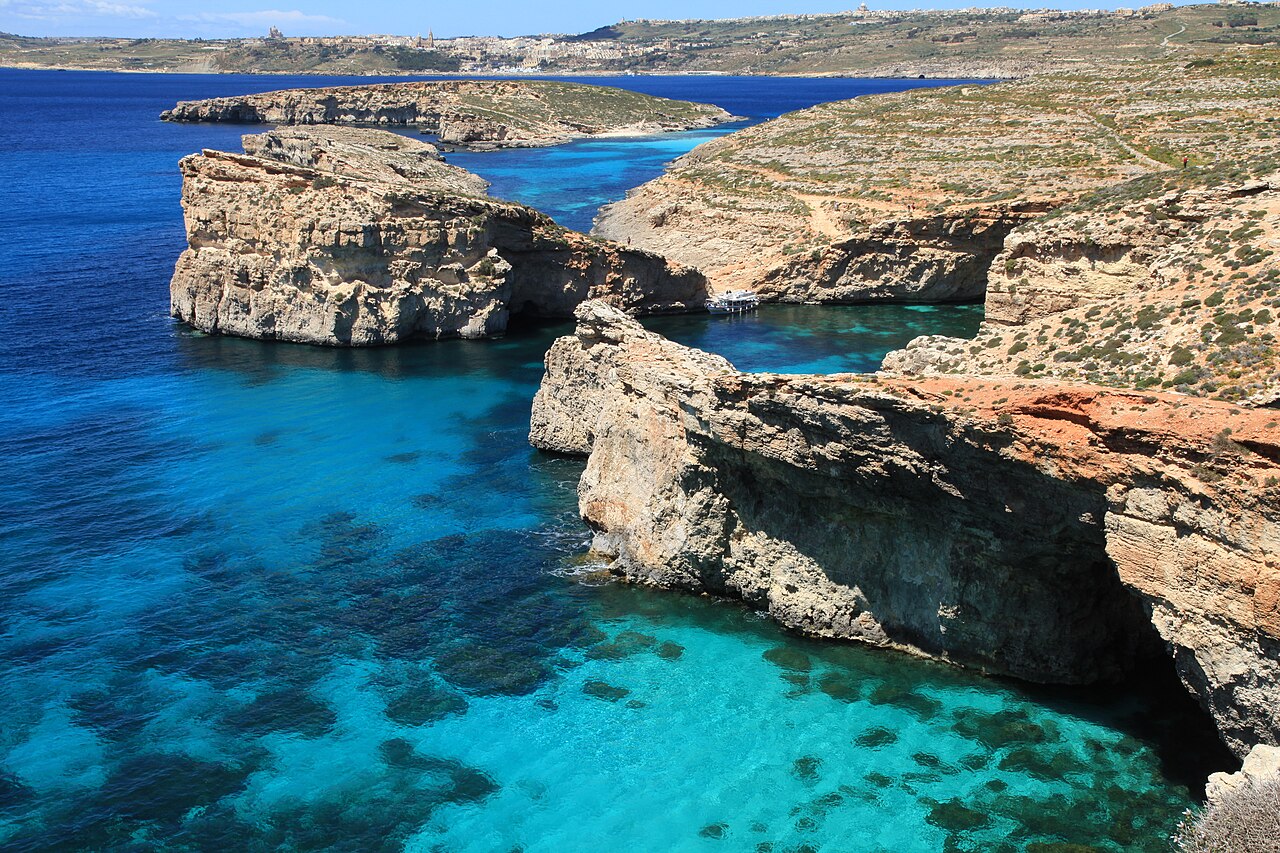
On the dry, windswept southwest coast of Malta, near the village of Qrendi, two prehistoric temple complexes sit above the sea. Ħaġar Qim and Mnajdra were built between roughly 3600 and 3200 BC, which makes them older than Stonehenge and the pyramids of Egypt, and together with Malta’s other megalithic temples they are recognised by UNESCO as World Heritage. Ħaġar Qim, the upper site, is the more imposing. Its limestone facade is made of enormous standing blocks, among them a single megalith many metres long, and inside, a series of oval chambers or apses open off a central passage. Carved doorways, spiral decoration and altars with pitted surfaces hint at rituals we can only guess at, and the original statuettes found here, the so-called fat figures, are now in the National Museum of Archaeology in Valletta. A short path leads downhill towards the sea to Mnajdra, a cluster of three temples set into a natural hollow with the blue Mediterranean and the rocky islet of Filfla beyond. Mnajdra is famous for its astronomical alignment: at the spring and autumn equinoxes the rising sun shines straight through the main doorway of the south temple, and at the solstices it lights up the edges of the inner stones. Whether by accident or design, it is a thrilling piece of architecture, and standing in the quiet with only wind and cicadas for company makes the age of the place feel real. Large protective canopies now shelter both sites, and a visitor centre explains how the temples were built, who might have used them and how they are being conserved.
The two temples are about ten minutes apart on foot along a gently sloping path, and the visitor centre sits at the top near Ħaġar Qim. Allow around two hours for both sites, longer if you enjoy the exhibition or want to walk the coastal paths. There is little shade away from the canopies, and in summer the heat and glare off the limestone can be fierce, so go early or late in the day, wear a hat and carry water.
Paths are uneven in places, so wear proper shoes rather than sandals, and the walk back up is a gentle climb.
Public transport reaches Qrendi, but the temples are a short way outside the village, so many visitors come on a guided tour or by hire car or taxi. A guided visit adds a lot here: the stones look impressive on their own, but a guide explains the construction, the layout of the apses and the astronomical alignment. Tours often pair the temples with the Blue Grotto boat trip and the fishing village of Marsaxlokk, which makes an easy half-day or full-day outing from Valletta or Sliema.
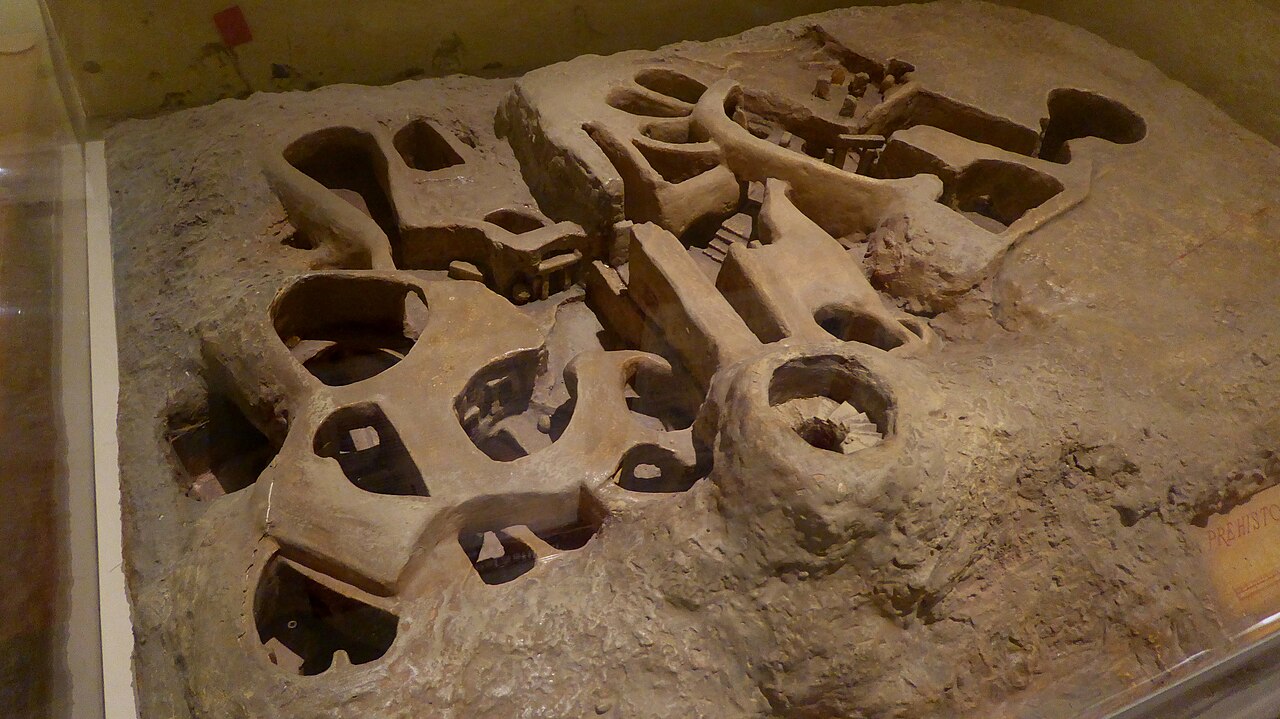
Think of this visit as the open-air companion to the underground Hypogeum. Where the Hypogeum shows how the people of Neolithic Malta buried their dead, Ħaġar Qim and Mnajdra show how they built and worshipped above ground. Seeing both gives you the clearest picture of one of the world’s earliest and most mysterious civilisations.
If you only have time for one, choose Ħaġar Qim for the megaliths and Mnajdra for the setting; if you go in the hour before sunset, the light on the stone and the sea is unforgettable, though check closing times before you plan a late visit.
What to expect
The experience
A guided or self-guided walk through two temple complexes linked by a short coastal path, with a visitor centre and exhibition.
Best time
Early morning or late afternoon, outside the heat and glare of midday.
How long
About two hours for both temples.
Tips
Wear proper shoes for uneven ground, bring a hat and water, and consider a guided visit to understand what you are seeing.
Quick picks
- Best for
- Anyone fascinated by prehistory, and a perfect companion to the Hypogeum.
- Families
- Older children enjoy the scale of the stones; younger ones may find the heat and the walk tiring.
- Couples
- Go late in the day for golden light and sea views.
- Pair with
- The Blue Grotto and Marsaxlokk, or the Hypogeum on another day.
- Time needed
- Two hours, or a half day with the Blue Grotto.
Good questions
How old are the temples?+
They were built between about 3600 and 3200 BC, older than Stonehenge and the Egyptian pyramids.
Are Ħaġar Qim and Mnajdra the same site?+
They are two separate complexes, about ten minutes apart on foot, usually visited together on one ticket and under one visitor centre.
Can I get there by bus?+
Buses serve the nearby village of Qrendi, but the temples are a walk or short drive beyond it, so many visitors use a tour, taxi or hire car.
What is special about the equinox?+
At the spring and autumn equinoxes the rising sun shines through the main doorway of Mnajdra’s south temple, an alignment that draws small crowds.
How does it compare with the Hypogeum?+
The Hypogeum is an underground burial complex that needs advance booking; these are above-ground temples with open views and are much easier to fit into a day.