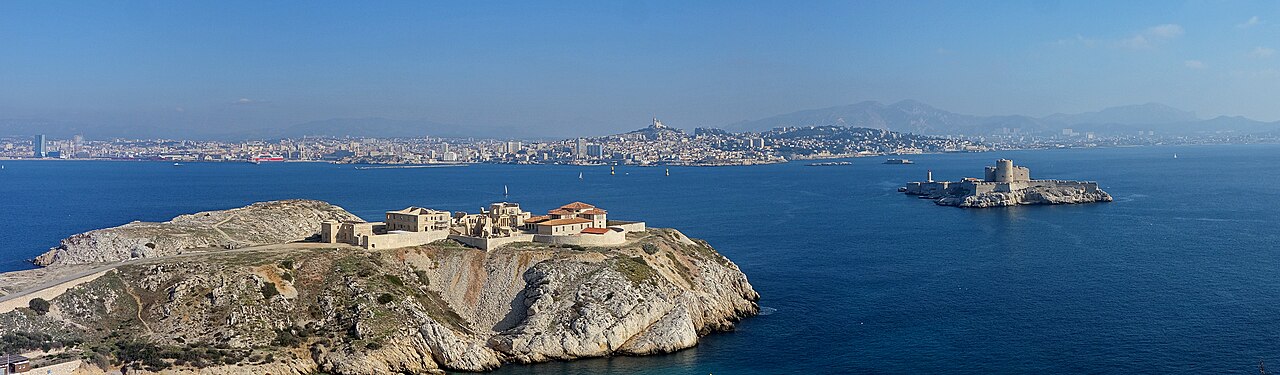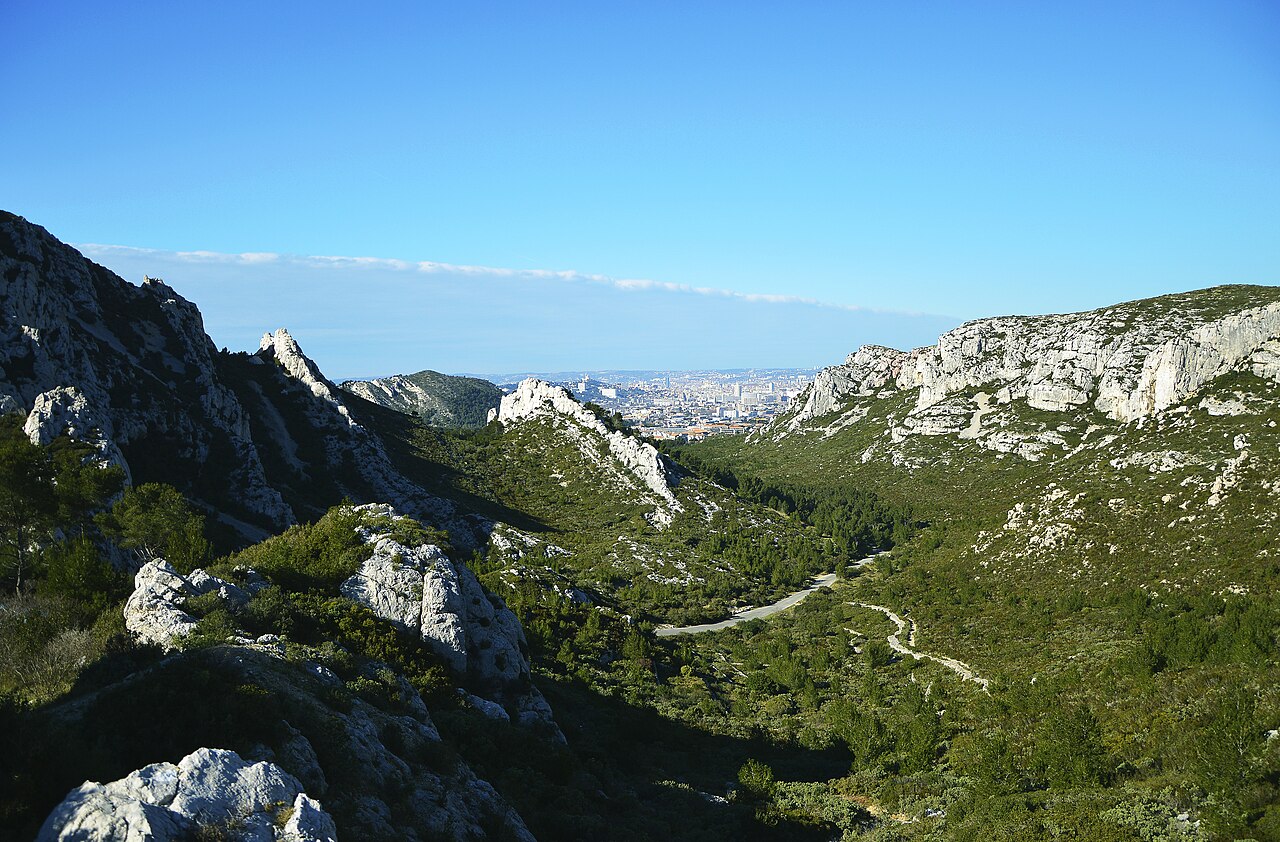
The calanques are narrow, steep-sided inlets cut into white limestone, where pine-scented cliffs plunge into water of an improbable blue. They run along the coast from the fishing village of Les Goudes, at the southern tip of Marseille, to Cassis, and in 2012 they became the Calanques National Park, unusual in Europe for protecting land and sea right on the edge of a major city. The best-known coves each have their own character. Sormiou and Morgiou shelter small fishing harbours and seasonal restaurants, with cabanons, the simple stone huts of Marseille families, along the shore. Sugiton, below the Luminy university campus, is the classic first hike, with views of the rocky islet called the Torpilleur. Further east, En-Vau is the most spectacular of all, a fjord of sheer cliffs with a pebble beach, reached on foot from Cassis or Marseille. Out at sea the park also protects islands and some of the richest underwater life in the Mediterranean. Most visitors explore on foot or by boat, and the walking season is at its best from autumn to spring, when the trails are open, cool and quiet.
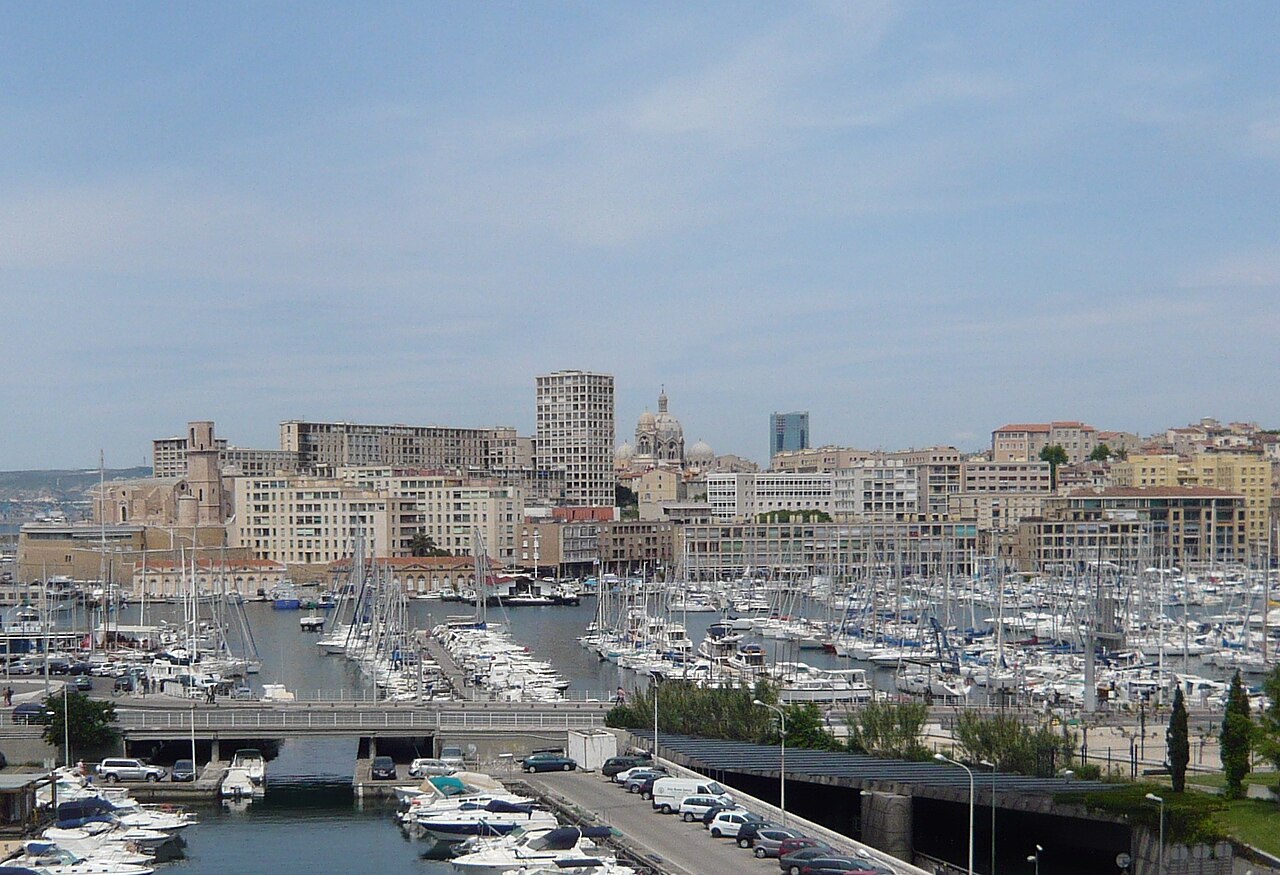
How to visit: city buses run from central Marseille to the trailheads at Luminy for Sugiton and Morgiou, and to Les Goudes and Callelongue at the end of the coast road. The roads down to Sormiou, Morgiou and Callelongue are closed to private cars in summer except at set times, and the Gardiole and Cap Croisette roads are closed to traffic all year. Boat cruises along the calanques leave from the Vieux-Port and from Cassis; choose a park-authorised operator, which displays an orange sticker. The park does not charge an entry fee.
Seasonal rules: from 1 October to 31 May the massif is open unless exceptionally closed. From 1 June to 30 September access depends on fire risk; a colour-coded map published daily by the Prefecture shows which areas are open, and on red days access is banned. Sugiton requires a free booking in summer. Check the Mes Calanques app before you go in any season.
What to bring: the paths are rocky and often steep, with no water on the trails, so take at least 1.5 litres per person, sturdy shoes, sun protection, a charged phone and a map. Stay on marked paths, take all rubbish away, do not pick plants, and tell someone your route if you walk alone. Allow a half day for Sugiton, a full day for En-Vau.
What to expect
The experience
Self-guided hiking on rocky coastal trails to limestone coves, or a boat cruise along the cliffs with an authorised operator.
Best time
October to May for hiking, early in the day; in summer check the daily fire-risk map before setting out.
How long
Half a day for Sugiton or Morgiou, a full day for En-Vau.
Tips
Carry at least 1.5 litres of water each, wear proper shoes, and check the Mes Calanques app for closures and summer bookings.
Quick picks
- Best for
- Walkers and nature lovers who want Marseille’s wild side, minutes from the city.
- Families
- Choose a short walk to Sugiton’s viewpoint or a boat cruise with younger children; some trails are steep and demanding.
- Couples
- Picnic in a quiet cove on a sunny winter day, when you may have it almost to yourselves.
- Pair with
- Cassis for a seafood lunch on the harbour after walking to En-Vau or Port-Miou.
- Time needed
- A half to a full day.
Good questions
Do you have to pay to enter the Calanques National Park?+
No, there is no entry fee for the park. Boat cruises and summer parking are paid separately.
When are the Calanques closed?+
The massif is open from 1 October to 31 May unless exceptionally closed. From June to September access depends on a daily fire-risk map, and red days mean no entry.
What is the easiest calanque to reach from Marseille?+
Sugiton is the classic first walk, from the Luminy campus at the end of a city bus line. Sormiou and Morgiou are also popular, with small harbours.
Can I see the Calanques by boat?+
Yes, cruises leave from the Vieux-Port and from Cassis. Choose an operator authorised by the park, which displays an orange sticker.
What should I bring for a hike?+
Bring at least 1.5 litres of water per person, sturdy shoes, sun protection, a charged phone and a map. There is no water on the trails.