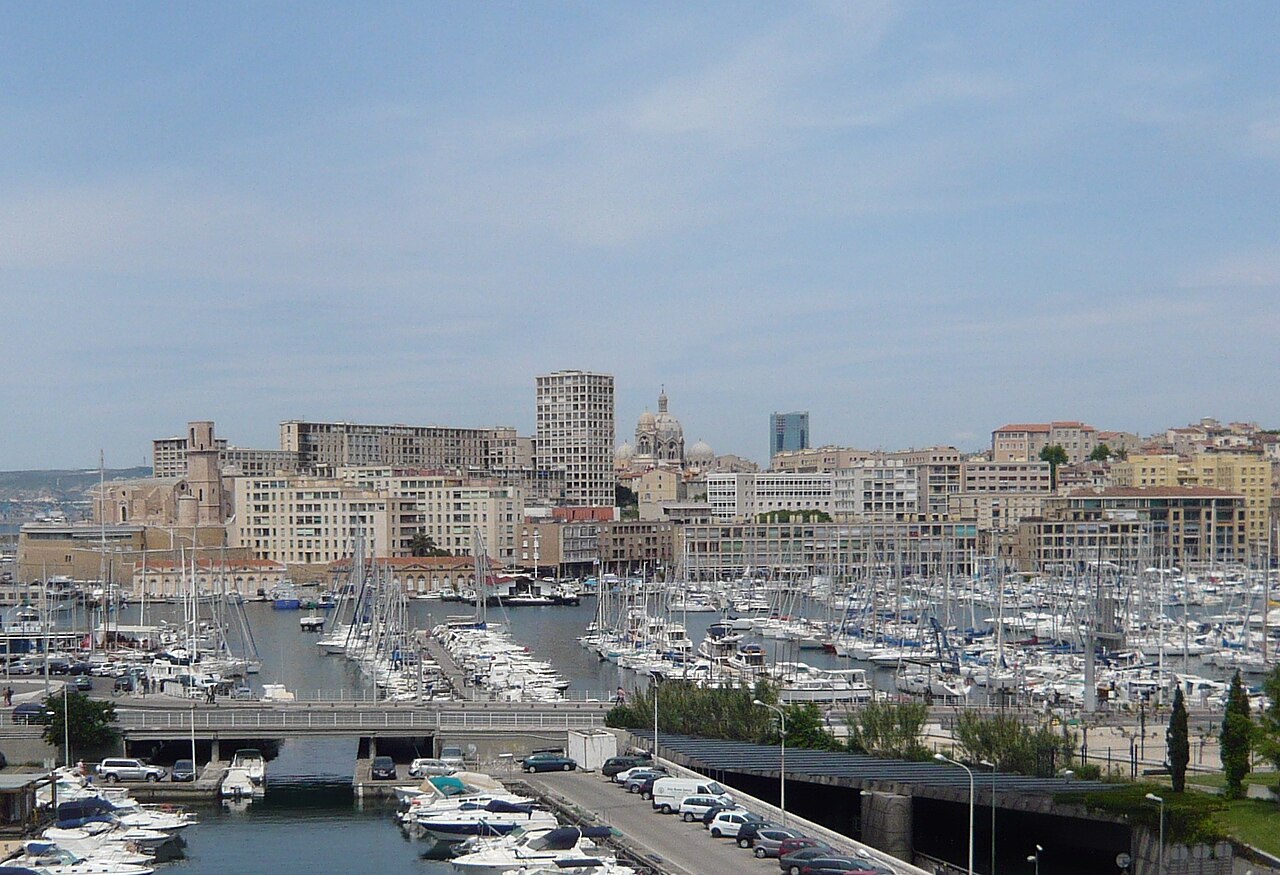
Marseille began here. Around 600 BC Greek sailors from Phocaea landed in the sheltered inlet now called the Vieux-Port and founded Massalia on the high ground above it, the hill that became Le Panier. The harbour is still the city’s living room: rows of masts, the town hall on the north quay, the forts at the entrance, and on the Quai des Belges the small fish market where fishermen sell their morning catch straight from the boats. Next to it, Norman Foster’s polished steel canopy, the Ombrière, reflects everyone walking beneath it upside down. Climb the stairs behind the town hall and you are in Le Panier, a tangle of steep lanes, laundry and pastel façades, partly destroyed by German forces in 1943 and since restored. Its walls are an open-air gallery of street art. Look for the diamond-pointed Maison Diamantée, Place de Lenche on the site of the Greek agora, Place des Moulins named after its old windmills, the Église des Accoules and the Vieille Charité, a former hospice completed in 1745 around a beautiful baroque chapel, now home to museums and exhibitions.
How to visit: the Vieux-Port metro station is right on the harbour, and everything here is on foot. A good loop starts at the fish market on the Quai des Belges in the morning, follows the north quay past the town hall, climbs into Le Panier by the Montée des Accoules, and wanders through Place de Lenche and Place des Moulins to the Vieille Charité. Then drop down to the Cathédrale de la Major and the Mucem on the waterfront. The tourist office suggests a walk of about 2.3 kilometres and an hour and a half, and you will want longer for coffee and shops.
What to expect: Le Panier is steep and the lanes are narrow, so wear good shoes. It is a lived-in neighbourhood rather than a museum, with small shops selling soap, ceramics and local design, cafés on the squares and murals that change from year to year. The fish market is a morning affair and is winding down by late morning. Like any busy port area, keep an eye on bags in crowds.
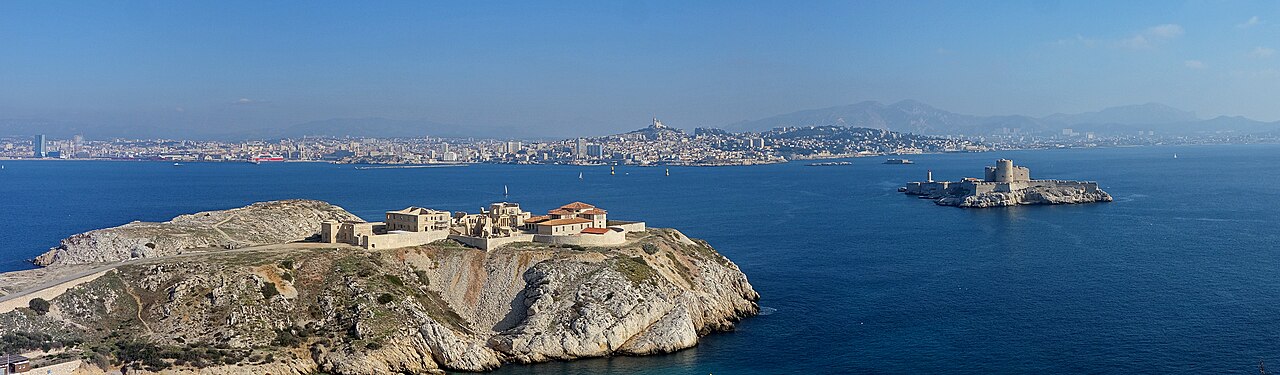
Making the most of it: in the evening the south quay, the Rive Neuve, fills with bars and restaurants, and this is the place to try a proper bouillabaisse at one of the established addresses, ideally ordered ahead. For a different angle on the harbour, take the little ferry boat that crosses between the two quays, or ride a boat out to the Château d’If and see the port as the Greeks first did.
What to expect
The experience
A self-guided walk around the historic harbour and up through the steep lanes, squares and murals of the city’s oldest quarter.
Best time
Morning for the fish market and quiet lanes, or early evening for the light on the harbour and an apéritif on the quay.
How long
Two hours for the essentials, half a day with shops, cafés and the Vieille Charité.
Tips
Wear shoes with grip for the steep streets, arrive at the fish market early, and book bouillabaisse ahead rather than trusting a menu board.
Quick picks
- Best for
- Every first-time visitor; this is where the city’s story and energy are concentrated.
- Families
- The fish market, the boats and the mirrored canopy delight children; the hills are hard work for pushchairs.
- Couples
- Wander Le Panier’s squares in the afternoon and watch the harbour lights come on from a terrace on the quay.
- Pair with
- The Mucem and Fort Saint-Jean at the harbour mouth, then Notre-Dame de la Garde for the view.
- Time needed
- Half a day, ideally split between a morning and an evening.
Good questions
Where is the Marseille fish market?+
It is on the Quai des Belges at the head of the Vieux-Port, where fishermen sell their catch from small stalls. Go in the morning, as it winds down by late morning.
Is Le Panier safe to walk around?+
Le Panier is a popular, lived-in neighbourhood that is busy with visitors by day. Use normal city sense with bags in crowds and stick to lit streets late at night.
What is the Vieille Charité?+
It is a former hospice completed in 1745 around a striking baroque chapel. Today it hosts museums and exhibitions throughout the year.
How long does a walk around Le Panier take?+
The tourist office suggests a loop of about 2.3 kilometres taking an hour and a half. Allow longer for cafés, shops and the Vieille Charité.
Where should I eat bouillabaisse?+
Bouillabaisse is a serious, expensive dish, best eaten at an established restaurant around the port or the Corniche. Book ahead, as many places need notice to prepare it properly.