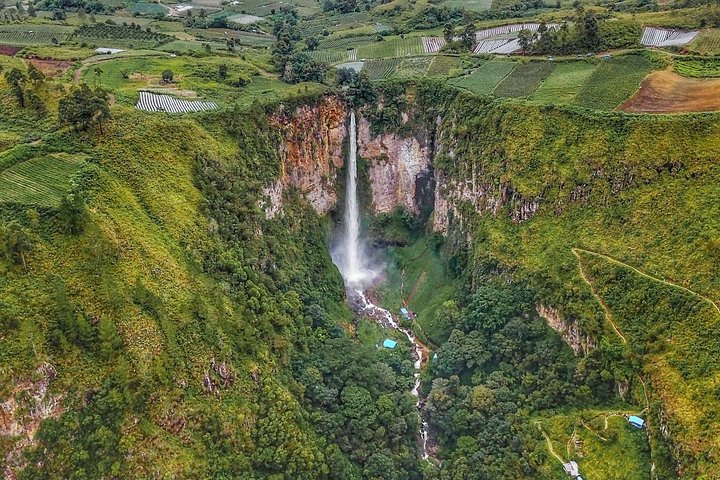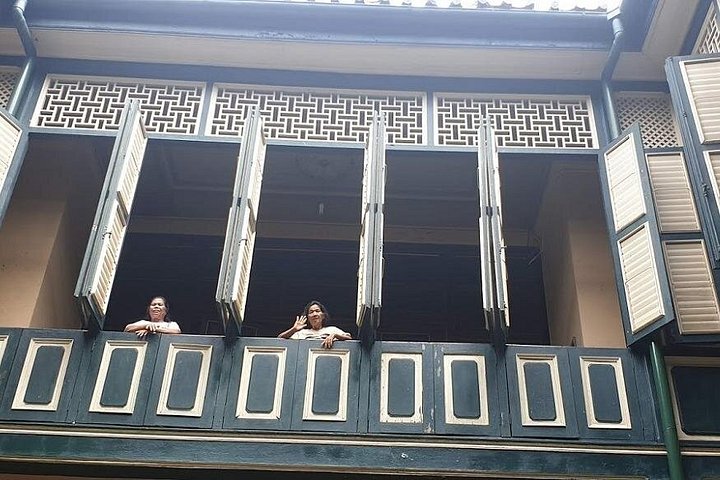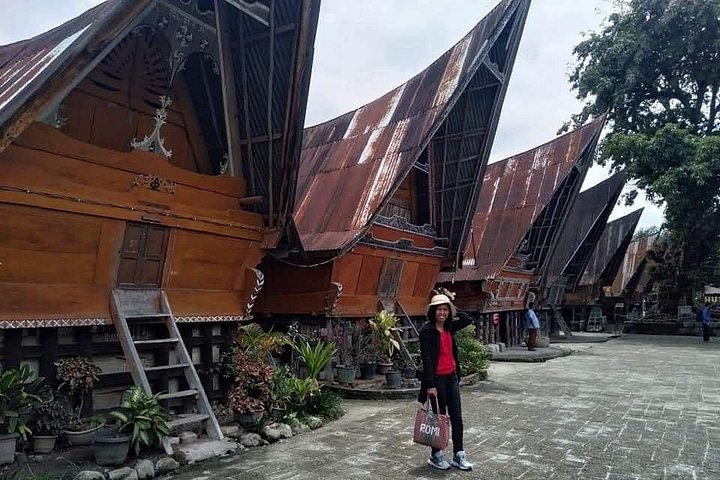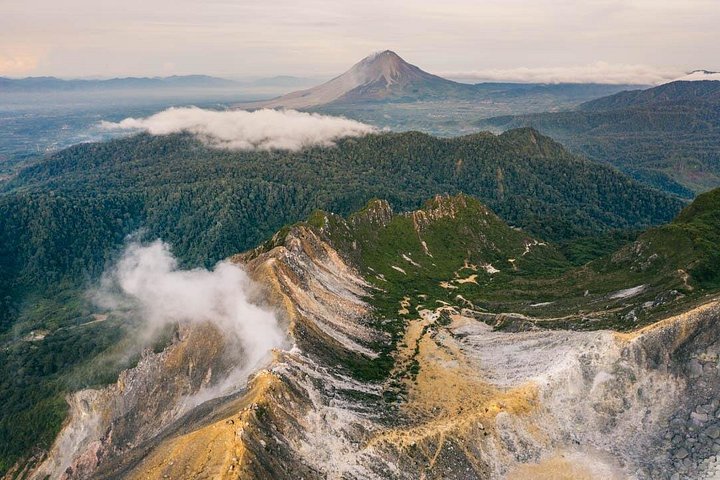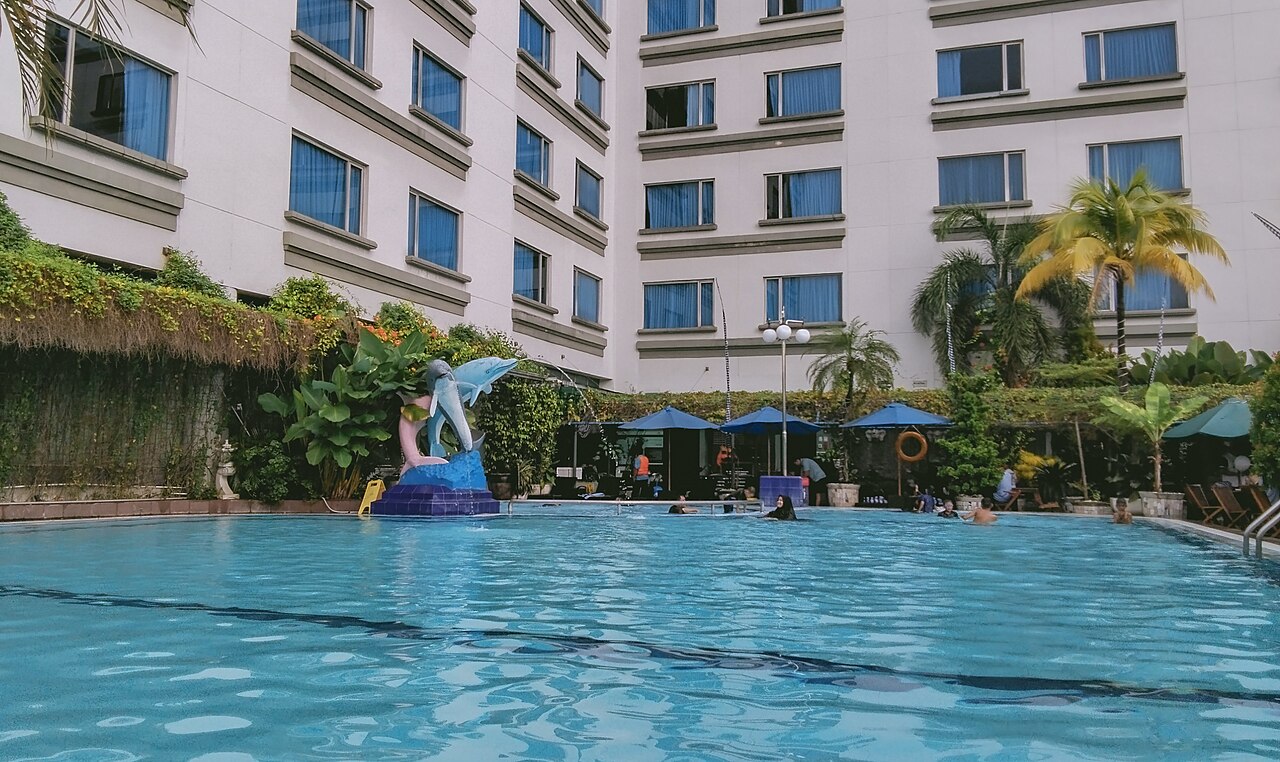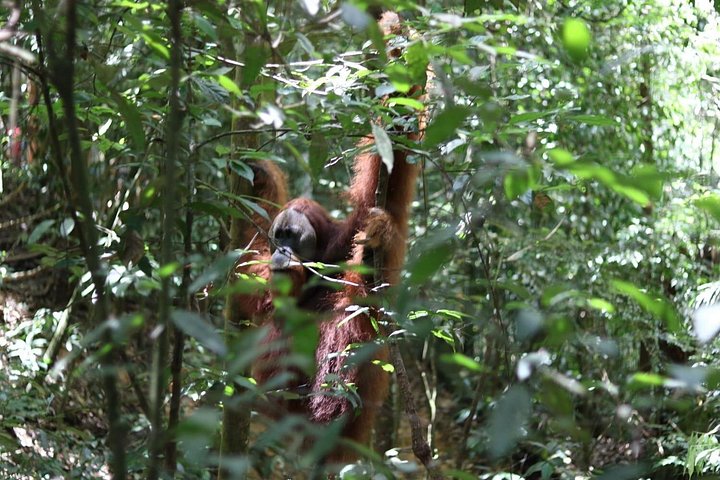
Northern Sumatra is one of Indonesia's great adventure regions, and almost every trip begins in Medan. The city is a hot, busy, food-loving port with colonial architecture, mosques, temples and a lively street scene, but most visitors treat it as a gateway to three bigger draws: orangutans in the rainforest around Bukit Lawang, the volcanic highlands around Berastagi and Lake Toba, the largest volcanic lake on Earth. This guide explains how those pieces fit together so that your first visit feels organized rather than overwhelming.
Arriving in Medan
International and domestic flights land at Kualanamu International Airport, roughly forty kilometers from the city center. You can reach town by road in about an hour in light traffic, or by the airport rail link to the main station, after which a taxi or ride-hailing car finishes the trip. Traffic in Medan is heavy and unpredictable, so never schedule a tight connection. Hotels can arrange transfers, and many tour operators include airport pickups.
How the regions connect
Bukit Lawang lies north-west of Medan, about three hours by road. Berastagi and the Karo Highlands lie to the south-west, around two hours away, and Lake Toba is farther, usually four to five hours depending on the route and traffic. That distance explains why many travelers choose a loop: Medan, Bukit Lawang, back through Medan, then on to Berastagi and Lake Toba. Each leg works best with a private driver, which is affordable by regional standards and saves the hassle of public minibuses.
What to book ahead
Jungle treks, overnight camps and private tours can be arranged at short notice, but in busy periods such as school holidays and the dry months it pays to reserve at least a few days ahead. Choose trekking operators with small groups, local guides and a clear policy against feeding wildlife. Accommodation on Samosir Island and in Bukit Lawang fills up in high season, so book those first and fit the tours around them.
Getting around
Ride-hailing apps work well in Medan, and taxis and becak motorized rickshaws are common. Outside the city, a driver and car are the simplest solution. Roads in the highlands are winding and slow, so allow plenty of time and consider motion-sickness tablets. Agree the price and the route before you set out, and carry small bills for tolls, parking and snacks.
Money, dress and manners
Indonesia is a Muslim-majority country, but North Sumatra is diverse, with large Christian Batak communities, Chinese and Indian minorities, and a relaxed attitude to visitors. Dress modestly in villages, mosques and shrines, and remove your shoes where asked. Carry cash in rupiah for markets and small restaurants, because cards are not accepted everywhere. Ask before photographing people and offer a smile and a thank you.
How many days
Three days lets you see Medan and do one big excursion, such as a Bukit Lawang trek. Five days adds Berastagi and a night on Lake Toba. A week gives time for an overnight jungle camp, the Karo Highlands, a Samosir Island stay and a food-focused day in Medan. Ten days allows a slower pace and a stop at Tangkahan or Ketambe for wilder forest.
Staying healthy and comfortable
The climate is tropical, so pack light, breathable clothing, a rain jacket, insect repellent and sunscreen. Drink bottled or filtered water, and be sensible with street food by choosing busy stalls with fresh turnover. Check with a travel clinic about vaccinations and malaria precautions well before you leave, and make sure your travel insurance covers trekking and remote areas.
A simple first plan
Day one, arrive and take a city tour in Medan. Day two, trek in Bukit Lawang. Day three, return to Medan or continue to Berastagi. Day four, hike Mount Sibayak at sunrise and drive to Lake Toba. Day five, explore Samosir Island by car and boat. Then fly out from Medan or extend to Tangkahan. Whatever you choose, leave a little slack for weather and traffic, and accept that the best moments are often the unplanned ones.
Safety and common sense
Use normal city precautions: keep bags zipped in crowded markets, use licensed taxis or ride-hailing apps after dark, and agree prices before long rides. Follow local guidance on volcano areas and river conditions, and take your guide's advice seriously on the trail. Keep photocopies of your passport and insurance details separate from the originals, and let your hotel know where you are heading when you leave for remote areas.
Connectivity
Mobile coverage is good in Medan and along main roads, patchy in the highlands and weak in the jungle. Buy a local SIM at the airport or in the city if you want data, and download offline maps before you set out for remote areas.