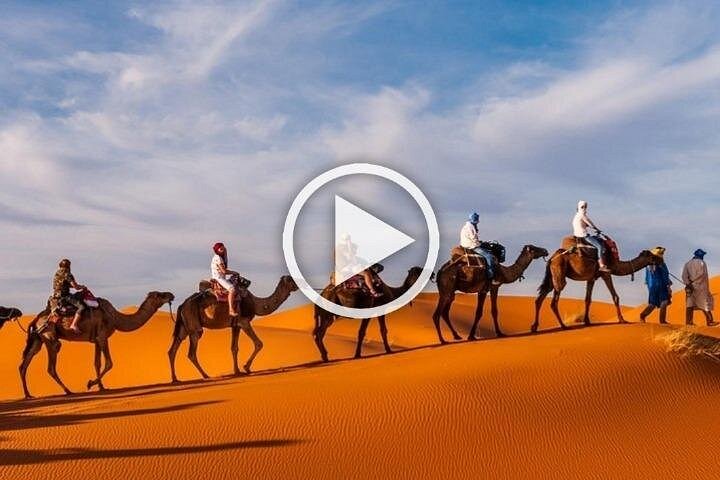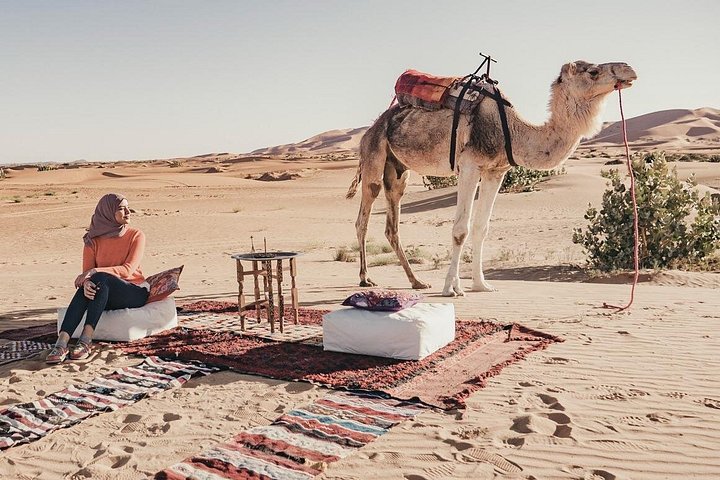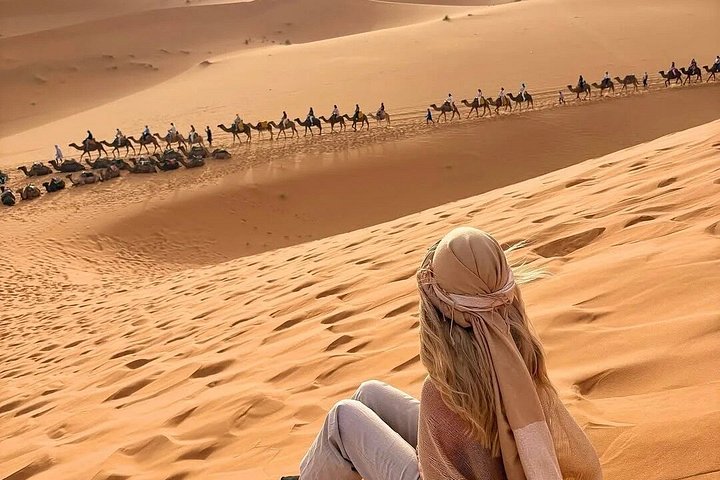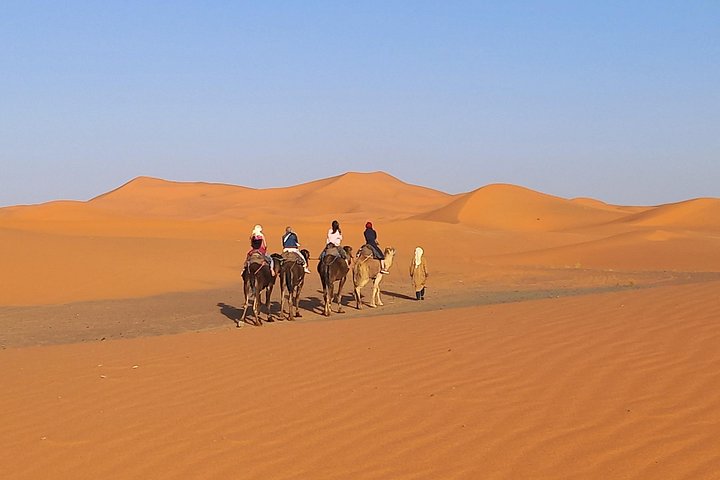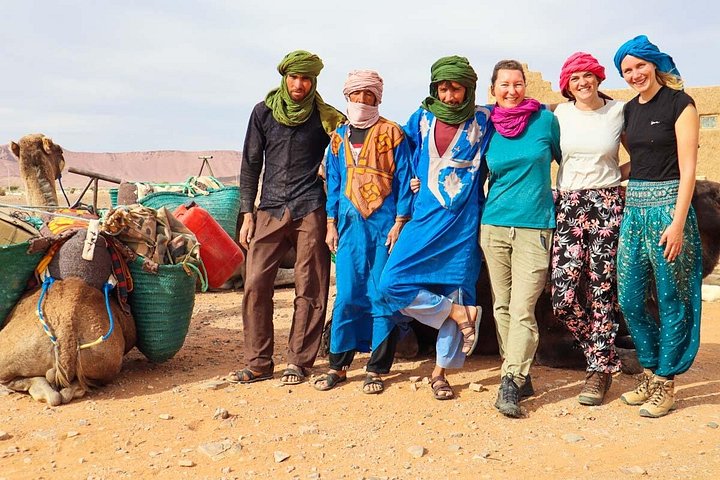
Walking is the slowest and most intimate way to know the Sahara. This five-day hiking adventure sets out from Merzouga with guides, camels or vehicles carrying supplies, and leads a small group through the dunes of Erg Chebbi and the stony plateaus beyond. Days typically cover moderate distances at an easy pace, with long breaks in the heat of the day for tea and rest. Nights are spent in camps under the stars, with simple meals prepared by the crew. You pass through palm groves, abandoned villages and seasonal lakes, and meet nomads and shepherds. It is a demanding but deeply rewarding trip for people who like to travel under their own power.
Preparation is essential. You should be comfortable walking five to seven hours a day in warm conditions, often on soft ground. Good footwear is crucial: broken-in trail shoes or lightweight boots, with gaiters or high socks to keep sand out. Bring a wide-brimmed hat, sunglasses, a scarf, high-factor sunscreen and a refillable water bottle or hydration pack. In winter, nights can be freezing, so a warm sleeping bag or extra blankets matter.
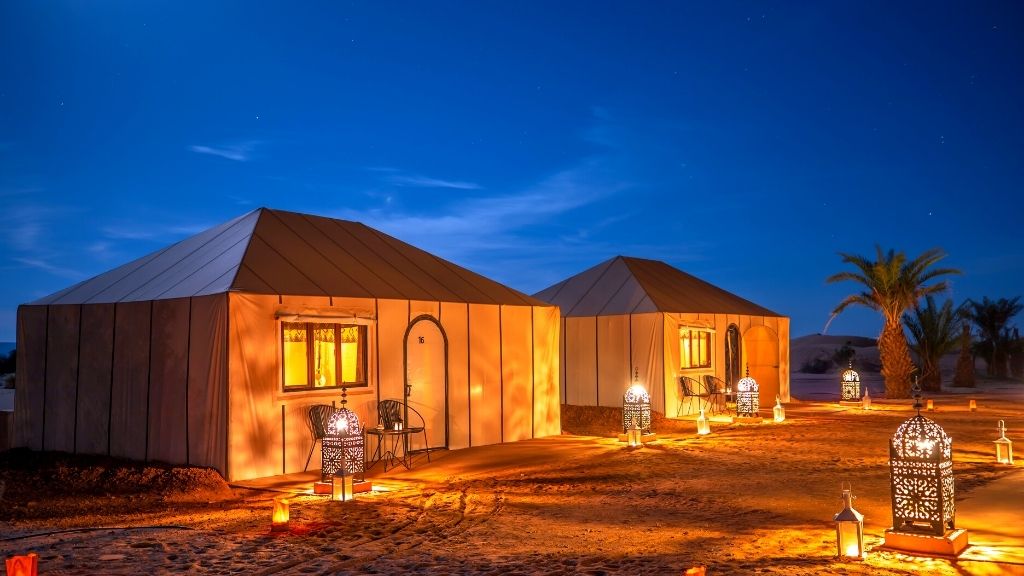
The supported format is a major advantage. Guides carry water, food and shelter, so you only carry a day pack. Meals are simple and filling, built on tagines, soups, bread, fruit and tea. Camping is basic, with shared tents and minimal facilities, though some operators offer more comfortable options. Discuss dietary needs well in advance. Because the desert is remote, reliable communication, a first aid kit and an evacuation plan are part of good practice.
Weather can be extreme. In summer, temperatures make walking unsafe, so these trips are run in the cooler months. Sandstorms occasionally interrupt the schedule. Respect local customs by dressing modestly and asking before photographing people. This trip suits hikers, photographers and travellers who want to disconnect. Consider adding a night in Merzouga before departure to rest and prepare, and another after the walk for a proper shower and a comfortable bed. Tips for the guides and cooks are appreciated at the end.
Prepare in the weeks before departure. Walk with a loaded day pack on uneven or sandy ground, and use the trip as a reason to test boots and socks. Pack a lightweight sleeping bag liner, blister care, electrolyte tablets and a head torch. Discuss the daily schedule with the guide so that walking happens in the cool hours and long rests fall in the heat. Remember that there is almost no signal in remote stretches, so tell family where you are going and when to expect contact.
Camp life has a rhythm worth knowing. Mornings start early with tea and bread, followed by walking in the cool hours. Midday is for shade, lunch and rest, and the afternoon walk leads to camp before dark. Evenings are for dinner, stories and sleep, with little light pollution to disturb. Respect the quiet, keep noise low and avoid leaving any waste. By the final day, many walkers say that their sense of time and distance has changed in ways that are hard to describe.
What to expect
The experience
A supported five-day guided hike through the dunes and desert plains with camping.
Best time
October to April.
How long
Five days.
Tips
Break in your footwear, carry sun protection and arrange dietary needs in advance.
Quick picks
- Best for
- Hikers who want a deep desert journey.
- Families
- Better suited to older teenagers and adults.
- Couples
- A shared challenge for fit couples.
- Pair with
- A comfortable night in Merzouga before and after.
- Time needed
- Five days.
Good questions
How hard is the walking?+
Moderate to demanding, with five to seven hours a day on soft ground.
Do I carry my own gear?+
Usually only a day pack. Supplies are carried by the crew.
Where do we sleep?+
In camps under the stars or in tents.
When should I go?+
October to April; summer is too hot.
Is it safe?+
Choose an operator with experienced guides and proper support.