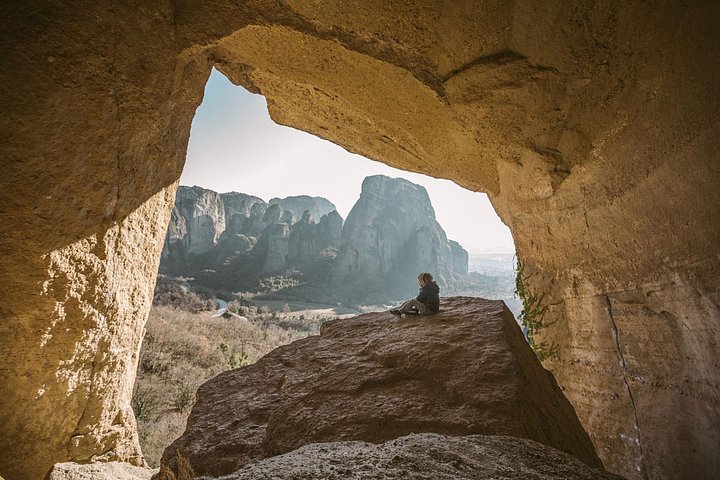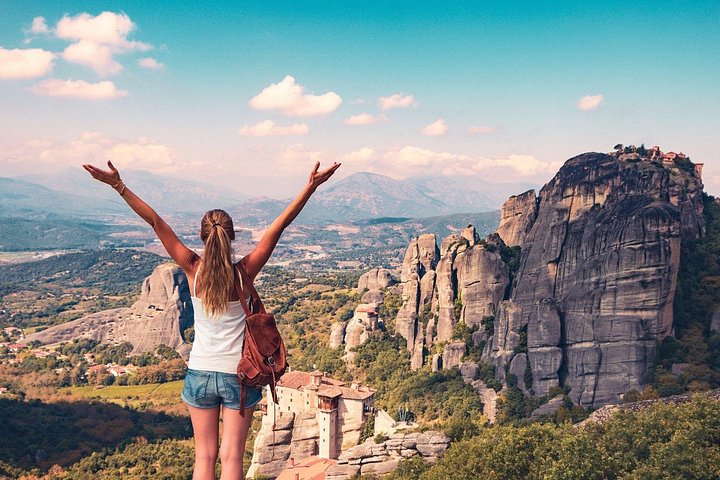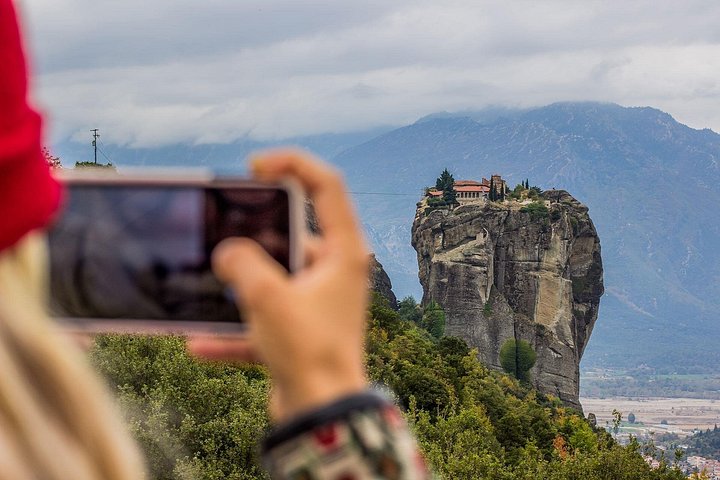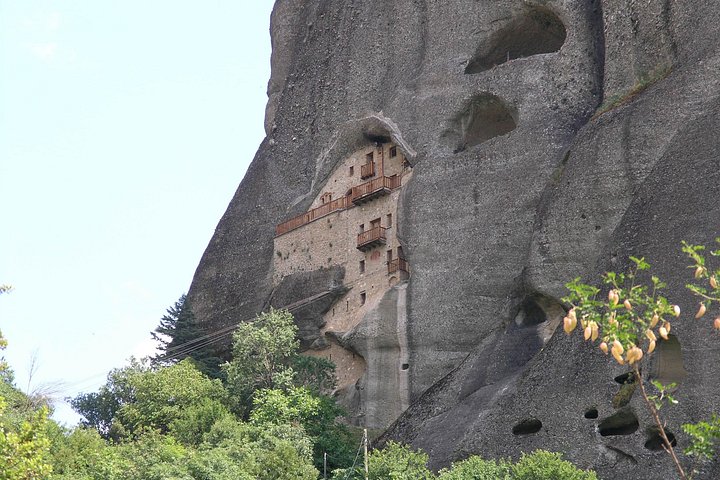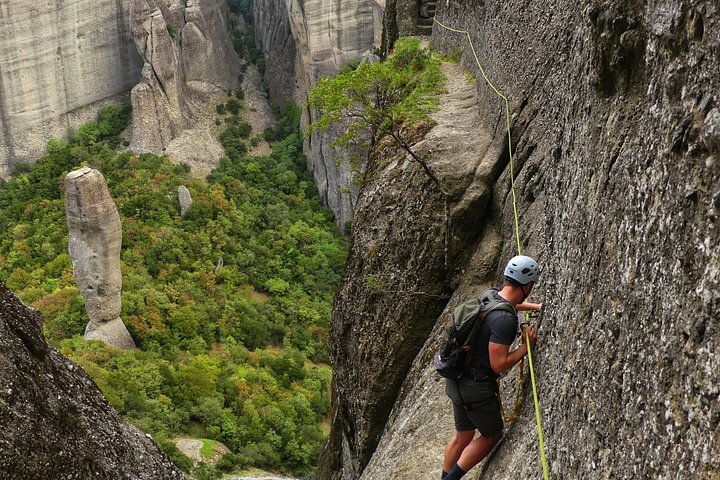
Meteora is a major climbing destination, with hundreds of multi-pitch routes on towers of conglomerate rock that rise from the valley. The rock is a mix of pebbles and stones set in a natural cement, which gives plenty of holds but can feel unusual to newcomers. Written permission to climb was granted in the 1970s by the archaeological service and the Orthodox Church, and climbing is forbidden only on the six towers with inhabited monasteries. For visitors who do not climb, the tour linked here is a half-day scramble led by an instructor, with equipment provided, which is suitable for beginners. It gives a real sense of height and exposure without needing technical skills, and the views from the rock are very different from those at the roadside viewpoints.
How it works
The linked tour is a small-group half-day scramble of around three hours with an instructor and the climbing equipment included, and with an optional pick-up from Kalambaka, Kastraki or Trikala. It is not a full multi-pitch climb. Experienced climbers can hire a local guide for longer routes, and guide services and gear shops operate in Kastraki. Always confirm the operator, the equipment and the weather policy when you book.
What to expect
The best climbing seasons are April to mid-June and mid-September to the end of November, according to a climbing guide, so early November is still within the good period. Winter climbing is possible on sunny days but colder and harder. Rain makes the rock slippery and tours may be postponed. Wear sturdy shoes and clothes you can move in, bring water and gloves in cold weather, and follow your instructor closely. The exposure can be intense, but the instructor controls the safety.
Making the most of it
Choose a morning slot for the best temperatures and combine it with a monastery visit in the afternoon, if it is open. Campfires, camping and bivouacking among the towers are prohibited, so treat the area with respect. Kastraki is the best base, with the towers rising above the village and several hotels within a short walk.
What to expect
The experience
A guided half-day scramble on a rock tower with an instructor and equipment included.
Best time
A dry, sunny morning; autumn and spring are the best climbing seasons.
How long
About three hours.
Tips
Wear sturdy shoes and flexible clothing, bring gloves in cold weather, and ask about the cancellation policy for wet days.
Quick picks
- Best for
- Active visitors who want height and adventure without technical experience.
- Families
- Suitable for older teenagers who are confident and comfortable with heights.
- Couples
- A shared adventure with a view few visitors see.
- Pair with
- A hiking tour or a sunset tour.
- Time needed
- Half a day.
Good questions
Do I need climbing experience?+
No, the linked tour is a beginner-friendly scramble with an instructor and equipment included. Experienced climbers can arrange guides for longer routes.
Is climbing allowed on the monastery rocks?+
No, climbing is forbidden on the six towers that hold inhabited monasteries. The other towers are open under the long-standing permission.
When is the best time to climb at Meteora?+
A climbing guide names April to mid-June and mid-September to the end of November as the best periods. Winter climbing is possible on sunny days but harder.
What happens if it rains?+
The rock becomes slippery, so tours are usually postponed or cancelled. Ask the operator about the policy at the time of booking.
Can I hire equipment separately?+
Gear shops and guides operate in Kastraki, but the linked tour already includes equipment. Check the details before you book.