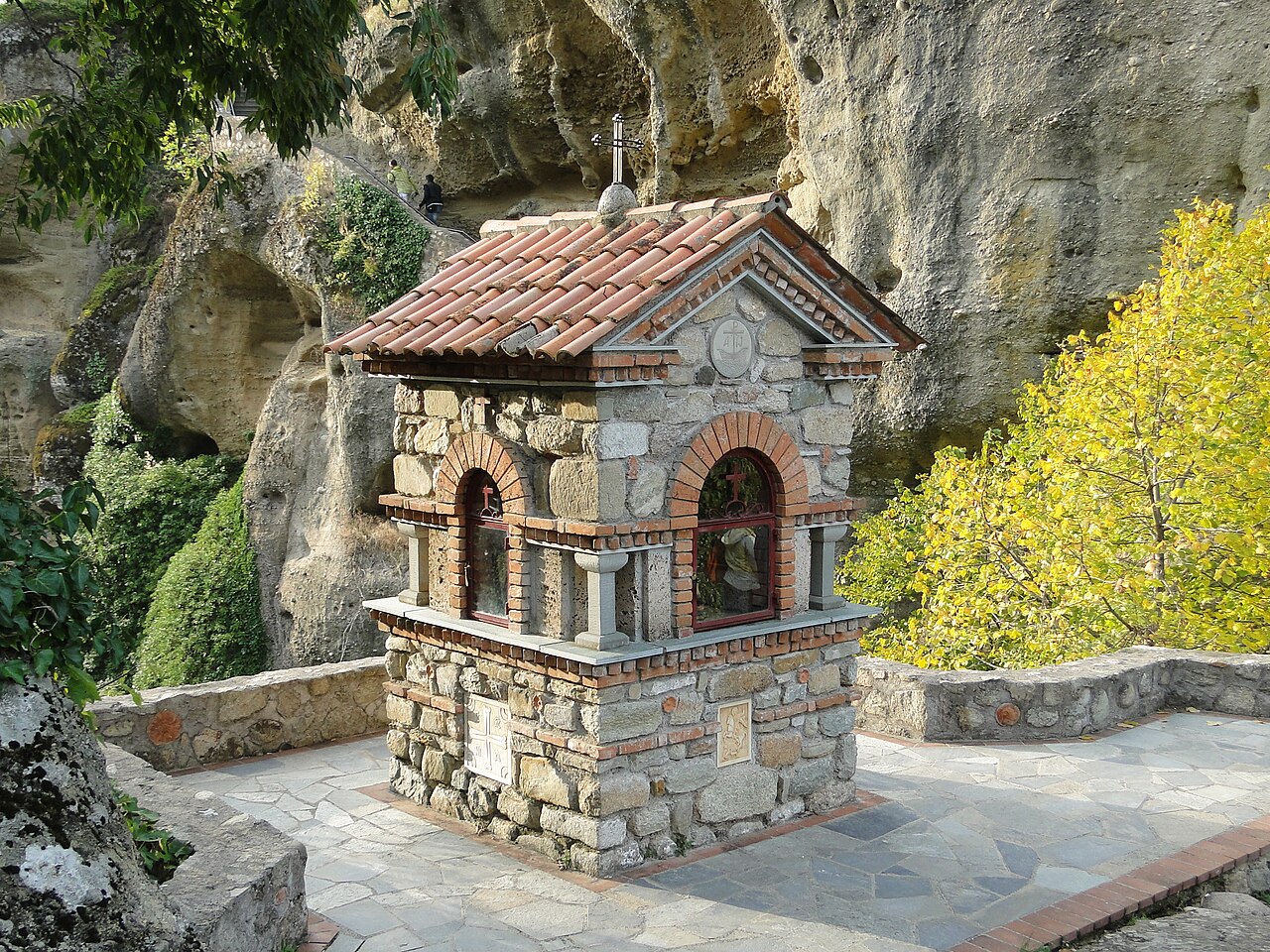
Great Meteoron Monastery
The largest of the six active monasteries, the Holy Monastery of the Transfiguration crowns the tallest rock with a painted church, a museum and wide terraces.
Greece
Meteora is one of the most astonishing landscapes in Greece: a forest of sandstone and conglomerate towers rising from the plain of Thessaly, with monasteries perched on their summits.
Between the fourteenth and sixteenth centuries monks built 24 monasteries on the rocks, and six are still active today, each with its own church, frescoes and weekly closing day. The area has been a UNESCO World Heritage Site since 1988. Around the monasteries are old hermit caves, monk paths for walking, climbing routes on the towers and viewpoints where the cliffs glow at sunset. The town of Kalambaka and the village of Kastraki are the bases, with tavernas, small hotels, a train station and an eleventh-century church. This guide covers what to book, what is open from November, when the monasteries close each week, how to get around and where to stay, from a boutique hotel in Kastraki to a town-centre hotel with breakfast included.
Great Meteoron Monastery
The largest of the six active monasteries, the Holy Monastery of the Transfiguration crowns the tallest rock with a painted church, a museum and wide terraces.
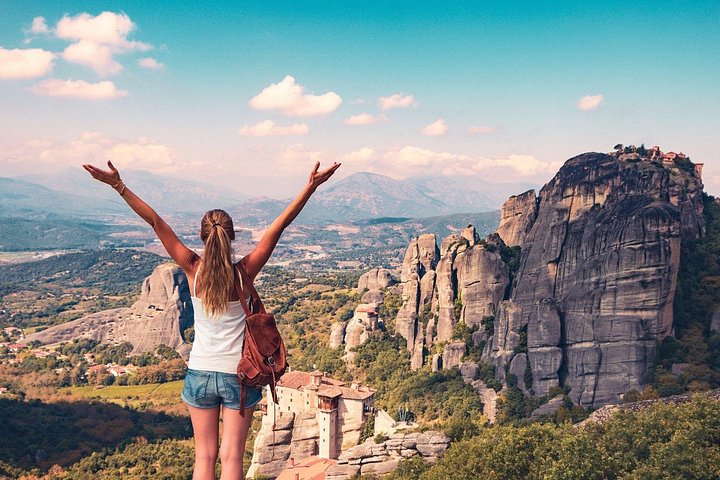
Varlaam Monastery
The second great monastery of Meteora, with a richly painted church, a museum and the old winch tower and giant wine barrel that show how monks once lived on the rock.
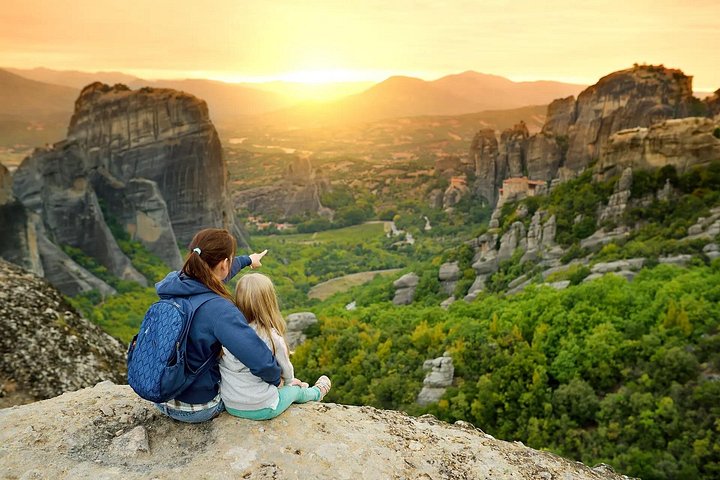
Meteora Sunset Tour
A small-group late-afternoon tour to the best rock viewpoints, with a monastery stop and the hermit caves, timed for the light turning gold on the pillars.
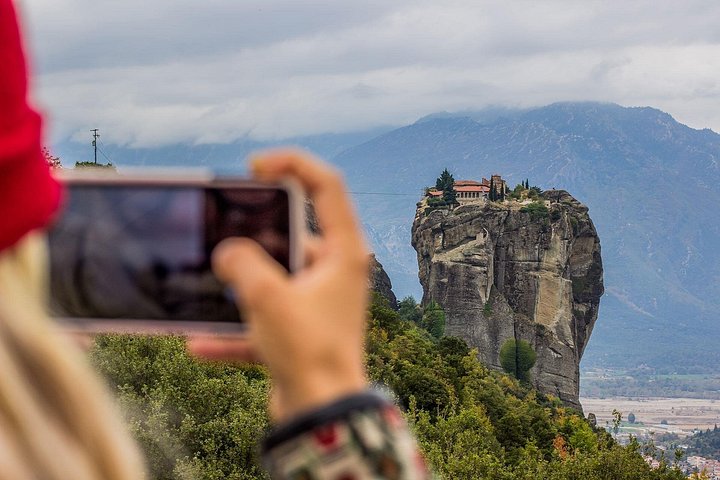
Roussanou and St Nicholas Anapausas
Two of the most photogenic monasteries: Roussanou, run by nuns and reached by a bridge, and St Nicholas Anapausas, squeezed onto a narrow rock with an unusually painted church.
Hand-picked: every experience here has strong traveler reviews and a verified booking link.
The largest of the six active monasteries, the Holy Monastery of the Transfiguration crowns the tallest rock with a painted church, a museum and wide terraces.
The second great monastery of Meteora, with a richly painted church, a museum and the old winch tower and giant wine barrel that show how monks once lived on the rock.
Two of the most photogenic monasteries: Roussanou, run by nuns and reached by a bridge, and St Nicholas Anapausas, squeezed onto a narrow rock with an unusually painted church.
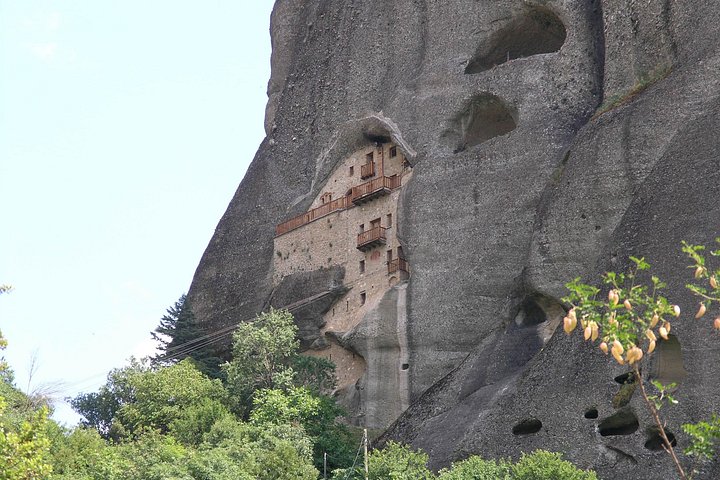
Holy Trinity, perched on a lone pillar above a deep gorge, and St Stephen, the most accessible monastery, joined to the road by a short bridge.
A small-group late-afternoon tour to the best rock viewpoints, with a monastery stop and the hermit caves, timed for the light turning gold on the pillars.
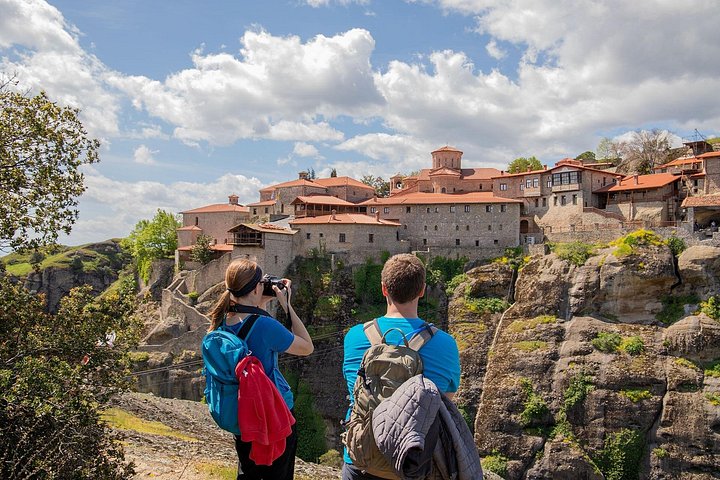
Guided walks on the old monk paths between the rock towers, with a transfer, a local guide and a monastery visit in a half-day small-group outing.
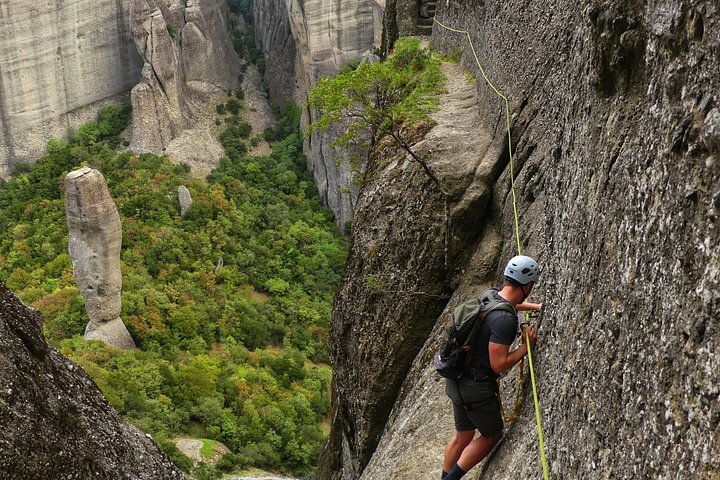
A beginner-friendly guided scramble on the sandstone towers, with equipment and an instructor, in one of the best climbing areas in Europe.
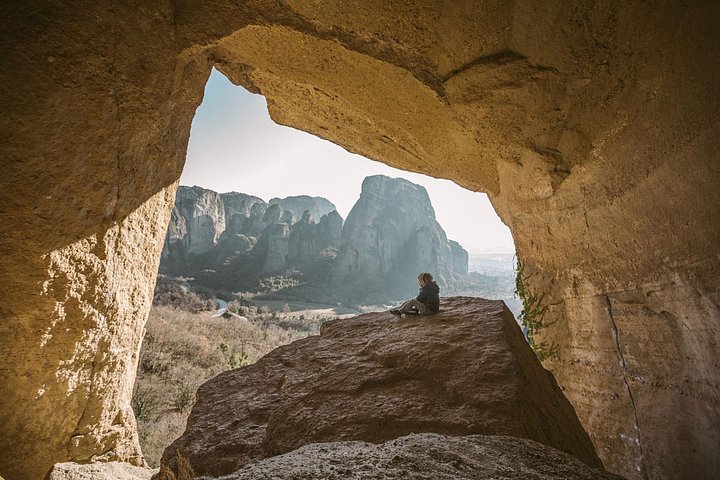
The caves and rock hollows where the first monks lived centuries before the monasteries, visited on a short sunset hike with a local guide.
The practical base for Meteora: a small, walkable town with an eleventh-century church, tavernas and cafes, and the village of Kastraki at the foot of the rocks.
A full-day guided tour from Athens by coach with a four-hour Meteora programme, the easiest way to see the monasteries without a stay.
A guided three-hour ride on electric bikes through Kastraki and the foot of the rock towers, timed to finish at a viewpoint as the cliffs change colour.
A guided two-to-three-hour electric mountain bike ride on tracks and trails around the rock towers, for visitors who want more adventure than a road ride.
Hotels we would book ourselves, from splurges to good-value bases.
Kastraki, below the rock towers
A three-class boutique hotel in Kastraki with twelve room types, Meteora-view rooms, hot tub and sauna suites, a garden terrace and a restaurant and bar.
Check rates →Kalambaka town centre
A four-class hotel in the centre of Kalambaka with free breakfast and parking, a restaurant, an art gallery and mountain-view rooms and suites.
Check rates →Kastraki, near the rock towers
A three-class hotel in Kastraki with panoramic monastery views, a garden and terrace, free parking, bike rentals and an area shuttle.
Check rates →Kalambaka edge, near Kastraki
A three-class hotel on the Kalambaka side of Kastraki, close to Kalambaka's tourist office and station, with a restaurant and bar, free parking and panoramic Meteora-view rooms.
Check rates →Kastraki, a short walk from the rocks
A budget-friendly three-class hotel in Kastraki, a short walk from the rocks, with a restaurant, bar, terrace, garden and Meteora-view rooms.
Check rates →Kalambaka, historical district
A four-class hotel in the historical district of Kalambaka with an indoor pool, a seasonal outdoor pool, a spa, a restaurant and free breakfast and parking.
Check rates →Theopetra, a short drive from Kalambaka
A large four-class hotel in a quiet mountain setting near Theopetra with two restaurants, a seasonal pool, a gym and spacious junior suites.
Check rates →Kastraki, below the rock towers
A four-class hotel in Kastraki with Meteora-view and panoramic rooms, an outdoor pool and a short walk to the Geological Museum and the base of the rocks.
Check rates →A practical primer for a first visit to Meteora: how many days to allow, which monasteries are open on which day, how to get around and what changes from November.
Where to base yourself for Meteora: the town of Kalambaka or the village of Kastraki, with eight hotels at different price points and winter notes.
A three-day plan for Meteora that spreads the monasteries, viewpoints, caves and outdoor activities over a sensible pace, with notes on closing days and where to stay.
A practical food guide to Meteora: grilled meats, regional pies, local wine and spirits, where to eat in Kalambaka and Kastraki, and how meals fit around monastery visits.
When to visit Meteora: how each season changes the weather, crowds, monastery hours and activities, with tips for winter, spring, summer and autumn.
A guide to the active side of Meteora: e-bike and mountain bike rides, off-road buggies, horseback riding, rafting, scrambling and photography, with advice on what suits whom.