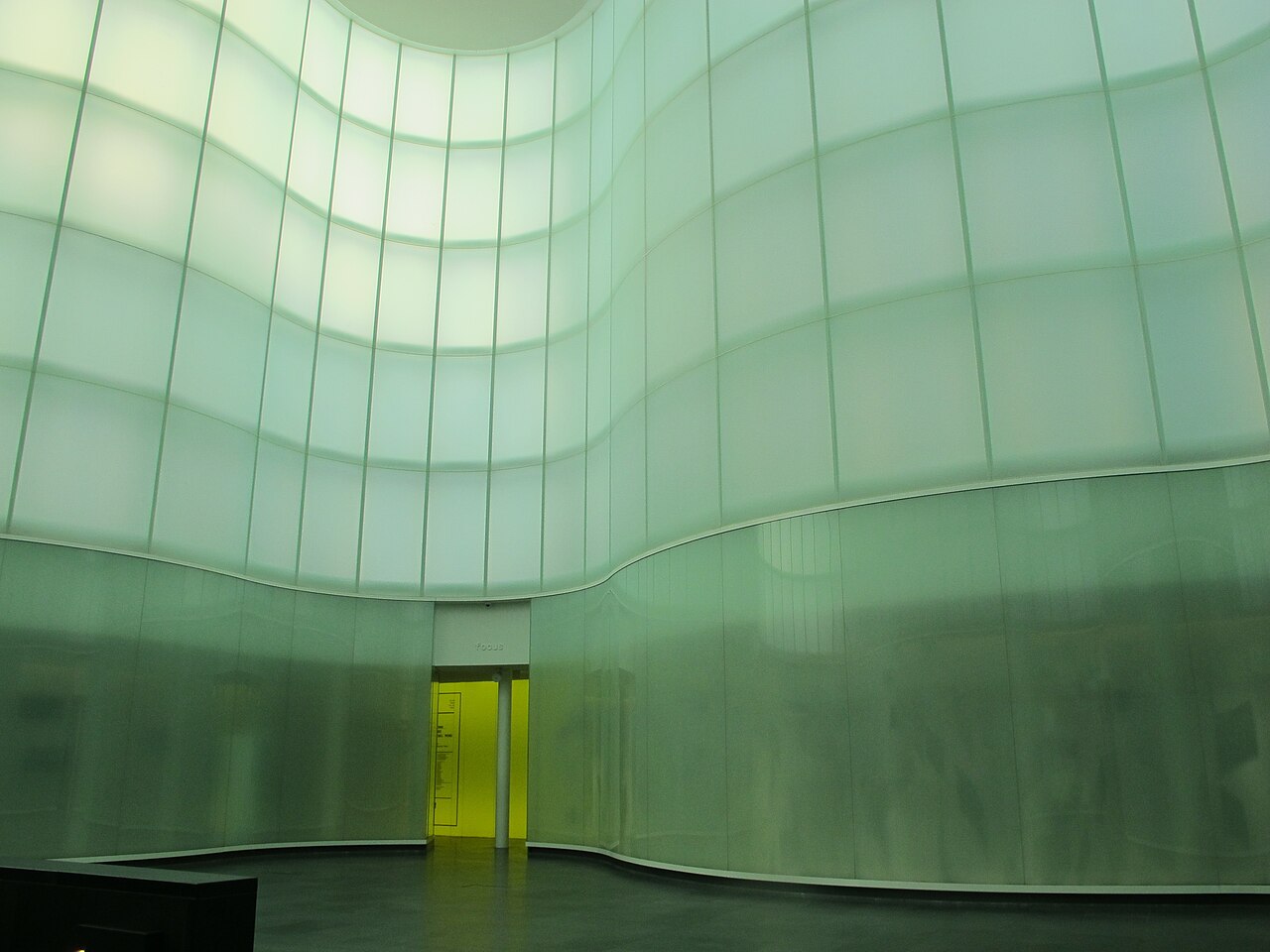
MUDEC is Milan's museum of cultures and one of the best-looking modern buildings in the city. It occupies part of the former Ansaldo industrial complex in the Tortona district, the old factory zone south-west of the centre that has become Milan's design quarter, and it was designed by the British architect David Chipperfield. From the outside it is a plain block clad in zinc; inside, the visitor walks into a curving, free-form atrium of frosted glass that glows softly by day and is lit up after dark, a calm piazza around which the galleries are arranged. The museum has two distinct sides. The permanent collection, drawn from the city's civic holdings, gathers thousands of objects from Africa, Asia, Oceania and the Americas, many of them collected by Milanese travellers, missionaries and merchants in the nineteenth and twentieth centuries, and it is displayed with an honest eye on how and why they came to Milan; it is free to visit. The temporary exhibitions are the big draw for most visitors: MUDEC regularly hosts large ticketed shows devoted to major artists, photographers and themes, from modern masters to fashion and design, and they are among the most visited exhibitions in Italy. The building also has a design shop, a bistro and a fine-dining restaurant on the upper floor. Its location matters too: MUDEC sits in the middle of the Tortona district, with converted workshops, showrooms, Armani/Silos down the street and the Navigli canals a short walk away, so a visit fits naturally into an afternoon of design and an evening aperitivo by the water.
Tickets and hours: the permanent collection is free, while temporary exhibitions are ticketed and often sold in timed slots, so book popular shows online through the official site, especially at weekends. The museum opens every day, with afternoon-only opening on Mondays and late opening on some evenings during the week; check the official timetable, which varies by exhibition. Children under six enter free.
How to visit: decide whether you are here for a particular exhibition or for the building and the collection. A major show takes one to two hours; the permanent collection rewards an extra hour, especially the sections on how European collectors acquired and displayed objects from other cultures. Even if you see nothing else, step into the atrium to look up at the glass and take in Chipperfield's architecture, then browse the shop for design books and gifts.
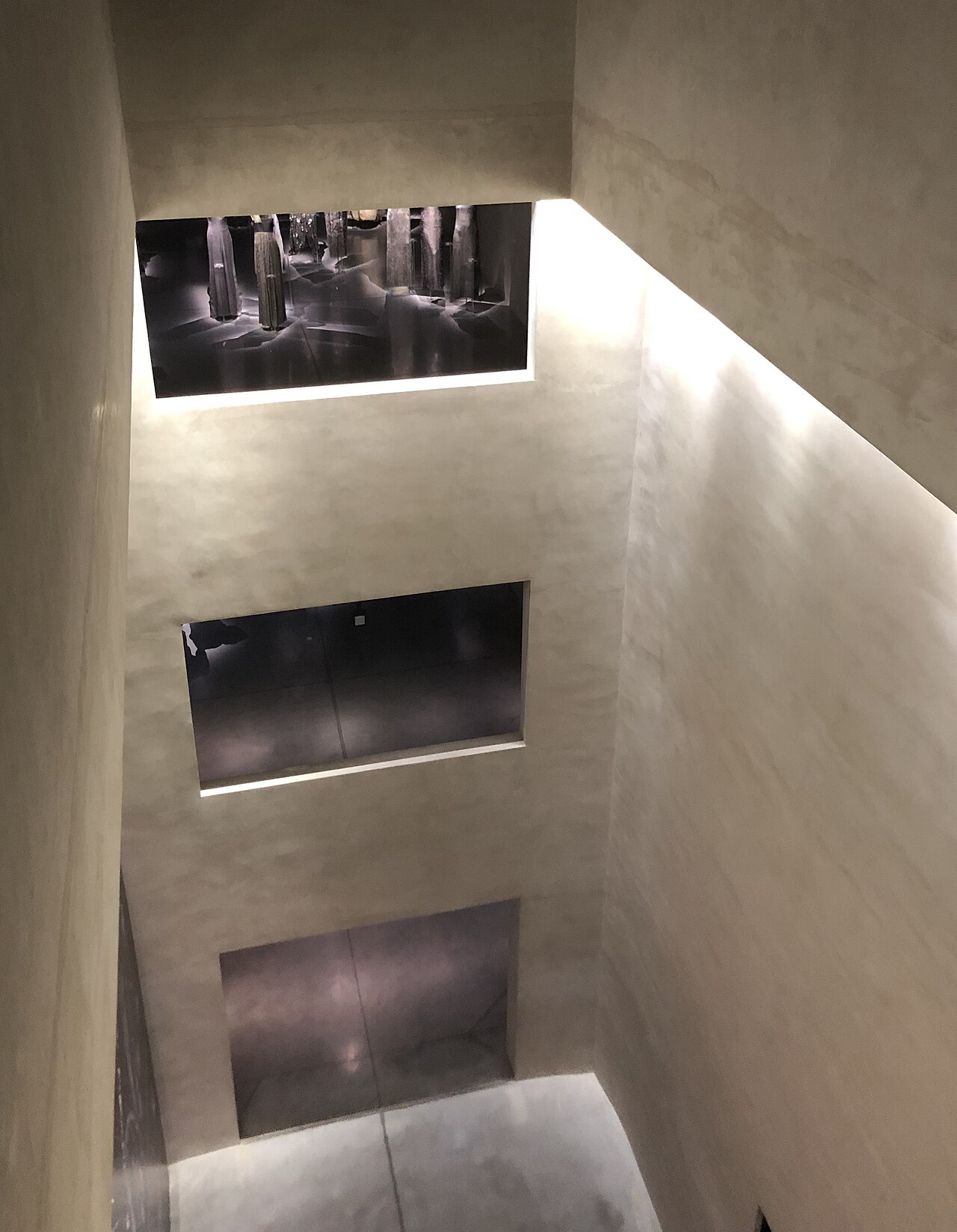
Getting there and combining: MUDEC is on Via Tortona, a short walk from Porta Genova station on metro line M2. From there, Armani/Silos is a few minutes away, the Navigli canals are about ten minutes' walk east, and the Darsena basin is just beyond. That makes an easy design afternoon: an exhibition at MUDEC, the fashion archive at Armani/Silos, then aperitivo on the Naviglio Grande.
What to expect
The experience
A museum of world cultures in a converted factory: a free permanent collection, large ticketed temporary exhibitions, a striking glass atrium, a shop and places to eat.
Best time
Weekday mornings for exhibitions without queues; late openings on some evenings are quieter still.
How long
About an hour for the collection, one to two hours per exhibition.
Tips
Book big exhibitions ahead in timed slots. Even on a short visit, step into the atrium. Combine with Armani/Silos and the Navigli for a full afternoon.
Quick picks
- Best for
- Exhibition-goers and architecture fans exploring the Tortona design district.
- Families
- The free collection and the atrium are easy wins; many exhibitions offer family activities.
- Couples
- An exhibition followed by a walk to the Navigli for aperitivo.
- Pair with
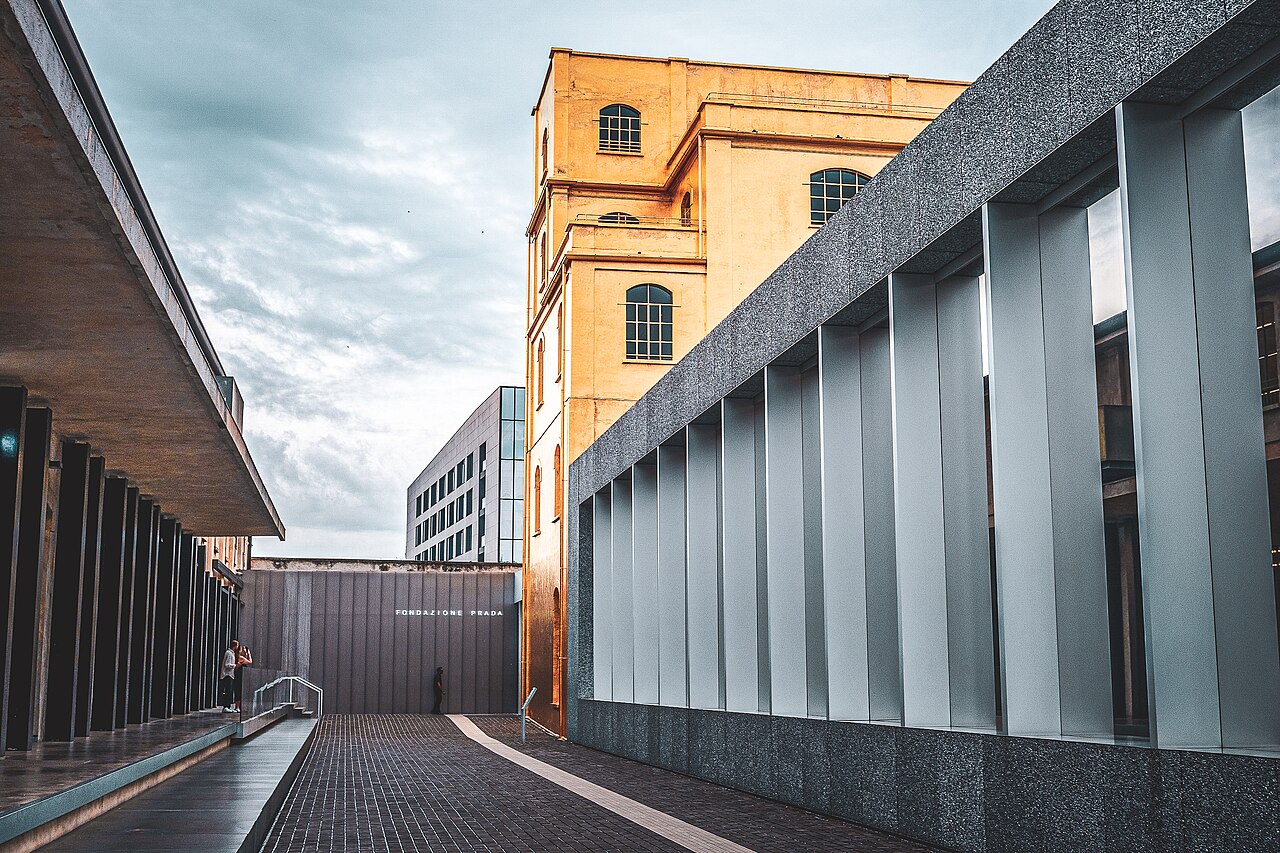
- Armani/Silos, the Navigli and Fondazione Prada for a contemporary-culture day.
- Time needed
- Two hours.
Good questions
Is MUDEC free?+
The permanent collection is free. The temporary exhibitions, which are the main draw for many visitors, are ticketed and often sold in timed slots.
Who designed the building?+
The British architect David Chipperfield, who converted part of the former Ansaldo industrial site and added the museum's curving frosted-glass atrium.
What is in the permanent collection?+
Objects from Africa, Asia, Oceania and the Americas from Milan's civic collections, many brought back by Milanese travellers and collectors, displayed with attention to how they arrived in the city.
How do I get there?+
Take metro line M2 to Porta Genova and walk a few minutes along Via Tortona. The Navigli canals are about ten minutes away on foot.
When is it open?+
Every day, with afternoon-only hours on Mondays and late openings on some evenings. Exhibition hours can differ from the collection, so check the official site.