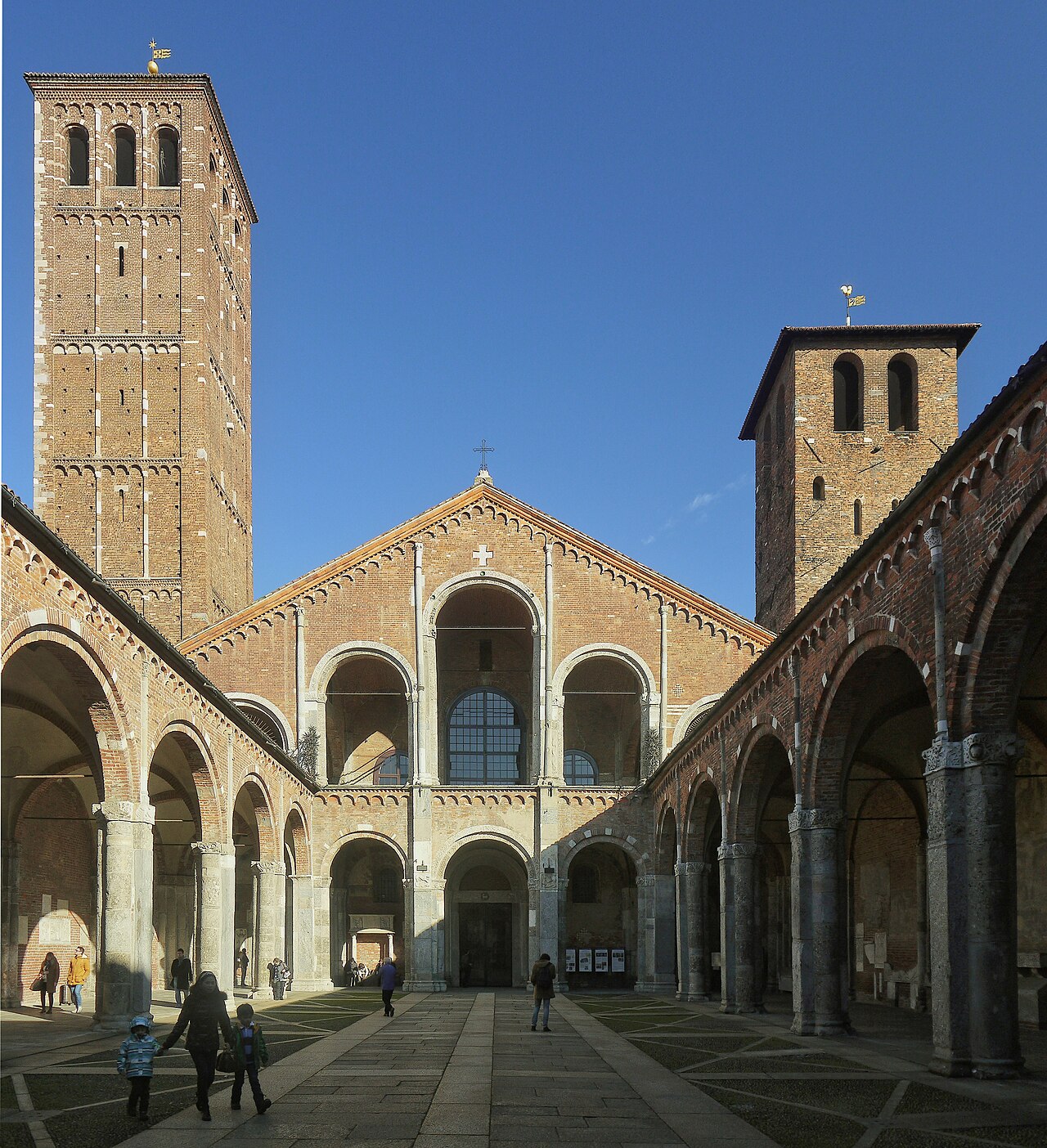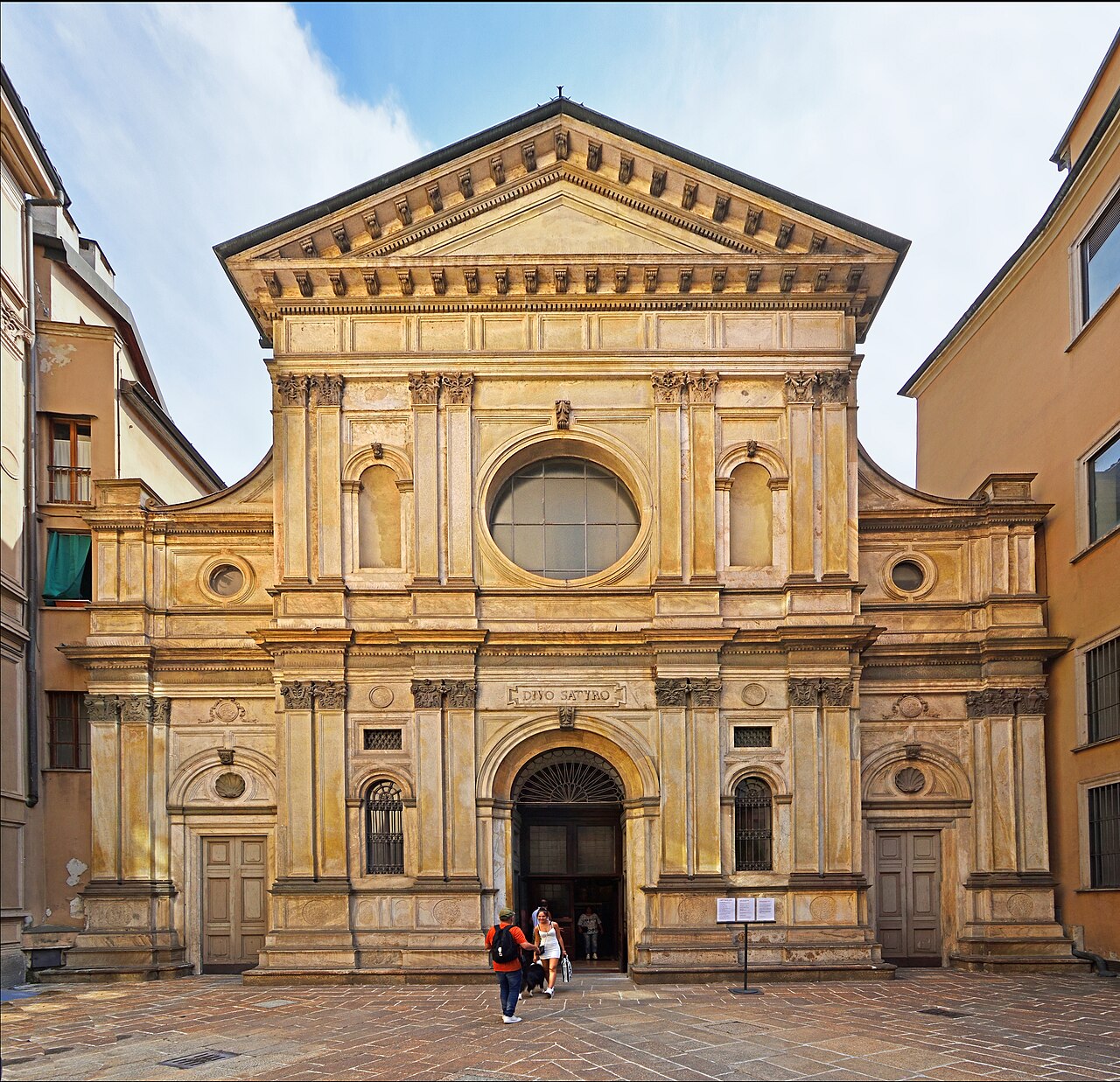
Santa Maria presso San Satiro is the easiest masterpiece in Milan to miss: its entrance on Via Torino, a busy shopping street just off Piazza del Duomo, is so discreet that thousands of people walk past every day without noticing it. Step inside and you seem to be in a small but perfectly proportioned Renaissance church, with a barrel-vaulted nave leading to a deep, coffered choir behind the altar. The choir does not exist. When Donato Bramante, then working for the Sforza court before his career in Rome, rebuilt the church in the late fifteenth century, the site was hemmed in by a street at the back and there was no room for a proper choir. His solution was a perspective illusion in stucco and paint, compressed into a space only about a metre deep, that reads from the nave as a full-sized apse. Walk up the nave and the trick holds; walk to the side of the altar and you can see how shallow the space really is. It is one of the earliest and most celebrated examples of trompe l'oeil architecture, and it shows the same interest in perspective that Leonardo, Bramante's contemporary at the Sforza court, was exploring at the same time. The church grew up around a much older shrine: the small Sacello di San Satiro, a ninth-century chapel dedicated to the brother of Saint Ambrose, survives at the left side, and an octagonal Renaissance sacristy, richly decorated with terracotta, opens off the right. The church is still a place of worship, small and peaceful, and a ten-minute visit fits between any two sights in the centre.
Visiting: the church opens daily, usually with a midday break, and services take priority, so visit outside mass times. Entry is free or by a small fee or donation, depending on the arrangement in place; guided visits run on some dates. Dress respectfully, and keep voices low, as people come here to pray.
How to see it: stand at the back of the nave first and take in the full view toward the altar, then walk slowly forward and finally step to one side to see how the illusion works. Look for the sacristy on the right and the old chapel of San Satiro on the left, the oldest part of the complex. The whole visit takes ten to twenty minutes, so it is easy to fit in while shopping on Via Torino or on the way between the Duomo and the Pinacoteca Ambrosiana.
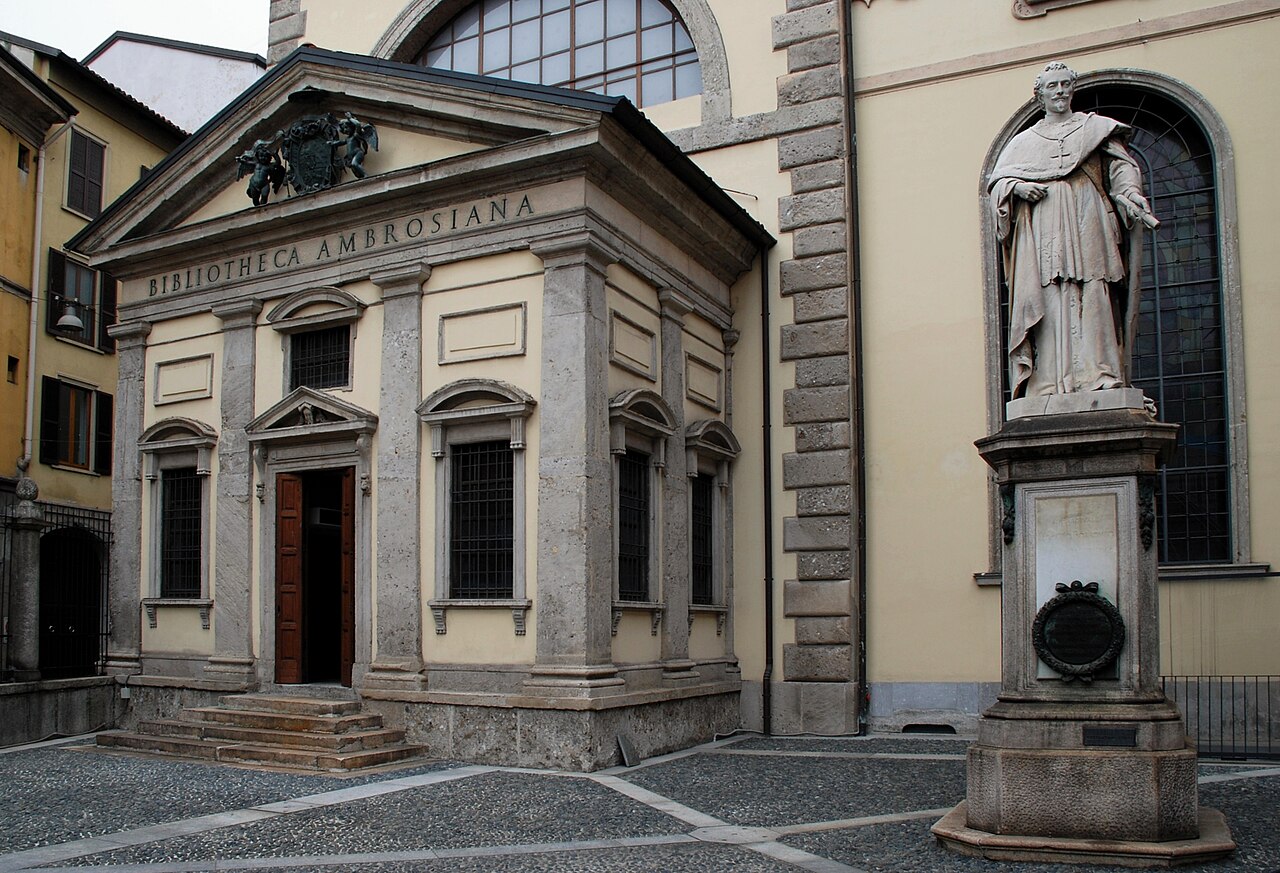
Combining it: the church is about two minutes from Piazza del Duomo and five minutes from the Pinacoteca Ambrosiana. For art lovers it makes a superb small prelude to the Duomo, and for anyone interested in Leonardo's Milan it is a reminder that he was one of several brilliant artists at the Sforza court.
What to expect
The experience
A short visit to a small Renaissance church with Bramante's famous painted false choir, a ninth-century chapel and a decorated octagonal sacristy.
Best time
Any time outside services; mornings are quietest. There is usually a midday closure.
How long
Ten to twenty minutes.
Tips
Look from the back of the nave first, then step to the side of the altar to see the trick. Visit quietly; it is an active church.
Quick picks
- Best for
- A ten-minute art-history marvel two minutes from the Duomo.
- Families
- Children love the optical illusion; make a game of finding where the real wall is.
- Couples
- A quiet, surprising stop between the Duomo and the shops.
- Pair with
- The Duomo and the Pinacoteca Ambrosiana, both within five minutes' walk.
- Time needed
- Twenty minutes.
Good questions
What is the false choir?+
A perspective illusion created by Bramante in the late fifteenth century. Because a street blocked the space behind the altar, he built a painted and stucco apse only about a metre deep that looks like a full-size choir from the nave.
Where is the church?+
On Via Torino, about two minutes' walk from Piazza del Duomo. The entrance is discreet, so look carefully.
Is it free?+
Entry is free or by a small fee or donation, depending on current arrangements. It remains an active church, so services take priority.
How long does a visit take?+
Ten to twenty minutes, which makes it easy to slot in between the Duomo and the Pinacoteca Ambrosiana.
What else is inside?+
The ninth-century Sacello di San Satiro, the oldest part of the complex, and an octagonal Renaissance sacristy decorated with terracotta.