Fort Jesus is the single building that explains Mombasa. The Portuguese began it in 1593 to guard the harbour and their trade route to India, and its geometry, a square with corner bastions modelled on Renaissance ideas of the ideal fortress, was designed to survive a siege. It did not always succeed: the fort changed hands repeatedly between the Portuguese, the Omani Arabs and the local Swahili over the next two centuries, was later used as a prison under British rule, and was finally turned into a museum. UNESCO inscribed it in 2011 as a masterpiece of military architecture and a place where African, Arab and European worlds met.
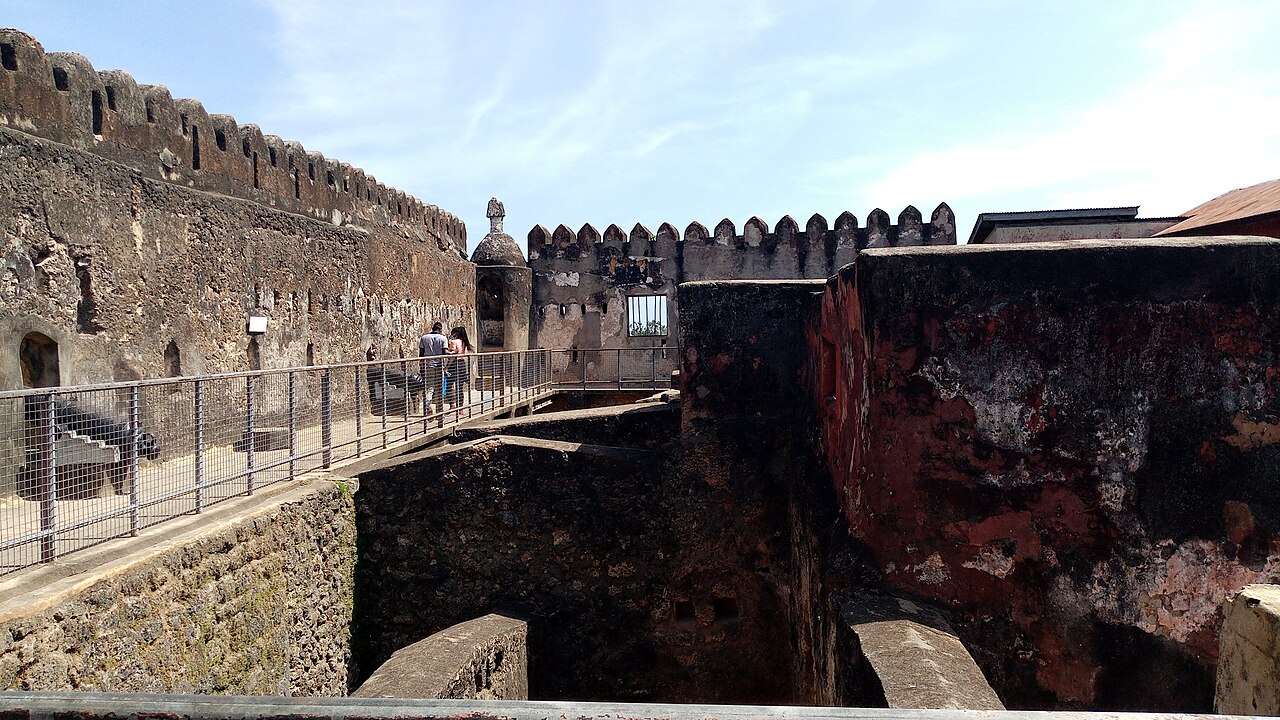
Inside the walls the layout is easy to read. You enter through the gatehouse, cross the parade ground, and walk the ramparts, where the cannon still point toward the Old Port and the dhow harbour. Climb to the bastions for the best views over the water and across the tiled roofs of Old Town; late afternoon light on the coral stone is the photograph most visitors come for.
The museum rooms hold Swahili pottery, Portuguese and Chinese ceramics recovered from wrecks and sites along the coast, carved doors, and displays that trace the Indian Ocean trade in ivory, cloves, cowries and enslaved people. Graffiti scratched by past garrisons is still visible on some walls, and a few rooms are deliberately left bare so you can see the construction.
A guided visit adds a lot here. The fort has layers (Portuguese, Omani, British) that blur together without someone to separate them, and guides can point out details such as the Omani-period house, the well, and the marks of earlier repairs. Walking tours that pair Fort Jesus with Old Town are the most popular way to see it, and a museum-focused walk is also on offer for people who want more time inside.
Plan roughly two hours for the fort alone and add Old Town on foot afterwards, since the entrance is only a few minutes from the narrow lanes around the Old Port.
Practical points
The fort is in the hottest, most humid part of the island, so go in the morning or late afternoon, wear a hat and carry water. Shade is limited on the ramparts. Dress modestly, as you will be walking into nearby mosques and Old Town streets afterwards. Entry for non-residents is charged at a higher rate than for Kenyan residents and East African citizens, and opening days and hours can change, so check with the operator when you book.
In the evening the fort hosts a sound and light show, which is covered separately on this page and makes a good second visit.
Context helps the stones make sense. Mombasa was one of the great ports of the Indian Ocean long before the Portuguese arrived, trading with Arabia, Persia, India and China, and the fort was an attempt to seize control of that trade rather than simply defend a town. Its repeated sieges, including a long one in the late 17th century, shaped the island's politics, and the ownership changes you read about on the museum labels were fought over hard.
Visitors with more time can ask guides about the Omani-era additions, the old prison cells and the restoration work that preserved the structure. If you are travelling with a camera, the best compositions are the bastions against the sky, the ramparts looking across the old harbour and the shadows in the main gateway. Leave time to sit on a bench and let the setting sink in before heading back out into the heat.
What to expect
The experience
A self-paced or guided walk through the fortress: gatehouse, parade ground, ramparts with harbour views, and museum rooms of Swahili, Portuguese and Omani objects.
Best time
Morning for cooler stone and softer crowds, or late afternoon for golden light on the ramparts and the dhow harbour.
How long
Two hours for the fort; three if you add the museum rooms carefully; a half day with Old Town.
Tips
Take a guide for the layers of history. Wear a hat and bring water, as the ramparts have little shade. Pair it with a walk through Old Town and finish with the evening show if you can.
Quick picks
- Best for
- Anyone who wants to understand why Mombasa matters, and a natural first stop on any city day.
- Families
- Older children enjoy the cannon and ramparts; very young ones will find the heat and museum rooms tiring, so keep it short.
- Couples
- Late afternoon on the ramparts, then a walk down to the old harbour as the light turns.
- Pair with
- Mombasa Old Town on foot, the evening sound and light show, and a Swahili food tour.
- Time needed
- Two to three hours.
Good questions
Why is Fort Jesus a World Heritage site?+
UNESCO inscribed it in 2011 as a leading example of 16th-century Portuguese military architecture and as a site where African, Arab and European cultures met over centuries of trade and conflict.
How long do I need?+
Two hours covers the ramparts and the main museum rooms. Add an hour if you want a guide to go deeper, and half a day if you combine it with Old Town.
Is a guide worth it?+
Yes for most visitors. The fort has Portuguese, Omani and British layers that are hard to separate alone, and guides also tie it to the Old Town streets outside.
What should I wear?+
Light, breathable clothing, a hat and comfortable shoes for uneven stone. Dress modestly, since most itineraries continue into Old Town and past mosques.
Can I see it at night?+
A sound and light show runs in the evening, usually on set nights. Check with the operator for current days and start times when you book.