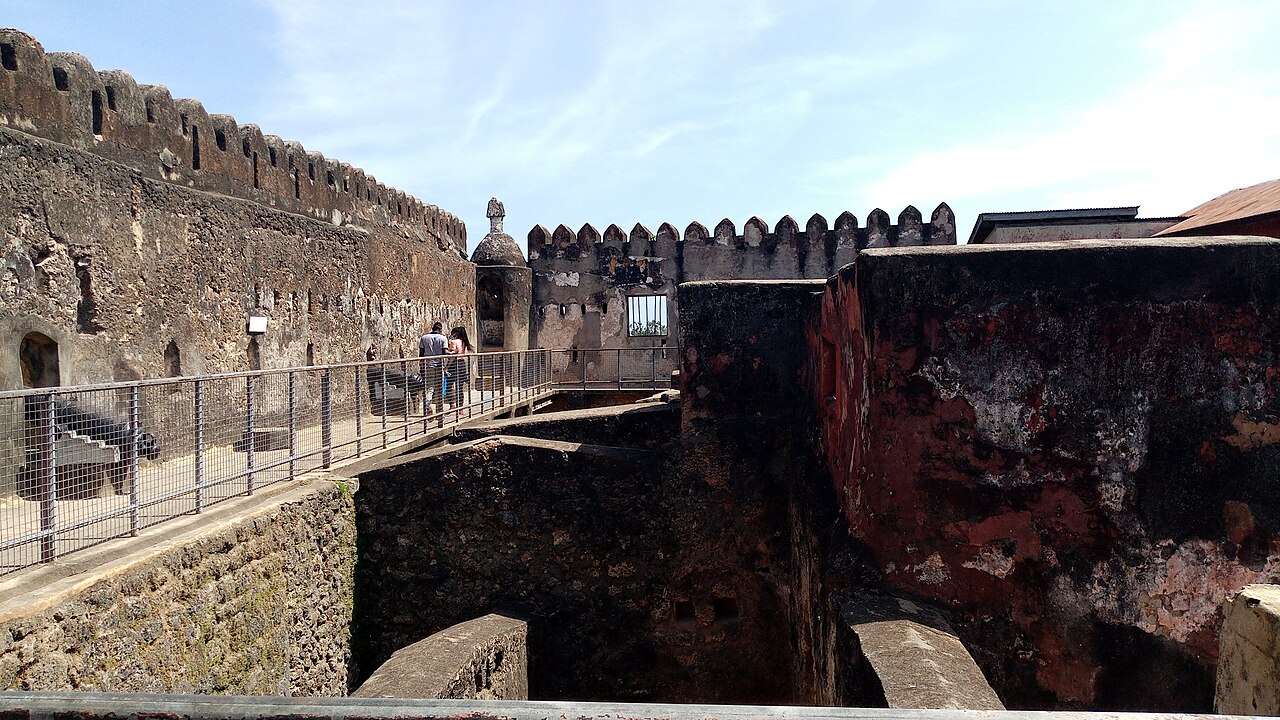
Old Town is the oldest part of Mombasa island and the reason the city has the character it does. Its lanes are narrow and shaded, lined with two- and three-storey coral-stone houses with carved wooden doors and projecting balconies, a style that blends Swahili, Arab, Indian and Portuguese influences. The quarter sits just below Fort Jesus and runs down to the Old Port, where wooden dhows still load and unload and where traders have worked for hundreds of years. Walking it with a guide turns what looks like a confusing maze into a readable story of who lived where, what they traded and how the buildings were made.
A typical route starts near Fort Jesus and drops down through the lanes. Guides point out the carved doors, which were traditionally an expression of the owner's wealth and origin; mosques of different ages, including some with distinctive minarets; a Jain temple that reflects the long-standing Indian merchant community; and small shops selling spices, textiles, kikoi cloth and curios.
You will see the Old Port from the waterfront, with dhows moored against the stone, and on many routes you will pass the fruit, spice and fish sellers who still give the district its smell and sound. Stops at a tea or coffee seller are common, and some tours add a taste of street snacks.
Old Town rewards slow walking. Ask your guide about the history of particular houses, about the Swahili language and its Arabic borrowings, and about how the old coral-stone building technique works. Photographers will find constant frames: shadows across narrow lanes, doors at the end of a corridor, men playing board games in doorways. Be polite about photographing people and ask first. Go in the morning when it is cooler and the market areas are busiest, and wear shoes that cope with uneven stone. Carry small notes for tips and purchases.
The district is compact, so a walking tour usually takes two to three hours and combines naturally with Fort Jesus. Private tours let you set the pace and the focus (architecture, food, religion or trade); shared tours are cheaper and tend to follow a fixed route. If you are arriving on a cruise or a short stay, this is the single best way to use a half day on the island.
Remember that Old Town is a living neighbourhood, so dress modestly, keep your voice down near mosques, and check with your guide about visiting rules for religious buildings.
A few more tips make the walk smoother. Carry a small bottle of water and a light scarf or hat, and keep cash in small denominations for snacks, tea and any purchases, since street vendors rarely have change for large notes. If you are interested in architecture, ask your guide to explain the Swahili house plan, with its inner courtyard, raised platforms and carved central door, and the way coral stone was cut and plastered with lime.
If you are interested in food, ask for a stop at a halwa seller or a coffee vendor. Shops often close for midday prayers on Fridays, so plan the busiest market stretch for another day if you can. Finish with a cold drink near the waterfront and take a last look at the dhows before you head back to your hotel.
What to expect
The experience
A private or small-group guided walk through shaded lanes from the Fort Jesus area to the Old Port, with stops at carved doors, mosques, a Jain temple and market streets.
Best time
Morning, when it is cooler and the markets are busiest. Late afternoon also works for softer light.
How long
Two to three hours at an easy pace.
Tips
Wear sturdy sandals or shoes, dress modestly, carry small notes and ask before photographing people. Combine it with Fort Jesus on the same morning.
Quick picks
- Best for
- Travellers who want local texture and history rather than another resort day.
- Families
- Fine for school-age children with a short route; strollers struggle on uneven stone.
- Couples
- Slow, photogenic and full of small discoveries, ideal before a dhow dinner.
- Pair with
- Fort Jesus, the Swahili food tour and the evening dhow cruise.
- Time needed
- Half a morning.
Good questions
Is Old Town safe to walk?+
Most visitors explore it in daylight with a guide, which also removes any guesswork about routes. Use normal city care with phones and bags and go with a local guide if it is your first visit.
How long does a walking tour take?+
Typically two to three hours, longer if you add Fort Jesus inside or stop for food and tea.
What will I see?+
Carved Swahili doors, old coral-stone houses, mosques, a Jain temple, the Old Port with dhows, and market streets selling spices and textiles.
Can I go inside the mosques?+
Access varies by building and time. Your guide will tell you which are open to visitors and what dress is expected.
Is it good for photography?+
Yes, especially in the morning. Ask permission before photographing people, and avoid religious buildings unless your guide says it is fine.