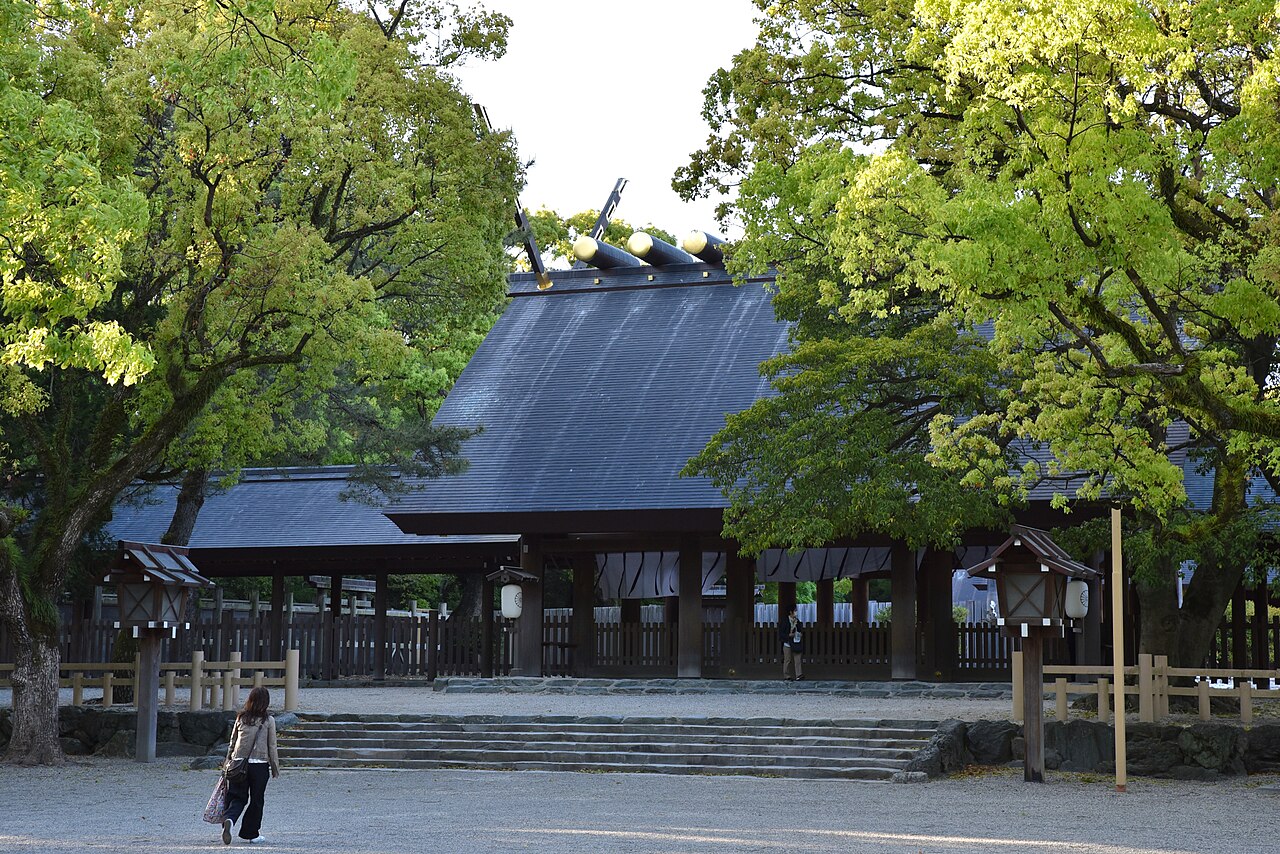
Atsuta Shrine, or Atsuta Jingu, is said to date back more than 1,900 years and is regarded as the second most revered Shinto shrine in Japan after the Grand Shrine of Ise. It keeps the Kusanagi sword, one of the three Imperial Regalia, which is never displayed to the public, so the shrine is about atmosphere and belief rather than a famous object. The grounds are a large forest of camphor trees, with gravel paths, small sub-shrines and a long wall built by Oda Nobunaga after he prayed here before his victory at Okehazama in 1560. The shrine is free to enter at any hour, and it is a place where local families come for blessings, weddings and festivals. A Treasure Hall holds thousands of swords, masks, mirrors and manuscripts, with displays that rotate.
What makes Atsuta feel different from a typical tourist shrine is how ordinary it is. People come to pray on their way to work, bring their children for blessings and hold weddings in the main hall. The camphor forest absorbs the city noise, and a short walk from any gate takes you to a quiet clearing with a small shrine, a pond or an old tree wrapped in a sacred rope.
Look for the earthen wall known as the Nobunaga-bei, a reminder of the warlord who thanked the shrine for his victory, though much of the original was lost in the Second World War. The shrine holds more than seventy ceremonies and festivals each year, and the New Year period is by far the busiest.
Practical planning
The shrine itself is free and open around the clock. The Treasure Hall keeps shorter hours, from morning to late afternoon, and closes on the last Wednesday of each month and the day after, and again from 25 to 31 December. There are three gates. The west gate is a short walk from Atsuta Jingu Nishi Station on the Meijo subway line, the south gate is near Tenmacho Station, and the east gate is minutes from Jingu-mae Station on the Meitetsu line.
Plan on an hour to ninety minutes for a calm walk, and allow longer if you add the Treasure Hall.
Pairing and timing
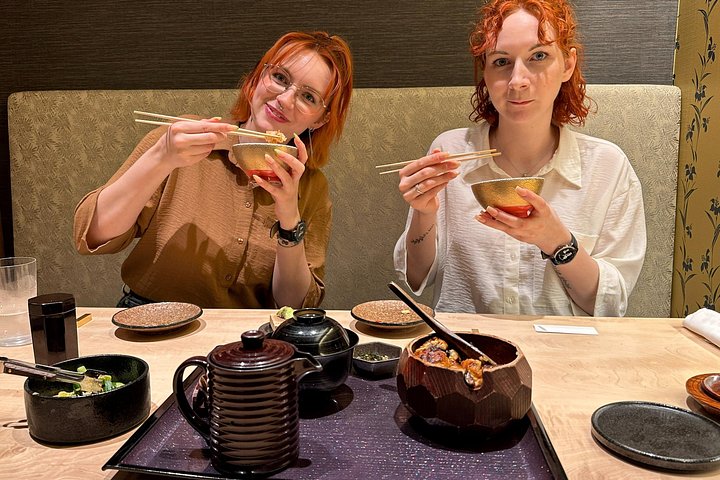
Atsuta is the natural pause between the castle and the evening. It is also known for grilled eel restaurants in the surrounding streets, so many visitors pair a walk with a hitsumabushi lunch. Early morning is the quietest and most atmospheric time, and a weekday visit lets you hear the forest. Dress modestly, bow at the gate, and follow the usual shrine etiquette of a bow, two claps and a bow at the offering hall. A guided visit adds the legends, but even without one the forest alone is worth the trip.
What to expect
The experience
A free walk through a forested shrine precinct with the main hall, small sub-shrines and an optional paid Treasure Hall.
Best time
Early morning on a weekday for the quietest forest, or a festival day if you like crowds and ceremony.
How long
An hour to ninety minutes, longer with the Treasure Hall.
Tips
Dress modestly, follow the bow-clap-bow routine at the offering hall and check the Treasure Hall closing days before you plan around it.
Quick picks
- Best for
- Travelers who want a calm, living Shinto shrine without the crowds of the big tourist temples.
- Families
- Easy gravel paths and shade make it comfortable for children, who often enjoy the forest and the carp.
- Couples
- A peaceful early walk, then a hitsumabushi lunch nearby.
- Pair with
- Nagoya Castle, a hitsumabushi meal and the Osu district.
- Time needed
- About an hour, or two with lunch.
Good questions
Is Atsuta Shrine free?+
Yes, the shrine grounds are free to enter and open all day and night. Only the Treasure Hall charges admission.
Can I see the Kusanagi sword?+
No. The sword is one of the Imperial Regalia and is never shown to the public. The Treasure Hall displays other swords, masks and relics instead.
When is the Treasure Hall closed?+
It closes on the last Wednesday of each month and the following day, and from 25 to 31 December. Daily hours run from morning to late afternoon, with last entry before closing.
How do I get there?+
The west gate is a short walk from Atsuta Jingu Nishi Station on the Meijo line, and the east gate is a few minutes from Jingu-mae Station on the Meitetsu line. The south gate is near Tenmacho Station.
What should I eat nearby?+
The area is known for grilled eel, especially hitsumabushi, served over rice and eaten three ways. Expect a queue at the best-known restaurants at lunchtime.