Osu is Nagoya's all-in-one entertainment and shopping district, a grid of covered arcades and lanes that runs from the Osu Kannon temple out in every direction. The district has more than 1,200 shops and restaurants, which range from secondhand clothing stores and shops selling imported goods to electronics outlets, anime and game stores and a long run of street food stalls. The temple, Osu Kannon, anchors the district and gives it its name, and the mix of temple, market and pop culture is what makes Osu feel like a real neighborhood instead of a mall. It is free to wander, and a lunch of street snacks, a browse through the vintage racks and a stroll past the temple takes a happy few hours.
Osu has been a gathering place for centuries. The temple Osu Kannon was moved here by Tokugawa Ieyasu in 1612, and the area grew up as its gate town, then became Nagoya's largest entertainment district in the early twentieth century. After a postwar decline, electronics and computer stores moved in during the late 1970s and gave Osu a reputation as one of Japan's three great electric towns, and that tech and anime culture is still visible today alongside the vintage clothing shops.
The result is a neighborhood where a shrine bell, a retro arcade game and a plate of fried snacks can all be found within a few steps.
Practical planning
Shops keep their own hours and closing days, so there is no single schedule, but most are open from late morning into the evening. The district is reached on the subway at Kamimaezu Station on the Tsurumai and Meijo lines or at Osu Kannon Station on the Tsurumai line. An antique market is held at the temple on the 18th and 28th of each month, and the district hosts seasonal events including a summer festival in August, a parade in October and a setsubun procession in February.
Allow two to four hours, and bring cash for the smaller stalls even though many shops take cards.
Pairing and timing
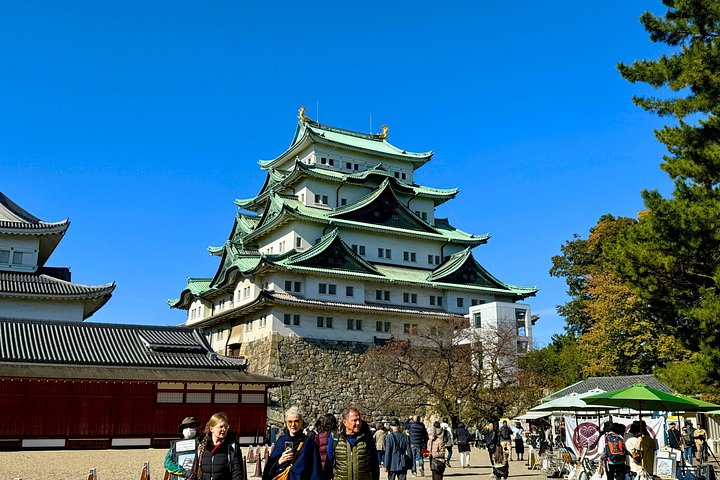
Osu is the easy place to land after Nagoya Castle or a morning of museums, and it is full of casual places to eat. A street food walking tour is a good way to learn what to order, and it is a sensible option on your first day. Weekday afternoons are relaxed, weekends are busy, and evenings are lively, with shop signs and snack stalls glowing under the arcades. Wear comfortable shoes and treat the district as a place to wander rather than a checklist, and you will find something unplanned.
What to expect
The experience
A free self-guided wander through covered arcades and lanes packed with shops, snack stalls, vintage stores and the Osu Kannon temple.
Best time
A weekday afternoon for space, or an evening for the lights and snack stalls.
How long
Two to four hours with a snack stop and some browsing.
Tips
Bring cash for small stalls, check the antique market dates on the 18th and 28th, and avoid weekend crowds if you dislike crushes.
Quick picks
- Best for
- Casual wandering, street snacks, vintage hunting and a lively cross-section of Nagoya life.
- Families
- Plenty of snacks, game stores and open arcades make it easy with children, though weekends are crowded.
- Couples
- An evening stroll under the arcades and a street food crawl.
- Pair with
- Nagoya Castle in the morning, then a Nagoya food tour or a miso katsu dinner.
- Time needed
- Half a day, or a long afternoon.
Good questions
Is Osu free to visit?+
Yes, the arcades and streets are free to wander. You pay only for what you buy or eat.
What is Osu known for?+
It is known for its sheer variety: secondhand clothing, electronics, anime goods, imported items and street food, all around the Osu Kannon temple.
How do I get to Osu?+
Take the subway to Kamimaezu Station on the Tsurumai or Meijo line, or to Osu Kannon Station on the Tsurumai line. Both are within a few minutes of the arcades.
When is the best time to go?+
Weekday afternoons are relaxed, and evenings are atmospheric. Weekends and festival days are lively but crowded.
Is there a market?+
An antique market is held on the 18th and 28th of each month. Seasonal events include a summer festival in August, a parade in October and a procession in February.