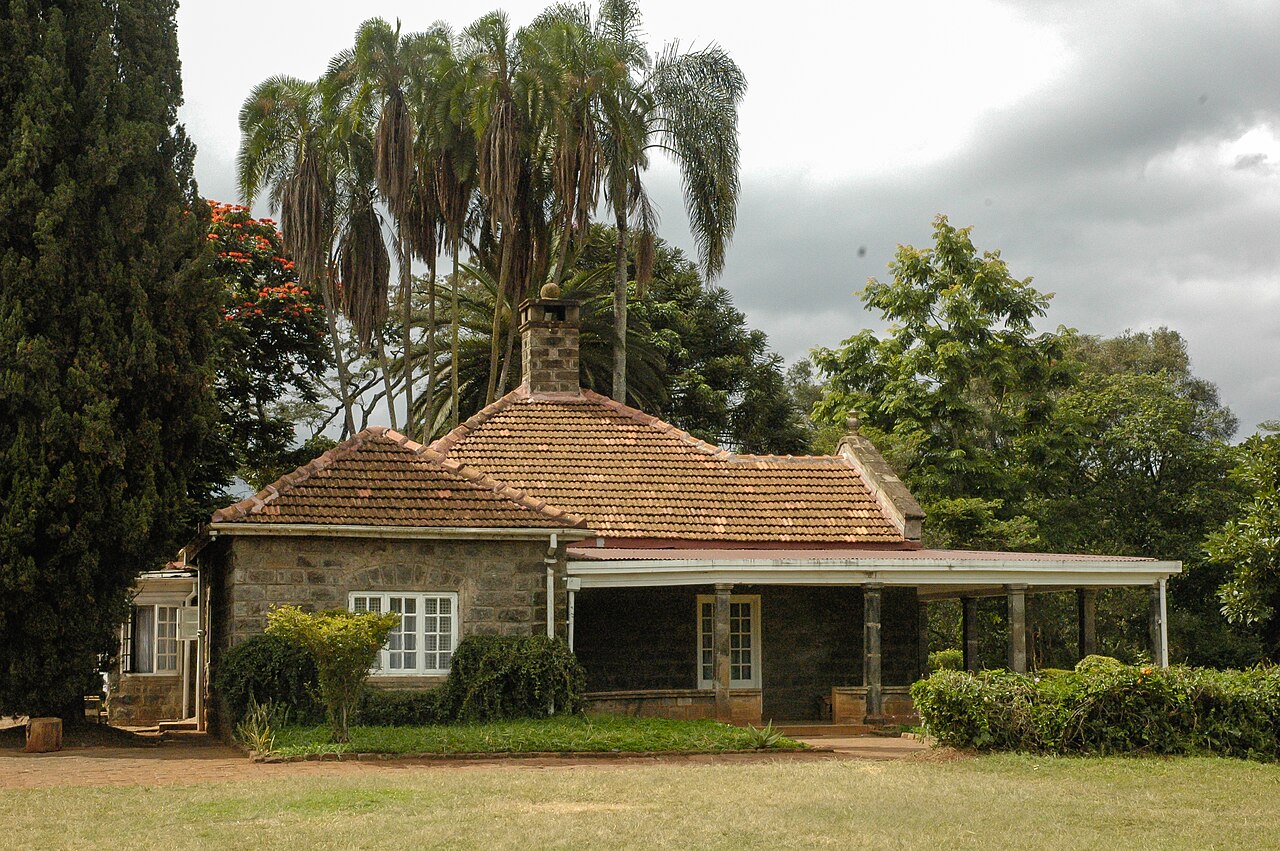
The Karen Blixen Museum is the house that gave a Nairobi suburb its name. Built in 1912 by the Swedish engineer Ake Sjogren, it was bought in 1917 by the Danish writer Karen Blixen and her husband, Baron Bror Blixen-Finecke, as the farmhouse for their coffee farm below the Ngong Hills. After the Baron left in 1921 Karen ran the farm alone until she returned to Denmark in 1931, and her memoir of those years, published under the name Isak Dinesen, became Out of Africa. In 1964 the Danish government bought the house and gave it to Kenya as an independence gift, and when the Oscar-winning film of the book drew new interest, the National Museums of Kenya turned it into a museum, opened in 1986. Today you walk through rooms with period furniture and some of Blixen’s own belongings, guided by multilingual staff, then wander the lawns with views to the hills. The tour we link pairs the museum with the Giraffe Centre.
How it works: guided tours run continuously through the day, lasting about half an hour, and you are free to explore the gardens afterwards. The museum is about ten kilometres from the city centre in Karen. Like other National Museums of Kenya sites, it takes payment through the cashless eCitizen system at the ticket desk, and the fee is modest. The Viator tour we link, Karen Blixen Museum and Giraffe Centre Half day tour, is rated 4.8 from 31 reviews and covers transport and both visits in about four hours.
What to see: the house is modest by today’s standards, which is part of its charm. Look for the veranda where Blixen entertained Denys Finch Hatton, the old farm machinery in the grounds and the view towards the Ngong Hills that opens her book. Fans of the film should know that much of it was shot elsewhere, though the house helped bring the story back to life.
Making the most of it: come in the morning for quieter rooms and clear views of the hills. Read the first pages of Out of Africa before you go. The museum sits between the Giraffe Centre and the restaurants of Karen, so it fits neatly into a half day with lunch nearby.
What to expect
The experience
A short guided tour of the farmhouse rooms, followed by free time in the gardens with views of the Ngong Hills.
Best time
Morning, when the house is quieter and the hills are usually clearest.
How long
About an hour at the museum, or four hours on the linked half-day tour with the Giraffe Centre.
Tips
Pay by card or mobile money through eCitizen at the desk, and ask your guide about the farm machinery in the grounds.
Quick picks
- Best for
- Readers, film fans and anyone curious about colonial-era Kenya.
- Families
- Best for older children; younger ones will prefer the giraffes, so pair the two.
- Couples
- A romantic, gently paced visit with lunch in leafy Karen afterwards.
- Pair with
- The Giraffe Centre and the Sheldrick elephant nursery, all in the Karen and Lang’ata area.
- Time needed
- About an hour on site.
Good questions
Is the Karen Blixen Museum the real Out of Africa house?+
Yes, it is the farmhouse where Karen Blixen lived from 1917 until 1931. The film of her memoir drew new attention to the house, which opened as a museum in 1986.
How long do you need at the Karen Blixen Museum?+
About an hour is enough for the guided tour and a walk in the gardens. The linked half-day tour combines it with the Giraffe Centre in about four hours.
Can I pay cash at the Karen Blixen Museum?+
National Museums of Kenya sites use the cashless eCitizen system at the ticket desk. Bring a card or mobile money.
Is the Karen Blixen Museum open every day?+
It is generally open daily, with occasional one-off closures announced by the National Museums of Kenya. Check the museum’s notices or ask your tour operator before you go.
How far is the Karen Blixen Museum from Nairobi?+
It is about ten kilometres from the city centre in the suburb of Karen. Tours, taxis and ride-hail apps reach it easily.