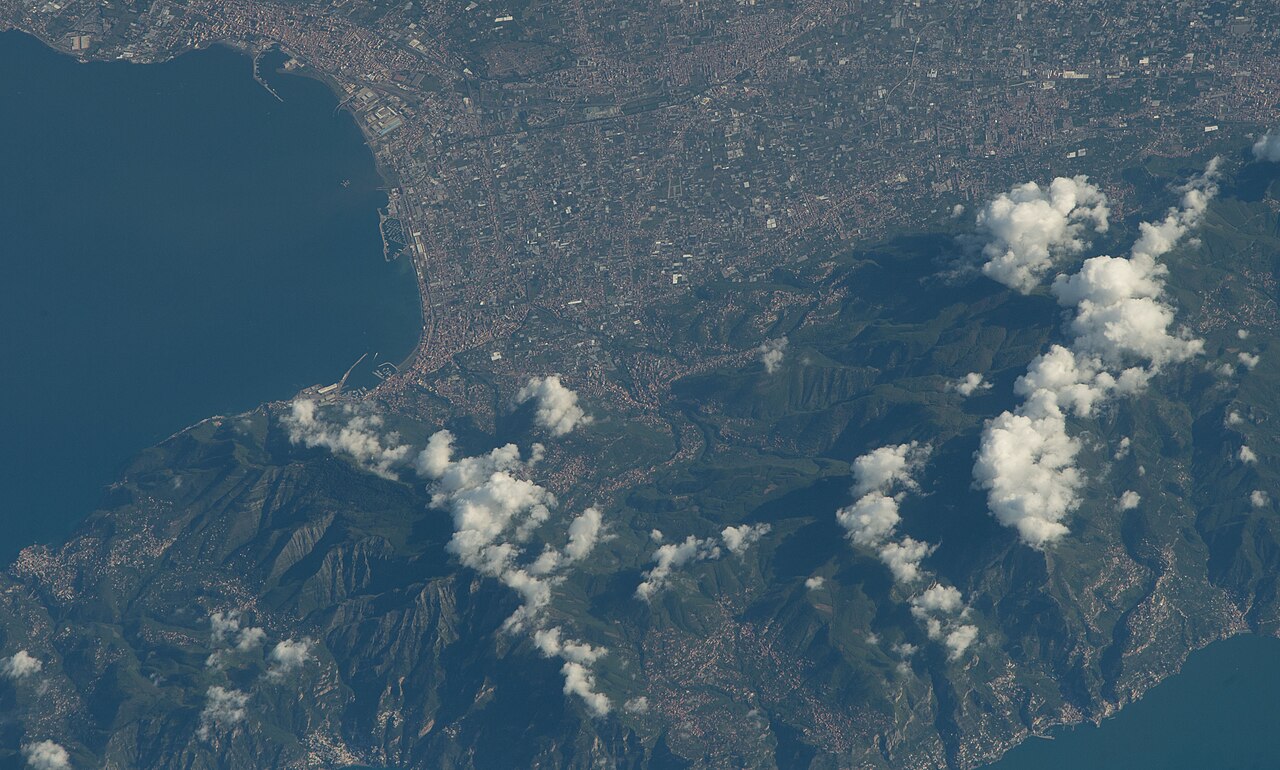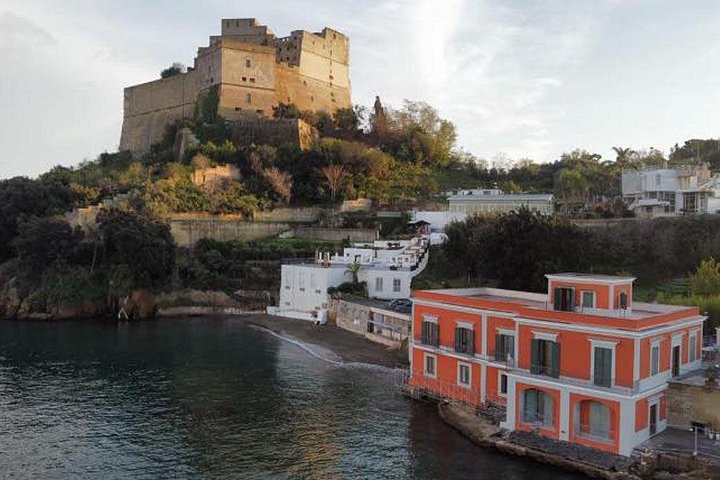
West of Naples, beyond the hill of Posillipo, lies a landscape that is older and stranger than Vesuvius. The Campi Flegrei, the Phlegraean or Burning Fields, are a vast caldera of craters, lakes, hot springs and steaming vents that the Greeks and Romans regarded as an entrance to the underworld. The area also holds some of the most evocative antiquities in Campania: the Flavian Amphitheatre of Pozzuoli, one of the largest in Italy; the Temple of Serapis, actually a Roman market, whose columns bear marks of the land rising and falling; the ruins of Baiae, the luxury resort of the Roman elite; and Cumae, the first Greek colony on the Italian mainland, where the Sibyl is said to have lived. The landscape still rumbles. The ground at Pozzuoli rises and falls in a slow process known as bradyseism, and the area is closely monitored by volcanologists. This private tour by car is listed on as covering the treasures of the Campi Flegrei and Naples, with a duration of four to five hours and a perfect 5.0 rating from 68 reviews. Going by car solves the main problem of the area, which is that its sights are spread out and public transport is slow. A driver-guide can link a morning's choice of sites in a way that would take a day by train and bus. The operator sets the exact stops, so check the itinerary on the booking page for the ones you most want to see. One important caveat is the Solfatara. This famous crater, where visitors once walked among fumaroles and boiling mud, is currently closed to visitors because of unstable volcanic activity, according to the listings that cover it. Do not expect to enter it on any tour, and treat any promise to the contrary with scepticism. Access to other sites can also change with weather, works or monitoring, so ask the operator which sites are confirmed for your date.
What is worth seeing
For a short visit, the amphitheatre at Pozzuoli gives a feel for Roman spectacle, with underground chambers still visible beneath the arena, while the Rione Terra, the old acropolis, has its own excavated Roman streets. At Cumae you can walk through a long trapezoidal tunnel associated with the Sibyl, with the sea shimmering at its end.
At Baiae, the museum and archaeological park interpret the villas where Julius Caesar, Nero and Cicero are said to have spent leisure time, and the submerged remains of the resort lie offshore. Which ones feature on your tour depends on the operator's route and on the opening hours of each site, so confirm the stops before you commit.
Practicalities
Many of the sites are state-run and have a weekly closing day or reduced winter hours, which a good driver-guide will plan around. Wear sturdy shoes, bring a hat and water, and take a light jacket because the air by the sea or on a hill can be cooler than in Naples.
A private tour is more flexible than a group trip, so tell the guide what interests you, whether Roman architecture, Greek mythology or volcanology, and ask for time at one or two places rather than a rush through many. If you also plan to snorkel the submerged ruins at Baia, build that in on a separate morning.
Who it suits
Travellers who have done Pompeii and Herculaneum and want to see what else the region holds, history lovers who enjoy mythology, and families with older children who can handle a full morning. The Campi Flegrei are far less visited than the sites around Vesuvius, which is much of their charm: you can often have a Roman amphitheatre almost to yourself. Pair the tour with the Archaeological Museum in Naples, where some finds from the Phlegraean area are displayed, and with the Gaiola Underwater Park on the Posillipo coast, which sits at the edge of the same volcanic landscape.
What to expect
The experience
A private tour by car of about four to five hours through the volcanic Campi Flegrei, visiting Roman and Greek sites chosen by the operator.
Best time
Morning, when the sites are open and the light is clear; spring and autumn are most comfortable.
How long
Four to five hours.
Tips
Confirm the stops and opening days when you book. Do not expect to enter the Solfatara, which is closed. Wear sturdy shoes and bring water and a hat.
Quick picks
- Best for
- Repeat visitors and history lovers who want Greek and Roman sites away from the crowds.
- Families
- Good for older children who like myths and volcanoes; the ground-level sights suit short attention spans.
- Couples
- A private, flexible half-day with sea views and almost no crowds.
- Pair with
- Gaiola Underwater Park, the Archaeological Museum and a seafood lunch at Pozzuoli.
- Time needed
- A half-day.
Good questions
Can I visit the Solfatara crater?+
Listings say it is closed to visitors because of unstable volcanic activity. Ask the operator which sites are open on your date.
How long is the tour?+
The booking page shows four to five hours.
Is it a private tour?+
Yes, the booking page describes a private tour by car.
What sites might I see?+
Typical highlights of the area include the Pozzuoli amphitheatre, the Rione Terra, Baiae and Cumae. The operator sets the exact stops.
Is the Campi Flegrei dangerous?+
The area is a monitored volcanic zone with slow ground movement, but visits to the open sites are routine. Follow local guidance and site closures.