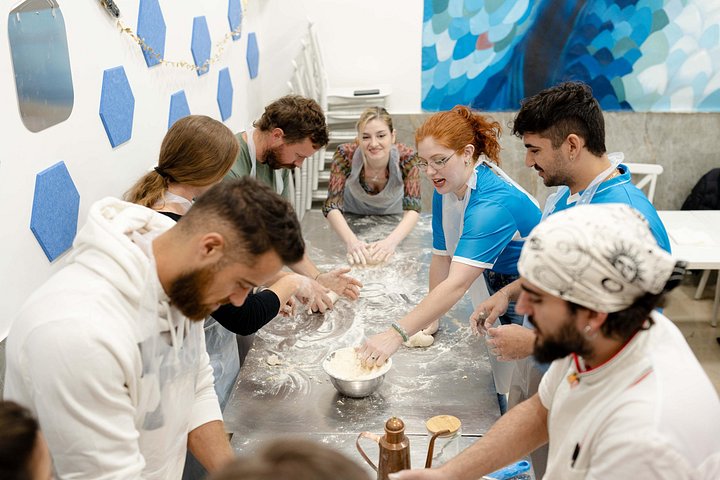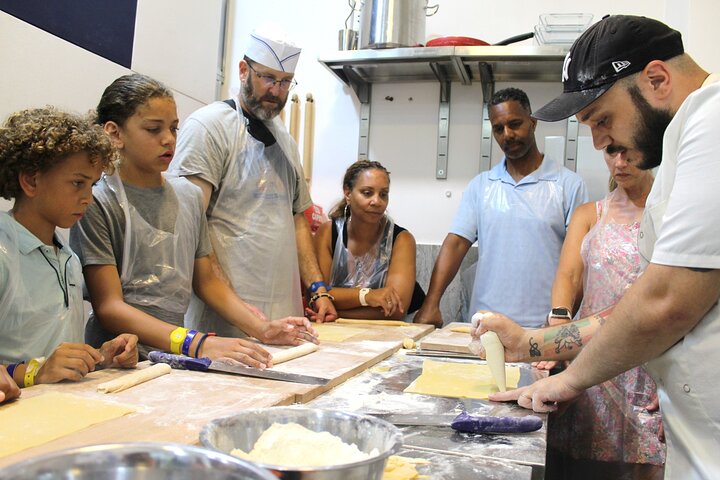
Pizza may be Naples' most famous export, but a Neapolitan table also runs on pasta. This is the region that gave the world the dried-pasta industry of nearby Gragnano, the spaghetti with clams and tomato, the sunday ragù simmered for hours, and the pasta alla genovese that is, confusingly, a Neapolitan classic. The pasta-making class on this page is a three-hour, hands-on session built around fresh pasta and tiramisù. It carries a rating of 4.9 from 578 reviews, which puts it among the best-reviewed cooking experiences in the city. The format is simple and sociable. You gather around a work table with a chef or cook, learn how a basic dough is built from flour and eggs, roll and cut your own pasta and then cook and eat it, followed by the tiramisù that you prepare as part of the same class. The listing describes the activity as a pasta-making class with tiramisu cooking, lasting about three hours. Details of the menu, the sauce and the drinks are set by the operator and shown in the booking details, so check them when you reserve if you have a favourite shape in mind or particular dietary needs. Why take one in Naples? Because the city has its own rhythm with pasta. Locals often eat a first course of pasta at midday as the main meal of the day, and the sauce is usually built from simple ingredients, such as San Marzano tomatoes, garlic, basil and good olive oil, rather than heavy cream. Cooking with a local cook, you hear how pasta is matched to a sauce: thick shapes with robust sauces, thin ones with seafood, and short tubes for baked dishes. If you only cook one thing on holiday, make it a dish you can reproduce at home, and fresh pasta with tomato is just that.
Choosing between the pasta and pizza classes: the pizza experience is the one most people book first, and it has more theatre, with a tossing demonstration. The pasta class is quieter and more about technique, which suits visitors who cook at home and want something transferable. If you are staying longer than a few days, doing one class at the start and one near the end of your trip is a good rhythm, as it gives you new skills to practise on your own pasta dinners afterwards.
Some visitors choose the pasta class for the evening and the pizza class for lunch on another day.
Practical points
The meeting point and exact start time are given in the booking details, so confirm them the day before. The operator lists a drink and tasting component as part of the class, but check what is included at booking, as the listings differ between formats. Wear clothes you do not mind getting floury, tie back long hair and keep your phone out of the dough. Vegetarians are usually well catered for with a tomato-based pasta, but vegans and gluten-free guests should ask in advance, as the base dough uses eggs and wheat flour.
Who it suits
Couples looking for a shared activity, families with children old enough to handle a rolling pin, solo travellers who want a convivial evening and anyone who values a souvenir of skills rather than objects. It makes a good rainy-day plan and a calm counterweight to a morning of ruins or crowded museums.
It works well with a trip to Sorrento or the Amalfi Coast, where the lemon and seafood flavours of the coast are different, giving you a deeper understanding of the way regional cooking changes over a short distance. Free cancellation terms are shown on the booking page, so check them if you are booking before your flights are fixed.
What to expect
The experience
A three-hour hands-on class in which you make fresh pasta and tiramisù with a cook, then eat what you have made.
Best time
Lunchtime or early evening; a good rainy-day plan.
How long
About three hours.
Tips
Confirm the meeting point and start time the day before. Check the menu and drinks at booking. Raise dietary needs early. Wear clothes that can get floury.
Quick picks
- Best for
- Home cooks and food lovers who want a skill they can repeat at home.
- Families
- Suitable for children who can handle dough, though the pace is calmer than the pizza class.
- Couples
- A cosy, shared activity that ends in a meal.
- Pair with
- The pizza class, a street food tour or a visit to the historic centre.
- Time needed
- Three hours plus travel.
Good questions
How long is the pasta class?+
About three hours.
What will I make?+
Fresh pasta and tiramisù, which you then eat. The operator lists the exact menu and drinks in the booking details.
Is it suitable for vegetarians?+
Usually yes with a tomato-based sauce, but ask the operator in advance. Vegan and gluten-free guests should check before booking.
How does it differ from the pizza class?+
The pizza class focuses on dough, toppings and a tossing demonstration; the pasta class is quieter and more technical.
Is it good for rainy days?+
Yes. It is an indoor, hands-on activity that makes a good alternative when the weather is poor.