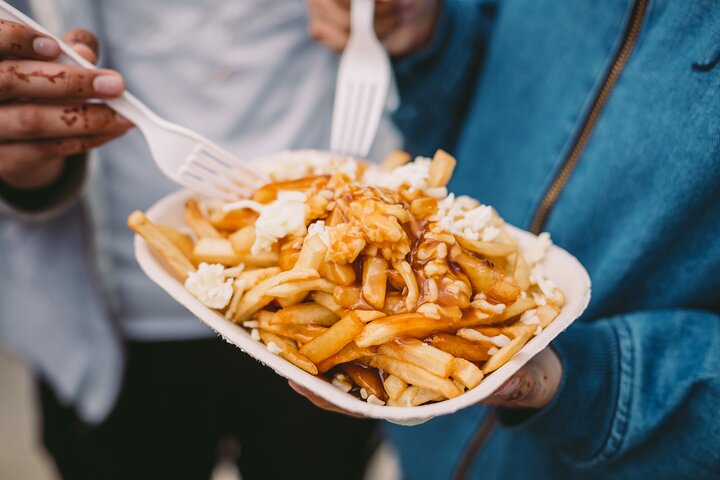
Ottawa's food scene is better than its reputation as a government town suggests. The capital draws on French Canadian, British, Irish, Lebanese, Italian, Asian and Indigenous traditions, and it sits close to farms, dairies and maple forests, so there is plenty of good local produce. The scene is easy to explore, because the best-known areas are compact and walkable. This guide covers what to eat, where to go and how to organise your meals around your sightseeing.
The ByWard Market
The market is the obvious starting point. Its heritage streets are lined with restaurants, bakeries, cheese shops, cafes and pubs, and its covered market buildings and outdoor stalls sell fresh produce, flowers, maple products and street food, with the busiest trading in the warmer months. It is also the home of the BeaverTail, a flat, fried pastry served with toppings such as cinnamon sugar, which started life in the Ottawa area and has become an iconic Canadian snack. Come hungry, wander the side streets rather than only the main lanes, and look for places where locals are queuing. If you prefer to be guided, a market food tour is an efficient way to taste several things in a couple of hours and learn how the district developed.
Canadian classics
Poutine, the dish of fries, cheese curds and gravy, is available everywhere from late-night snack bars to polished restaurants, and Ottawa's position on the border with Quebec means that the curds are often fresh and squeaky. Maple is the other staple, from syrup and taffy to maple-glazed dishes and cocktails. Look for local game, river fish, Ontario cheeses and Ottawa Valley beef on seasonal menus. Smoked meat, Montreal-style bagels and tourtiere, the traditional French Canadian meat pie, make good winter comfort food, and many places offer vegetarian versions of Canadian favourites. A Canadian food tour is a good way to sample several of these in one outing.
Neighbourhoods beyond the centre
For a break from the tourist core, try Elgin Street for casual dining after a day of museums, Preston Street, the traditional Little Italy, for pasta, pizza and espresso, and Wellington West and Hintonburg for independent cafes, bakeries and small restaurants. Across the river in Gatineau, French-influenced bistros and bakeries offer a different feel, and many visitors combine a meal there with the Museum of History. Lebanese food is a particular strength in Ottawa, with a long-established community and many family-run restaurants, so shawarma, falafel and sweet pastries are worth seeking out.
Drinks
The craft beer scene is lively, with breweries and taprooms in the city and the valley, and many pubs in the ByWard Market pour local beers alongside international favourites. Cocktail bars use maple, local spirits and seasonal ingredients. Coffee culture is strong, with independent roasters in most neighbourhoods. In winter, hot chocolate and warming spirits are part of the experience, especially after time on the Rideau Canal Skateway. Drinking laws, last orders and opening hours differ from some other countries, so check venue hours and carry identification.
Planning your meals
A simple pattern works well. Have a hearty breakfast, lunch in the market or near the museum you are visiting, and a long dinner in the evening when many restaurants have their best menus. Reservations are wise at popular restaurants on Friday and Saturday nights and during festivals, Winterlude and the Tulip Festival. Prices are in Canadian dollars, a tip of fifteen to twenty percent is customary, and cards are widely accepted. Many restaurants offer set menus or special offers at lunch, which can be good value. If you are travelling with children, most places welcome families early in the evening.
Where to stay for food
If dining is a priority, the ByWard Market puts you at the centre of the action, and the Andaz is a stylish base there. The Chateau Laurier is a short walk from the market and has its own dining rooms. Our where-to-stay guide compares neighbourhoods in more detail. It also helps to leave room for a snack between meals, because the best finds are often a bakery, a cheese counter or a market stall you spot on the way to somewhere else. If you have dietary needs, most restaurants handle vegetarian, vegan, gluten-free and allergy requests well, and staff are usually happy to explain a menu if you ask.