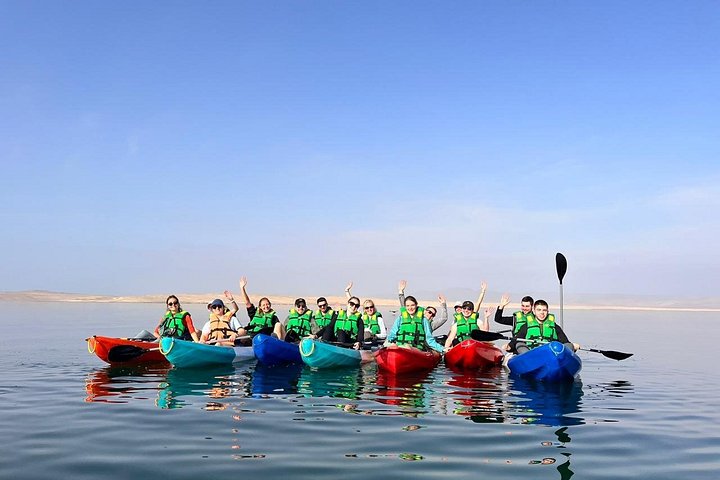
The shallow bays around Paracas shelter flocks of flamingos for part of the year, and a guided kayak outing is one of the quietest ways to see them. You paddle along protected water with a guide who knows where the birds feed and how to approach them without causing a disturbance. Kayaks are stable and easy to handle, and no experience is required, because the water is usually calm and shallow. It is a gentle, rewarding trip for nature lovers who prefer a slow pace and a good chance at photographs.
Wildlife viewing on the water is different from a boat or a van tour. You glide silently, so birds are less alarmed, and you notice details such as the pink of the feathers, the sweep of the beak through the water, and the calls that carry across the bay. Besides flamingos, you may see herons, pelicans, cormorants and shorebirds, and the guide explains their feeding habits and the importance of the bay as a stopover for migrants.
Come prepared for sun and wind. Wear a hat, sunglasses and sunscreen, quick-drying clothes and shoes that can get wet, and bring a dry bag for your phone or camera. Life jackets are provided and should be worn. Morning is usually calmest, and afternoon wind can make paddling harder.
Sightings depend on season, tides and the movement of the birds, so no guarantee can be made, but guides know the best spots. Keep a respectful distance from the flocks, follow the guide's instructions, and avoid sudden movements. It is an easy, low-impact way to enjoy the natural side of Paracas.
Understanding the birds helps you appreciate what you see. The flamingos that visit the Peruvian coast feed on tiny crustaceans and algae, which they filter from the water with their curved beaks, and the pink colour comes from pigments in their food. Groups wade slowly, sweeping their heads side to side, and sometimes take off in a sudden burst when disturbed. Staying calm and keeping distance keeps them feeding, which is why guides emphasise quiet paddling and slow movement.
Beyond birds, the shallows hold other interest. Small fish dart beneath the kayak, crabs scurry across the sand at low tide, and herons stalk the edges. The sky is often huge and the landscape flat, which makes for peaceful photography. Wind is the main enemy, so go early. Bring a waterproof case for your phone, a hat that can be tied on and a water bottle. If you have limited mobility, ask the operator about the launch point and the effort required. This outing works well as a gentle counterpoint to more energetic tours.
Kayak etiquette protects the birds and improves your own experience. Paddle slowly, avoid splashing, speak softly and keep a good distance from the flocks. If birds start to walk away or lift their heads, stop paddling and let them settle. Binoculars are welcome if you have a waterproof pair, and a long lens helps with photography.
Guides often supply dry bags, but confirm in advance. Aim to finish before the midday sun becomes strong, because glare on the water is tiring, and apply sunscreen to the backs of your hands and the tops of your feet. Sit centred in the kayak, keep your weight low and ask for help if you need it getting in or out.
What to expect
The experience
A guided kayak paddle through sheltered shallows to watch flamingos and other waterbirds.
Best time
Morning, when the water is calm and the birds are active.
How long
2 to 3 hours.
Tips
Hat, sunscreen, quick-dry clothes, water shoes and a dry bag. Life jackets provided.
Quick picks
- Best for
- Birdwatchers and nature lovers.
- Families
- Families with older children who can paddle.
- Couples
- Couples for a quiet shared activity.
- Pair with
- Ballestas boat tour, reserve tour or catamaran sail.
- Time needed
- Two to three hours.
Good questions
Do I need kayaking experience?+
No. The water is sheltered and guides give a brief lesson.
Is flamingo sighting guaranteed?+
No. Birds are wild and move with the seasons and tides, though guides know where to look.
What should I wear?+
Quick-drying clothes, a hat, sunscreen and shoes that can get wet.
Is it safe for children?+
Older children who can follow instructions are usually welcome with life jackets. Ask the operator about age limits.
When is the best time?+
Mornings, when the water is calm and the light is gentle.