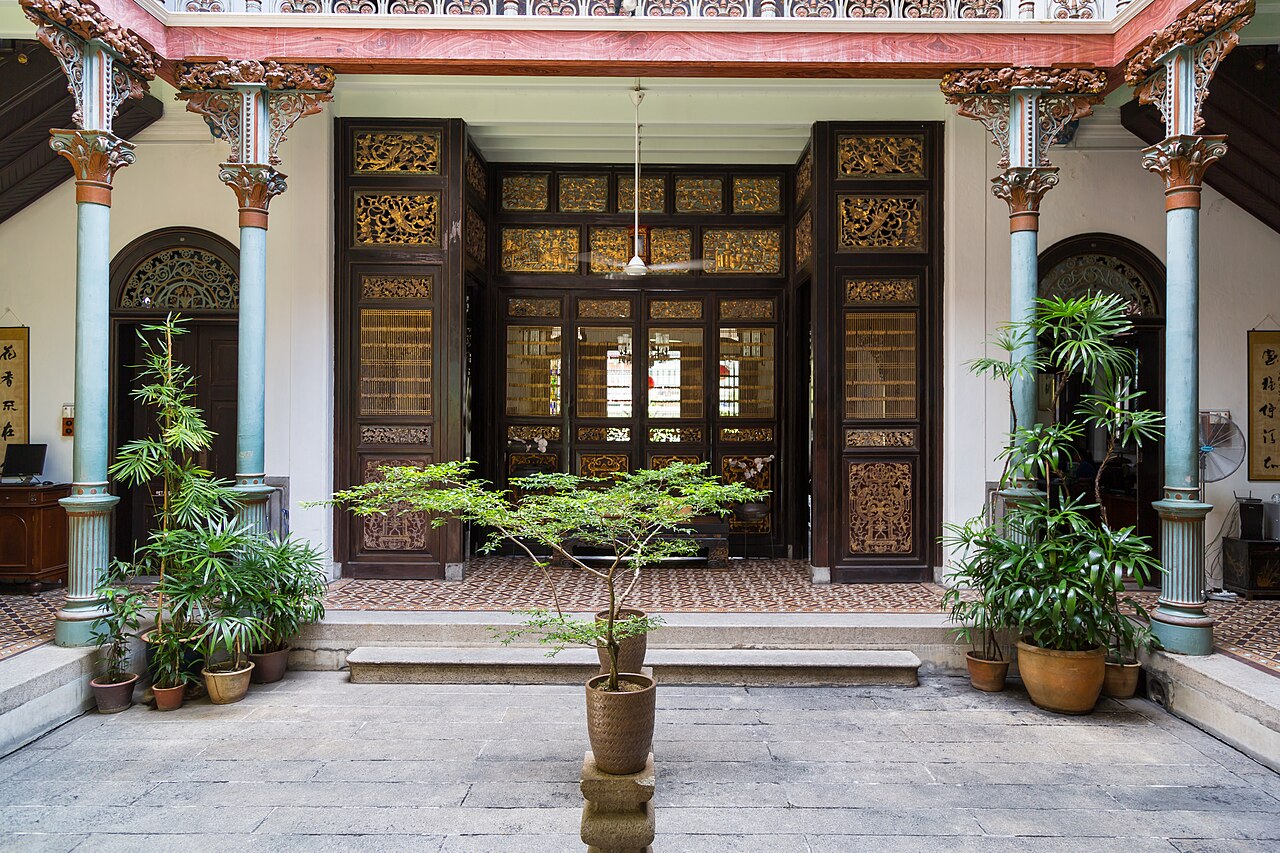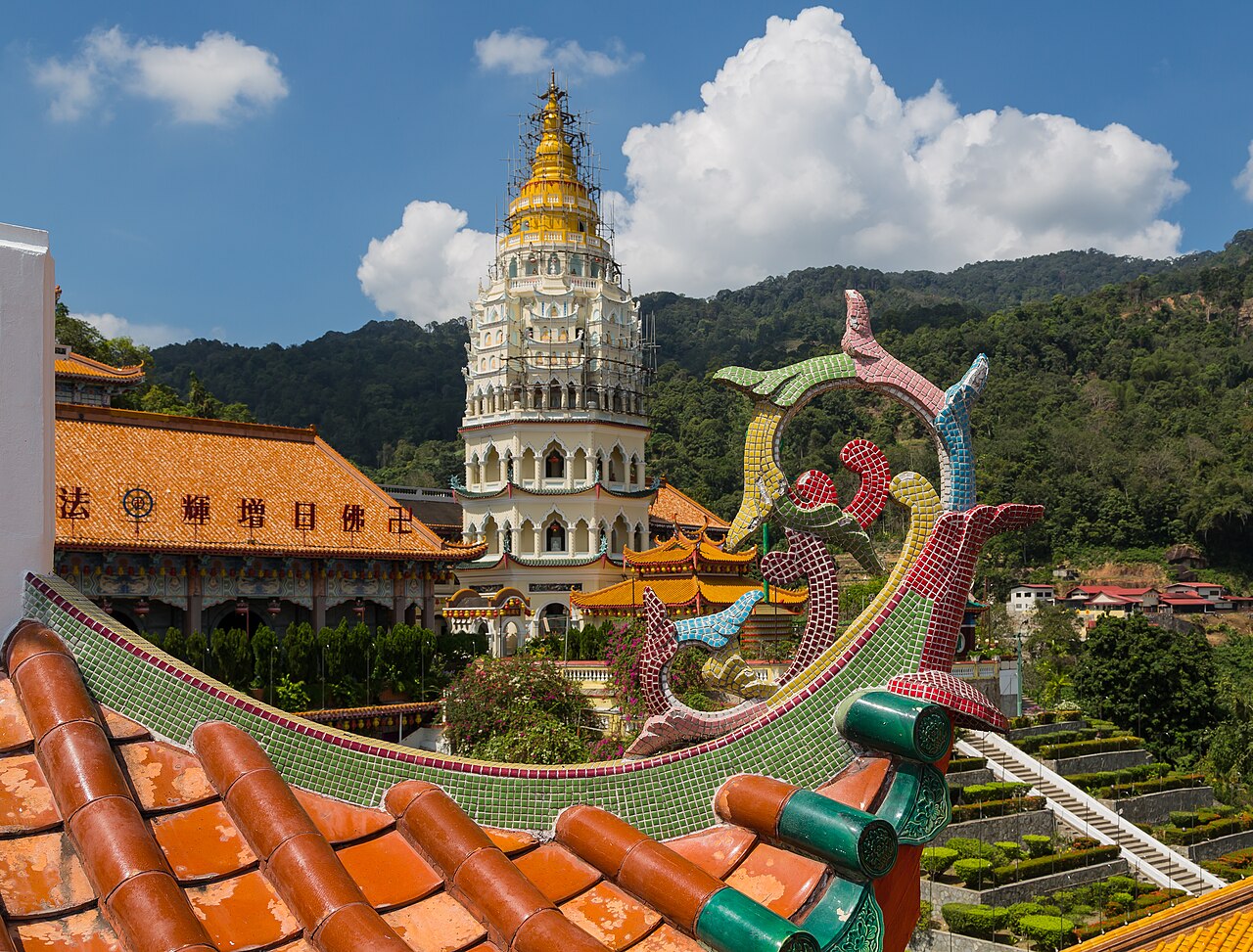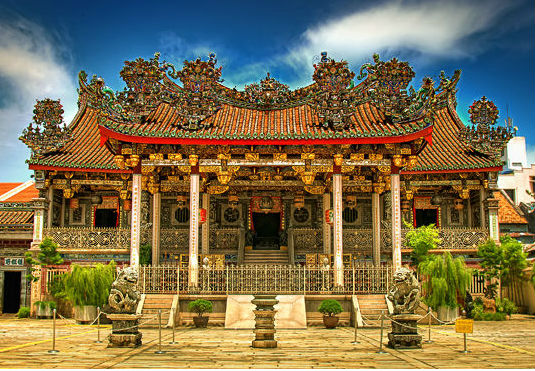
Khoo Kongsi, formally the Leong San Tong Khoo Kongsi, is the clan house of the Khoo family, one of the five great Hokkien clans of old Penang, and it is widely regarded as the grandest clan temple in the country. The current hall was completed in the early 20th century after an earlier building was destroyed by fire, and it is a riot of carved stone and wood, gilded detail, painted murals and ceramic shard work, with a roofline crowded with dragons and mythical creatures. In front of the hall is a courtyard, an opera stage where performances are staged for festivals and terrace houses where clan members once lived. A small museum below the temple tells the story of the Khoo family, from their ancestral village in China to their rise as merchants in Penang. The compound is tucked away off the street, which adds to the sense of discovery. It is a quiet counterpoint to the bustle outside and a compelling window into the clan associations that structured Chinese life in Southeast Asia, offering mutual aid, ancestral worship and a social network for newcomers.
Why it matters: clan houses, called kongsi, were the glue of the Hokkien migrant communities that built George Town. They managed funds, settled disputes, ran festivals and honoured ancestors, and the Khoo Kongsi was among the richest. Its elaborate decoration was meant to display the clan's wealth and pride, so the details reward a slow look, from the guardian figures at the entrance to the painted ceilings and carved beams.
Visit tips: it is a place of worship and a living clan house, so dress modestly and be quiet in the hall. A small entry fee applies, and opening hours can change on festival days, so check the official Khoo Kongsi website. Early morning is calmest, and the light on the carved roof is lovely. The compound is small, so you will not need long, but take time to read the museum panels and look at the details.
Make it a route: Khoo Kongsi sits in the middle of the old town, a short walk from the Blue Mansion, the street art lanes of Armenian Street and Chinatown's hawker stalls. A good morning pairs it with a heritage walk and lunch nearby. Because it is compact, it also works well as a stop on a rainy day, when the covered verandas give shelter. Together with the nearby temples, it gives a vivid sense of how the immigrant communities organised their lives.
What to expect
The experience
A self-guided visit to the ornate clan hall, opera stage and courtyard, with a small museum on the Khoo family history.
Best time
Early morning for quiet and soft light on the carvings. Check for festival closures.
How long
Forty-five to sixty minutes.
Tips
Dress modestly, keep voices low in the hall and check the official site for current hours and festival days.
Quick picks
- Best for
- Architecture and culture lovers who want the best surviving example of a Hokkien clan temple.
- Families
- Older children who like detail and stories will enjoy it. Small children may find the quiet atmosphere restrictive.
- Couples
- A short, rewarding stop on a heritage walk, followed by coffee in a nearby cafe.
- Pair with
- The Blue Mansion, a street art walk and the clan jetties.
- Time needed
- About an hour.
Good questions
What is a kongsi?+
A kongsi is a Chinese clan association house, used for ancestor worship, mutual aid, social gatherings and festivals. Khoo Kongsi is the grandest in Malaysia.
Is there an entry fee?+
Yes, a small fee applies for visitors. Check the official site for current prices and opening hours.
How do I find it?+
The compound is tucked off the street, reached from Cannon Street in the heart of the old town. Look for the entrance gate near the Acheen Street area.
Is it a working temple?+
Yes, it remains a living clan house and place of worship, so dress modestly and behave respectfully.
How long should I spend there?+
About an hour is enough for the hall, the courtyard and the museum, unless you want to study the carvings closely.