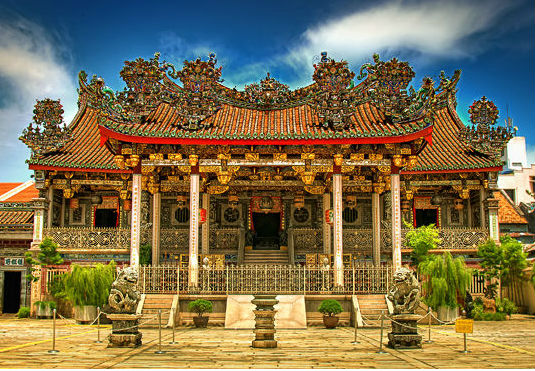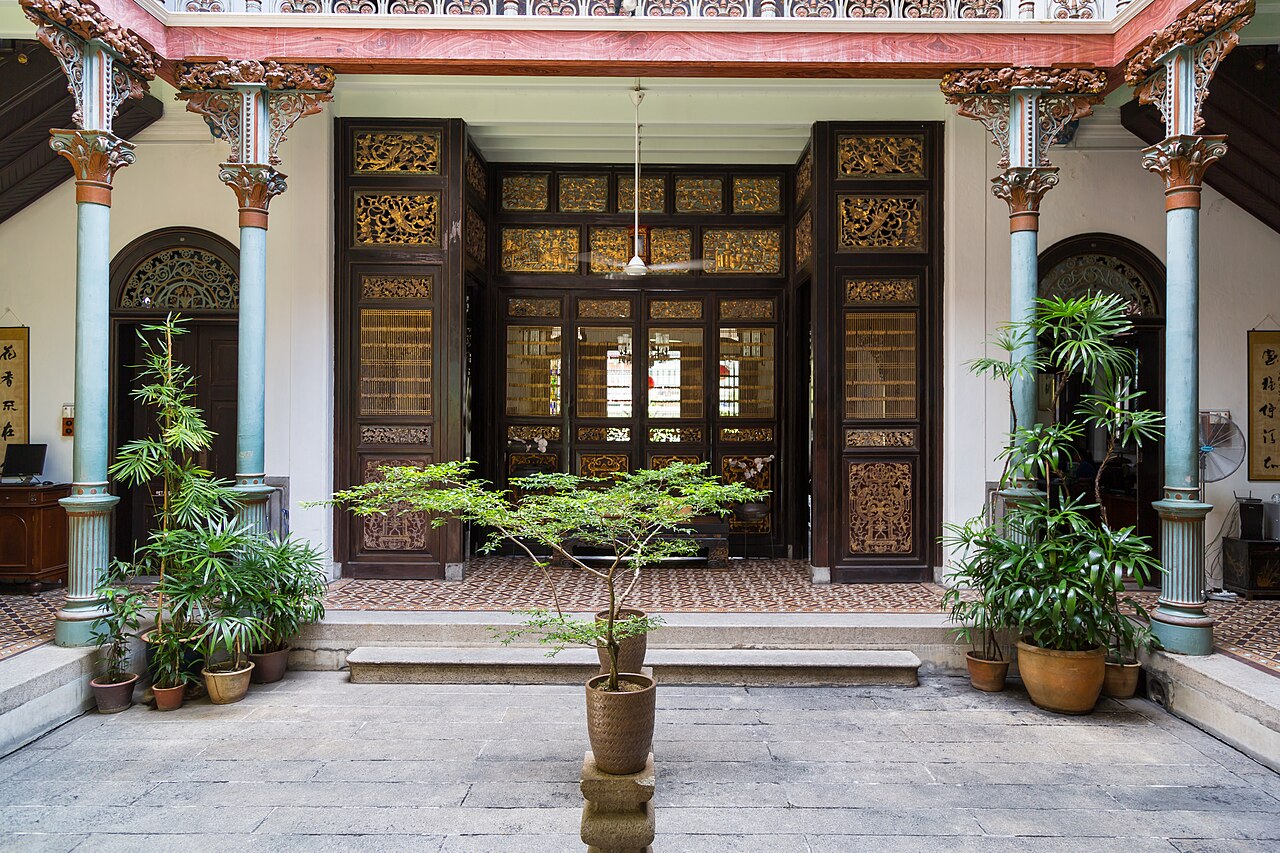
The Cheong Fatt Tze Mansion, universally called the Blue Mansion for its indigo lime-wash walls, is the most photographed house in George Town and one of the finest surviving Chinese courtyard mansions in Southeast Asia. It was built in the late 19th century for Cheong Fatt Tze, a Hakka merchant who rose from poverty in China to become one of the wealthiest businessmen in the region, sometimes called the Rockefeller of the East. The house was designed to the rules of feng shui, with courtyards, airwells and a layout meant to bring good fortune and ventilation, and it blends Chinese craftsmanship with European touches such as cast-iron work, Scottish ironwork and Stoke-on-Trent tiles. After decades of decline the mansion was rescued and restored in the 1990s, and the work later won a UNESCO Asia-Pacific heritage award. Today it works as a boutique hotel, a restaurant venue and a museum visited on daily guided tours. The tour is the best way to see it: a guide leads you through the courtyards, staircases and rooms, explains the symbolism of every detail and tells the story of the man and his family.
Why the tour matters: the house is full of details that are easy to miss, from the layout of the airwells that cool the interior to the carved timber screens, the stained glass and the symbolic placement of doors and stairs. The guides are well informed and entertaining, and they bring the building to life with anecdotes about the family, the restoration and the film scenes shot here. Tours run on a daily schedule, and it is wise to check the timetable and book ahead.
Practical details: dress comfortably, expect uneven floors and stairs, and note that parts of the house are private because it operates as a hotel. Photography is generally allowed in public areas but may be restricted in some rooms, so follow your guide. The mansion is in the old town on Leith Street, within walking distance of Khoo Kongsi, the street art lanes and many cafes. After the tour you can have lunch or a drink at one of the on-site venues, which makes it an easy morning or afternoon activity.
Make it more: if you love heritage, consider staying a night. The mansion's rooms and suites are furnished with antiques and arranged around a courtyard with a pool, and overnight guests experience the house after the tour groups leave. Others may prefer to simply visit, then return to a modern hotel. Either way, the Blue Mansion is a highlight for architecture lovers, history fans and photographers.
What to expect
The experience
A guided walk through the courtyards, staircases and rooms of the restored mansion, with commentary on feng shui, architecture and the family story.
Best time
Choose a morning or early afternoon tour on a weekday, and book ahead in busy seasons.
How long
About an hour, plus time for a drink or lunch on site.
Tips
Book the tour in advance, wear comfortable shoes, follow your guide on photography and respect the privacy of hotel guests.
Quick picks
- Best for
- Architecture and history lovers who want to see a grand heritage house with an engaging guide.
- Families
- Older children who like stories and architecture will enjoy it. The tour involves stairs and a fair amount of standing.
- Couples
- A good morning highlight followed by lunch nearby, or an overnight stay for a romantic splurge.
- Pair with
- Khoo Kongsi, a street art walk and a hawker lunch, all within a short walk.
- Time needed
- Allow ninety minutes including arrival and a quick look around.
Good questions
Why is it called the Blue Mansion?+
Its exterior walls are coated in a distinctive indigo-blue lime wash, which gave the house its nickname. The colour made the mansion a landmark in George Town.
Can I visit without a tour?+
Guided tours are the main way to see the interior, so plan to book one. Hotel guests and diners enjoy parts of the house too.
Is the mansion really a hotel?+
Yes, it operates as a boutique heritage hotel with a small number of rooms and suites around a courtyard garden and pool. Day visitors join a tour.
Who was Cheong Fatt Tze?+
He was a Hakka merchant who rose from poverty to build a vast business empire across Southeast Asia in the 19th century. The mansion was one of his homes.
Where is it?+
It is at 14 Leith Street in the heart of George Town, within walking distance of the main heritage sights.