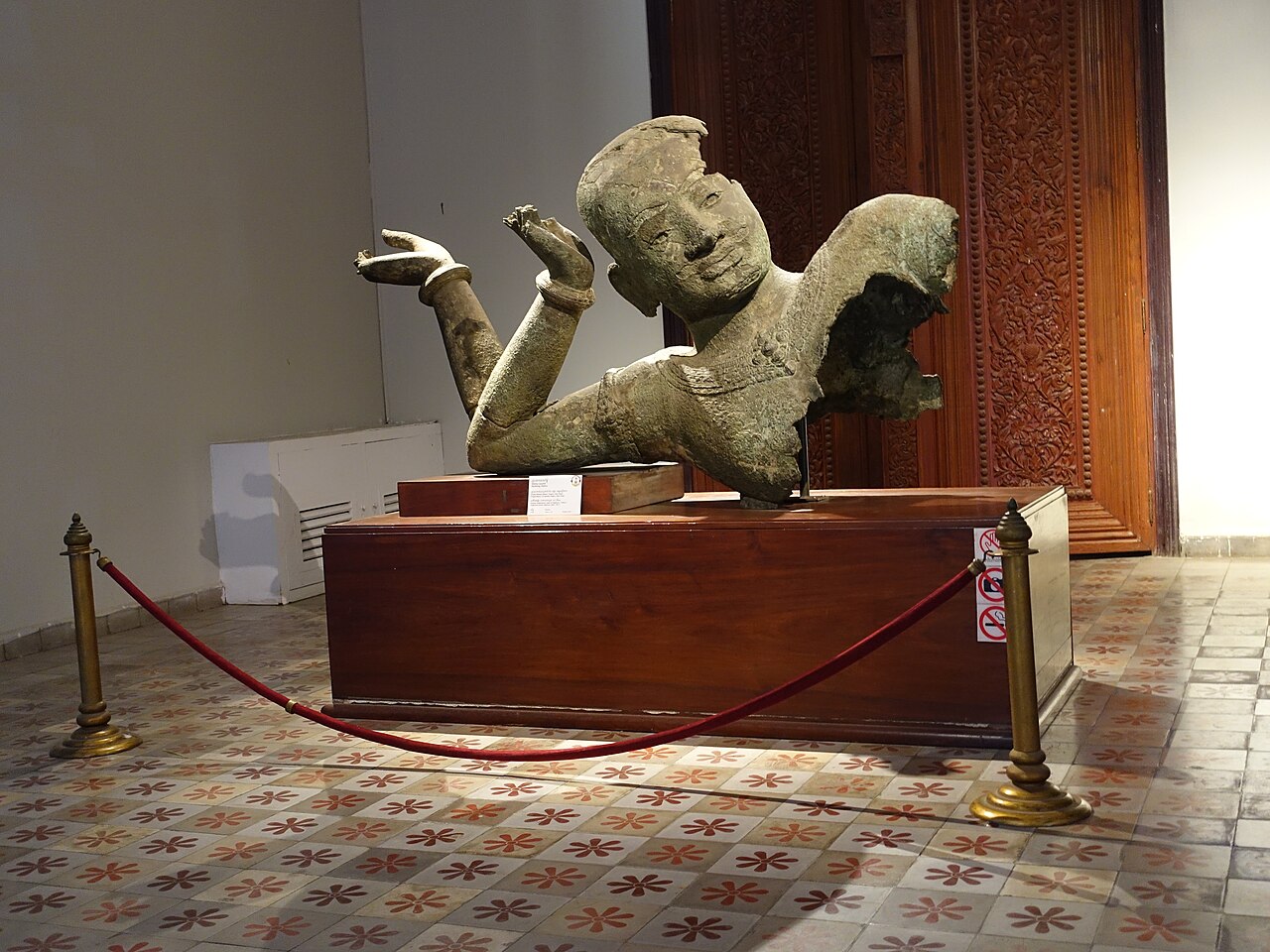
If you plan to see Angkor, or have already been, the National Museum of Cambodia is the place that makes the temples make sense. Its collection of Khmer art, built up over more than a century, runs from prehistoric and Funan-era pieces through the pre-Angkorian, Angkorian and post-Angkorian periods. The sculpture is the star. An eight-armed Vishnu from the sixth or seventh century stands near a Shiva from the ninth, and a serene seated portrait of Jayavarman VII, the king who built the Bayon, is among the most moving works in the building. There is also pottery, bronzes from the Funan and Chenla periods, and ethnographic objects. The museum is housed in a distinctive red terracotta pavilion complex designed in the Khmer style, with four peaceful courtyards planted with frangipani and lotus ponds, so it is a calm place to cool off between sights. Many pieces carry labels in English, and the building sits right beside the Royal Palace.
How to visit
The museum is on Street 13 beside the Royal Palace and the riverfront, and it is open daily from 8:00 to 17:00, with the last tickets sold at about 16:30. Foreign adults pay an entry fee in US dollars, with a lower price for older children and free entry for school groups, and cash is the safest way to pay. Most travellers allow about two hours, and the museum is easy to combine with the palace, which is a few minutes’ walk south.
What to look for
Start with the courtyards and then work through the galleries in time order, from the oldest pieces to the Angkorian masterpieces. Look for the Vishnu statue from the earliest Khmer period, the Shiva, and the seated Jayavarman VII, then take your time over the lintels and pediments that were carried here from the temples. Dress respectfully, keep your voice down and check the photography rules on your visit, since they can differ by gallery.
Making the most of it
A guide is a real asset here, because the labels cover the basics but not the stories behind each god and king. If you are visiting Angkor on the same trip, come here first, since the pieces will then make more sense in the temples. The courtyards are shady, which makes the museum a good choice in the hottest part of the afternoon. The wider city page also lists it among the capital’s highlights.
What to expect
The experience
A self-guided walk through a red-roofed pavilion building arranged around four courtyards, with Khmer stone and bronze sculpture displayed in chronological galleries.
Best time
Late morning or the heat of the afternoon, when the shaded courtyards and galleries are a welcome break from the street.
How long
Plan on one and a half to two hours, or more if you have a guide.
Tips
Bring cash for the ticket, dress respectfully, arrive before 16:30 for the last admission and visit before Angkor if you can.
Quick picks
- Best for
- Anyone interested in Khmer art, travellers heading to Angkor and visitors who want a cool, quiet break in the middle of the day.
- Families
- Older children enjoy the big stone gods and the courtyard ponds, but younger ones may find the galleries slow going.
- Couples
- The peaceful courtyards and sculpture galleries suit a slow, thoughtful hour together.
- Pair with
- The Royal Palace and Silver Pagoda, only a few minutes away on foot, and a riverfront stroll after.
- Time needed
- Two hours, or half a day with the palace.
Good questions
What are the opening hours of the National Museum of Cambodia?+
The museum is open daily from 8:00 to 17:00, with the last tickets sold at about 16:30. Check current hours before you go, as they can change on public holidays.
What is the best piece to see in the museum?+
Many visitors single out the eight-armed Vishnu and the seated Jayavarman VII, the king who built the Bayon. The pre-Angkorian and Angkorian sculpture galleries are the highlight.
Should I visit the museum before or after Angkor?+
Before is better, because the sculptures and lintels explain the gods and stories you will see carved into the temples. It is also a useful rainy-day or midday-heat option in Phnom Penh.
Is the National Museum near the Royal Palace?+
Yes, it stands right beside the palace and the riverfront, a few minutes’ walk from the Silver Pagoda. Most visitors combine the two in a single morning.
How long do I need at the National Museum?+
Most visitors spend about one and a half to two hours. Allow longer if you take a guide or want to read every label.