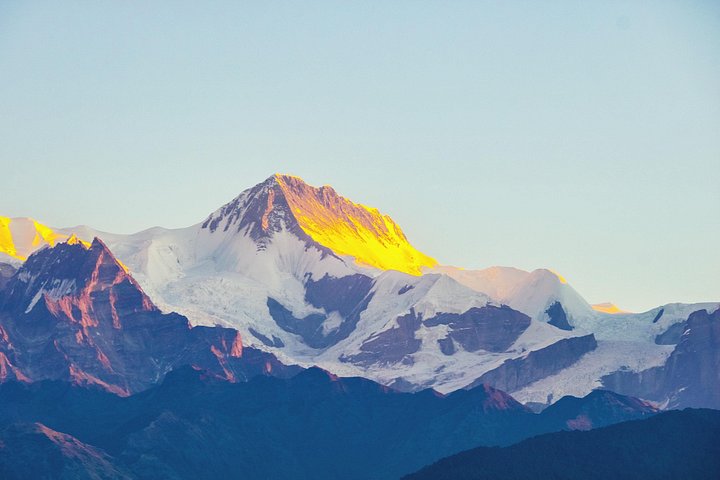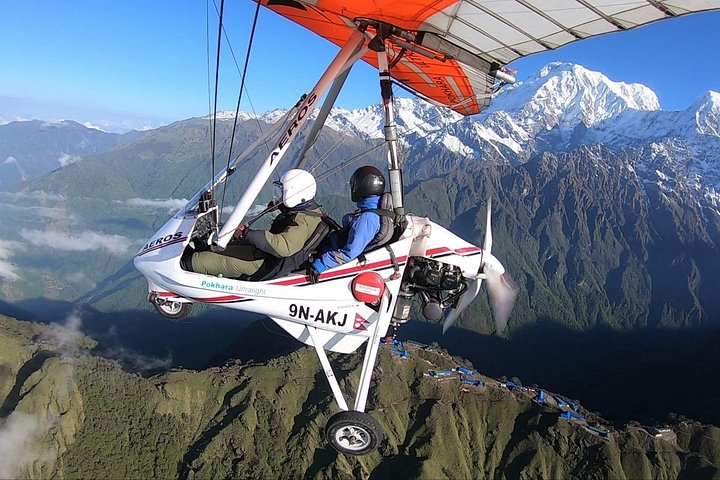
The Annapurna Base Camp helicopter landing compresses a week of walking into a single morning. A helicopter lifts off from Pokhara, follows the green foothills and the Modi Khola gorge north, passes close beside Machhapuchhre and sets down at base camp, roughly 4,130 meters up, inside the ring of peaks that trekkers spend days reaching. After a stop on the ground for photographs, tea and the views, the aircraft flies back along the same valley. The flight itself is the highlight for many passengers, because the scale of the range is easier to grasp from the air than from any single trail, and the glaciers and ridges of Annapurna I, Annapurna South and Hiunchuli sit right outside the windows.
Timing is everything. Flights depart early because the mountains are usually clear in the first hours of the day and cloud builds later, and the pilot decides on the day whether conditions allow a landing. Expect to be collected from your hotel, taken to the departure point, briefed on safety and weighed along with your bags so the aircraft can be balanced.
Time on the ground at base camp is limited, often under an hour, which is enough to walk around, take photographs and warm up with a drink before the flight back. Because you rise from valley level to over 4,000 meters in minutes, the thin air can be noticeable even in a short stop.
Treat the altitude with respect. Skip heavy exertion at base camp, drink water, dress warmly and tell the crew if you feel unwell, as descent is quick but not instant. People with heart or lung conditions, those who are pregnant and very young children should check suitability with the operator and a doctor before booking. Weather and wind can cancel or reroute a flight, particularly outside the clear seasons, so keep a spare day in your plan and ask what happens if a landing is not possible, including whether a fly-by is offered instead.
This is a premium experience, and the right fit depends on what you want. If you love walking, the trek itself is the point and the helicopter is a poor substitute. If you have limited days, mobility limits or a group with mixed abilities, a flight lets everyone share the same view. Some travelers combine the two, walking up and flying down, which avoids the repeated descent.
Book in the October and November window if you want the clearest skies, reserve ahead because seats are limited, and bring sunglasses, a warm jacket and a camera with a strap you trust. Pair it with a Sarangkot sunrise on another day to see the same range from the opposite side.
A few extra choices can improve the day. A private charter offers more control over timing and group makeup, while shared flights are cheaper but run to a fixed schedule, so ask which format is on offer. Sit on the side recommended by the crew for the best views on the way up, and keep your camera ready for Machhapuchhre as the aircraft turns into the sanctuary.
Wear sunglasses, because glare off snow is intense, and keep loose items zipped away. If your flight is canceled for weather, ask early about rebooking the next morning, because seats fill quickly in the autumn season and a flexible schedule makes the difference between seeing the peaks and missing them altogether.
What to expect
The experience
A shared or private helicopter flight from Pokhara to Annapurna Base Camp, a short stop on the ground and a return flight.
Best time
Early morning in October and November, when skies are clearest and the mountains are fully visible.
How long
About half a morning including hotel transfer, briefing, flight and time on the ground.
Tips
Dress warmly, take it easy at altitude, keep a spare day for weather and ask what happens if a landing is not possible.
Quick picks
- Best for
- Travelers who want to stand among the Annapurna peaks without a week-long trek.
- Families
- Good for mixed-ability groups, though check age limits and altitude suitability for young children.
- Couples
- A memorable splurge with a breakfast-hour landing among the peaks.
- Pair with
- A Sarangkot sunrise on another day, and a lakeside recovery afternoon.
- Time needed
- Half a day, with a spare day in case of weather.
Good questions
How long do you stay at base camp?+
Time on the ground is usually under an hour, enough for photographs and a warm drink. Check the exact timing with the operator.
What if the weather is bad?+
Flights depend on conditions and can be delayed, rerouted or canceled. Ask about rescheduling and what is offered if a landing is not possible.
Will I feel the altitude?+
Some people notice thin air, headache or breathlessness at 4,000 meters. Keep movements slow, drink water and tell the crew if you feel unwell.
When is the best time to fly?+
Early morning in October, November and spring gives the clearest views. Afternoons are often cloudy.
Is it a substitute for the trek?+
It gives the view and the arrival, but not the walk. Many travelers choose it for limited time or to avoid the climb.