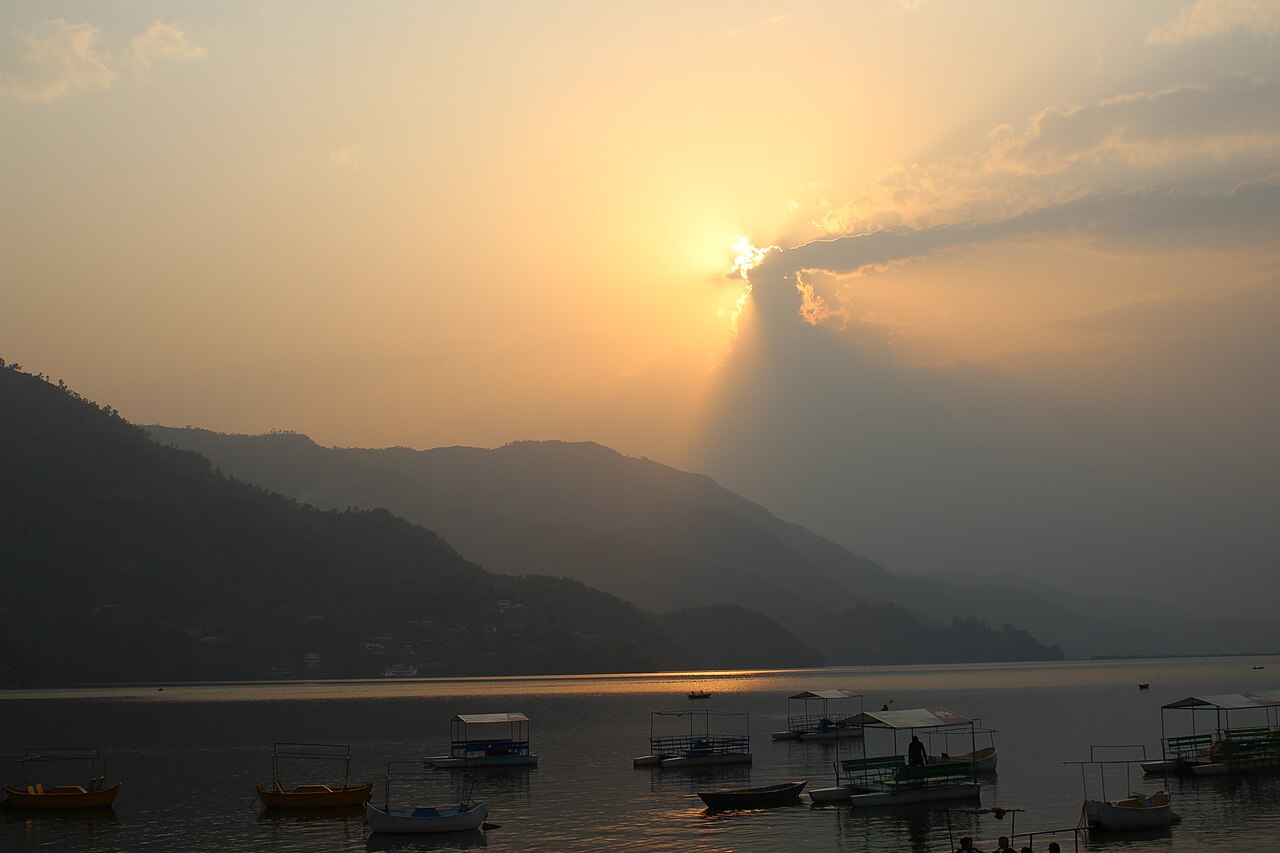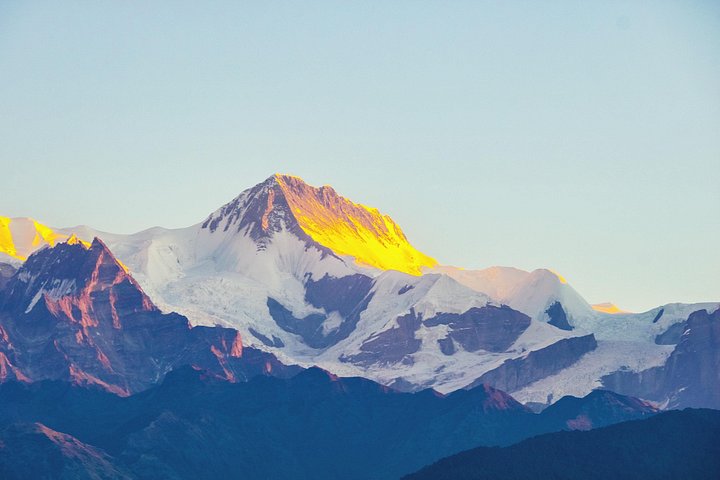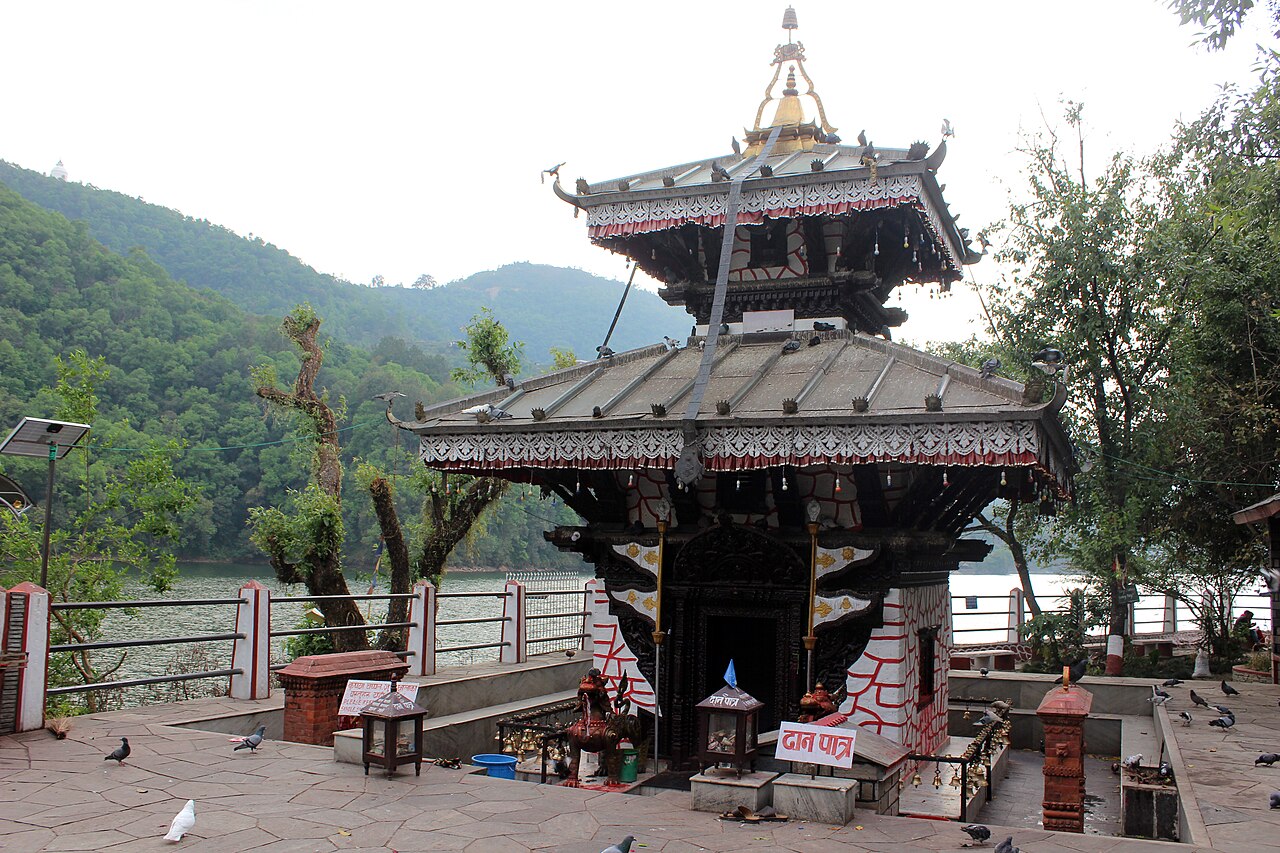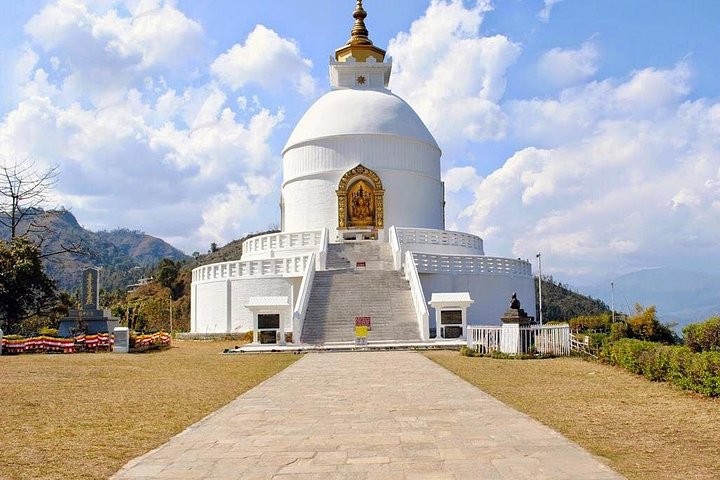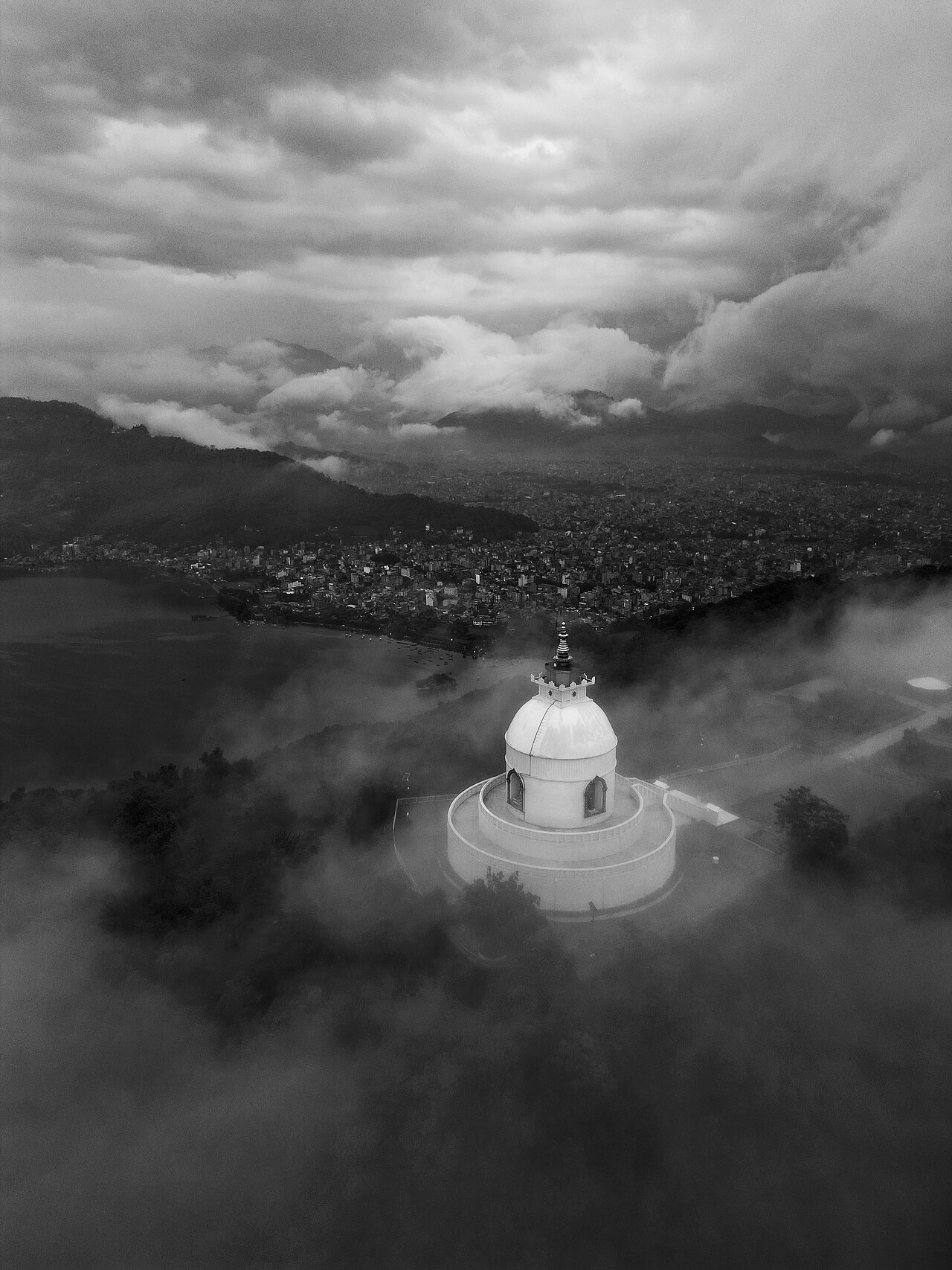
The World Peace Pagoda, also known as the Shanti Stupa, crowns a forested hill on the southern side of Phewa Lake. It was built by Japanese Buddhist monks of the Nipponzan Myohoji order, who raise such stupas around the world as symbols of peace, and its white dome and gilded Buddha figures are visible from much of Pokhara. The reward for the climb is the view: Phewa Lake, the city and the wide curve of the Himalayan range from Annapurna to Machhapuchhre. Most visitors cross the lake by boat to the landing on the south shore, then walk up through woodland, which takes around an hour, while others come by road for a shorter climb. A small cafe and a few shops sit near the top, and the monks hold prayers at the shrine nearby.
The walk is moderate. After crossing the lake you follow a stepped forest path that climbs steadily, with some steep sections, and the trail can be slippery after rain. Take water, comfortable shoes and a hat. Along the way you pass small viewpoints and, on busy days, other walkers heading in both directions.
It is possible to go by road to a point near the top, which is helpful for those with limited time or mobility. Guided options organize the boat, the climb and the return, and they are useful if you want context about the stupa and the order that built it.
At the top, walk the circuit of the stupa in the clockwise direction customary in Buddhist practice. The four sides show Buddha images and the area is quiet and calm, especially in the early morning. Remove shoes if requested near shrines, dress modestly and keep your voice down. Photography is fine in general, but be mindful of monks at prayer. The panorama toward the Annapurna and Machhapuchhre is the main draw, and the best views come early or late when the air is clearer.
Autumn is the ideal season. In October and November the haze lifts and the peaks are visible for much of the morning, and the lake below is easy to read from above. Combine the hike with a boat trip on Phewa Lake and a visit to the island temple for a satisfying half day. Beware of the midday sun and the monkeys on the trails, which may grab food, and allow time to return before dusk because the forest path is not well lit.
What to expect
The experience
A boat crossing of Phewa Lake or a drive, then a walk up a forest path or a shorter road climb to the white stupa and its viewpoint terrace.
Best time
Early morning for the clearest air and quiet shrine, or late afternoon for soft light over the lake.
How long
Allow three to four hours including the boat crossing, the climb, time at the top and the return.
Tips
Wear sturdy shoes, carry water, dress modestly, protect food from monkeys and start the descent before dusk.
Quick picks
- Best for
- Visitors who want a peaceful viewpoint and a gentle half-day walk with a cultural payoff.
- Families
- Older children can manage the forest path, while the road option is easier for younger ones and tired legs.
- Couples
- Hike up for sunset, watch the light change on the peaks and return by boat as the lake darkens.
- Pair with
- A rowing boat trip on Phewa Lake and the island temple of Tal Barahi.
- Time needed
- Three to four hours, or a half day with a relaxed lunch at the lakeside.
Good questions
How long is the walk to the World Peace Pagoda?+
The forest path from the boat landing takes about an hour at an easy pace, with some steep steps. A road route is shorter if you prefer.
Is there an entrance fee?+
Entry arrangements can change, so check with your guide or hotel. The experience is mostly about the walk, the stupa and the view.
When is the best time to go?+
Early morning and late afternoon give the best light, and October to November has the clearest air for mountain views. Midday can be hot and hazy.
Do I need a guide?+
The route is straightforward, but a guided trip organizes the boat and the walk and gives background on the stupa. Independent walkers should carry water and a map.
Are there monkeys on the trail?+
Yes, macaques live along parts of the path and can grab food or loose items. Keep snacks in a closed bag and do not feed them.