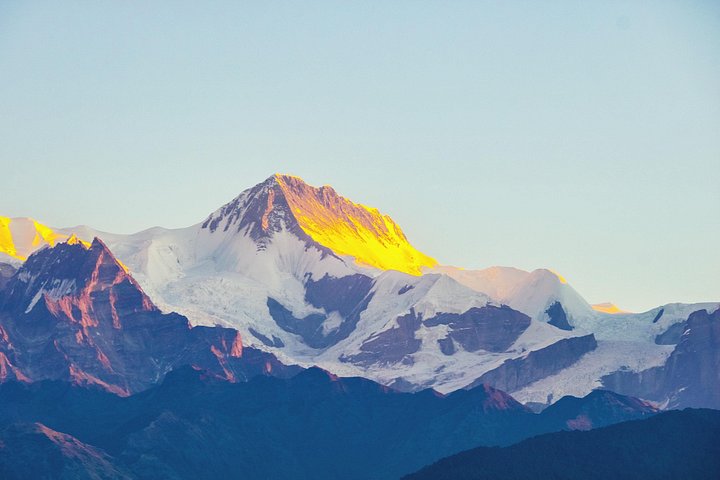
Lower Mustang is the stretch of the Kali Gandaki valley between Jomsom and the Tibetan border country, and this three day jeep tour shows it without a long trek. The road follows what is often described as the deepest river gorge in the world, squeezed between the 8,000 meter giants Dhaulagiri and Annapurna, and the scenery changes from green hills and waterfalls to windswept, ochre desert as you climb. Stops include Jomsom, the district hub with its apple orchards and airstrip, Kagbeni, a medieval walled village at the gateway to Upper Mustang, and Muktinath, a temple and spring complex sacred to Hindus and Buddhists, at about 3,800 meters.
Expect long, scenic driving rather than hard exercise. The first day heads north from Pokhara through Beni and Tatopani toward Jomsom, with stops for tea, photos and the hot springs at Tatopani if time allows. Day two continues to Kagbeni and Muktinath, with a short walk to the temple and its 108 water spouts, and day three returns by the same road.
The road is rough in places, and landslides or weather can delay the schedule, so patience is part of the package. Pack a small daypack, a scarf for the dust and a warm layer for the windy afternoons.
Altitude is modest compared with a trek but still real. Muktinath is around 3,800 meters, and some travelers feel headaches or tiredness, particularly after a fast ascent by vehicle. Drink water, move slowly and tell your driver or guide if you feel unwell. Be respectful at the temple, which is an active place of worship, with modest dress and quiet behavior. Local food is simple, with Thakali dal bhat and apple products as highlights, and the lodges are basic but welcoming.
This tour is a good fit for travelers who want to see the Annapurna region's dry side without a pass crossing, for families with older children who can handle long drives, and for those with limited mobility who still want an adventure. Book for October to November or spring for the clearest views, and avoid the heaviest monsoon weeks, when landslides disrupt the road.
Wind picks up in the afternoons in the valley, so schedule hikes in the morning. Keep a buffer day in your Pokhara plan, and consider adding a night at a lakeside hotel afterward to recover from the road. If you want more walking, the Annapurna Circuit covers the same valley on foot.
Make the most of the stops. At Tatopani, if the schedule allows, the hot springs are a pleasant break, and at Marpha the whitewashed lanes and apple brandy are local highlights. In Kagbeni, climb to the rooftops for a view over the gorge and the red monastery, and at Muktinath take your time with the eternal flame and the water spouts. Carry cash for entrance fees, snacks and souvenirs, and a scarf or buff to keep out dust.
Photography is welcome in most places, though you should ask before photographing people and avoid photographing inside shrines unless permitted. The windy afternoons are good for resting, and a warm evening meal in a lodge makes the cold nights comfortable. Ask about the vehicle, the driver's experience on mountain roads and how many passengers share each jeep, since comfort on bumpy sections depends on both.
What to expect
The experience
A guided 4WD road journey from Pokhara up the Kali Gandaki valley to Jomsom, Kagbeni and Muktinath, returning by the same route.
Best time
October and November, or spring, for clear views and reliable roads.
How long
Three days with two nights on the road.
Tips
Carry layers and a dust scarf, drink water at altitude, dress modestly at the temple and allow for road delays.
Quick picks
- Best for
- Travelers who want Himalayan scenery and culture without trekking.
- Families
- Good for older children who tolerate long drives; check altitude advice for younger ones.
- Couples
- A scenic road journey with a pilgrimage destination.
- Pair with
- Annapurna Circuit Trek for the same valley on foot, or Short Poon Hill Trek for a gentler mountain night.
- Time needed
- Three days.
Good questions
How rough is the road?+
It is a mountain road with rough and unpaved sections, so expect a bumpy ride and occasional delays.
Will I feel the altitude?+
Muktinath is around 3,800 meters, so some travelers feel mild symptoms. Move slowly and drink water.
What is Muktinath?+
A temple and spring complex sacred to Hindus and Buddhists, known for its 108 water spouts.
When is the best time?+
October, November and spring are best. Monsoon landslides can block the road.
Is trekking required?+
No, but short walks around villages and the temple are part of the experience.