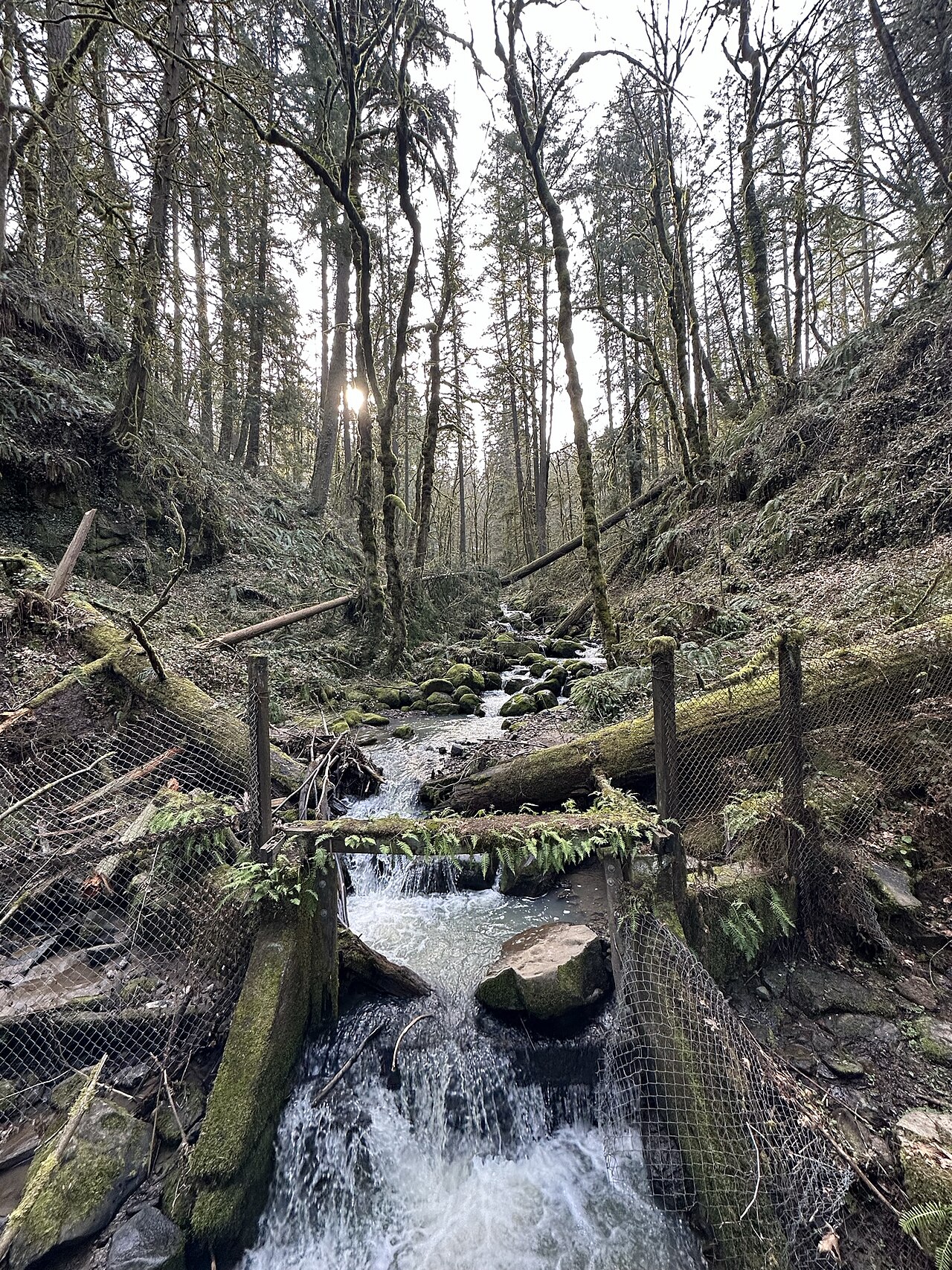
Forest Park is the most remarkable thing about Portland's geography and the easiest way to understand why people move here. Stretching for miles along the West Hills above Northwest Portland and the industrial riverfront, it covers about 5,200 acres, making it one of the largest forested parks inside any American city, and almost all of it is genuine Pacific Northwest forest: Douglas fir, western red cedar and bigleaf maple draped in moss, sword ferns carpeting the slopes, and creeks running through shaded ravines. More than 80 miles of trails, fire lanes and old roads lace the park, and the spine is the Wildwood Trail, a 30-mile footpath that runs from West Burnside Road near Washington Park all the way to NW Newberry Road, marked with blue diamonds and mileposts. Because Wildwood connects to Washington Park at its southern end, you can walk from the Hoyt Arboretum and the Oregon Zoo through the forest to Pittock Mansion and beyond without leaving the trees. Leif Erikson Drive, an 11-mile gravel road closed to cars, is the favorite of runners and cyclists, and dozens of connector trails make loops of almost any length. The park is free and open daily from 5am to 10pm, parking at the trailheads is free but limited, and dogs must be leashed. The most popular entry point for visitors is the Lower Macleay trailhead in Northwest Portland, which has parking, bike racks, TriMet service and the park's only paved, ADA-accessible path, a short segment along Balch Creek.
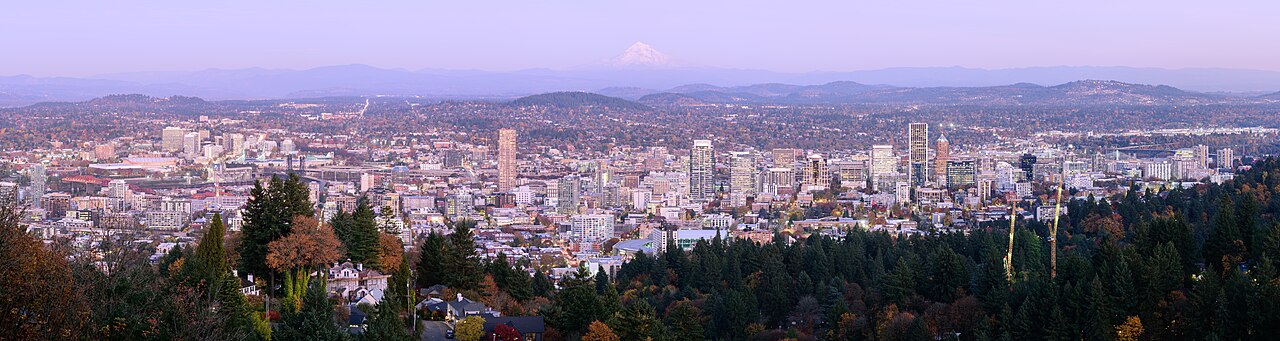
The classic first hike: from Lower Macleay Park, follow the Lower Macleay Trail up Balch Creek into a mossy canyon. Within about a mile you reach the Stone House, a moss-covered ruin of a 1930s restroom building that locals call the Witch's Castle, one of the most photographed spots in the park. Continue up to join the Wildwood Trail and climb to Pittock Mansion for the view over the city and, on clear days, the Cascade volcanoes — roughly five miles round trip with a solid climb. For a gentler walk, wander the Lower Macleay path along the creek and turn back at the Stone House. In the south, the Hoyt Arboretum, adjoining Forest Park in Washington Park, offers well-signed short loops among trees from around the world.
Longer outings: Leif Erikson Drive, accessed from the end of NW Thurman Street, is a wide, gently graded path that runs for 11 miles and is ideal for long runs or gravel rides; it is shared with cyclists, so stay alert. Hikers can build loops by combining Wildwood with fire lanes and connector trails, and the farther north you go, the quieter the forest becomes. Mileage markers on Wildwood make navigation easy, but download a map before you go, as phone coverage can be patchy in ravines.
What to know: the park is wet for much of the year, so expect mud from autumn through spring and wear proper shoes. Wind, heavy rain and high water can bring down trees and trigger landslides, and the city posts trail closures and detours online, so check before heading out. Trailheads are rustic with limited parking, so carpool, cycle or use TriMet — buses on NW Thurman and NW 23rd reach the southern trailheads. Respect the forest: stay on the trails, keep dogs leashed and pack out everything. On a summer day, Forest Park is cool and shaded; on a misty winter morning, it feels primeval.
For a deeper understanding of the park's ecology, the Forest Park Conservancy works with the city on trail maintenance, invasive plant removal and habitat restoration, and runs volunteer days that welcome visitors. The forest shelters more than a hundred species of birds and dozens of mammals, from deer and coyotes to the occasional elk in the quieter north, and in spring the understory comes alive with trilliums and other wildflowers. It is a reminder that Portland's most famous green space is a living ecosystem, not just a backdrop.
What to expect
The experience
A huge free urban forest with more than 80 miles of trails, from short creekside walks to the 30-mile Wildwood Trail and the car-free Leif Erikson Drive.
Best time
Early morning on weekends before trailheads fill; misty autumn and winter days for atmosphere; summer for dry trails and shade.
How long
One hour to the Stone House and back; three to four hours to Pittock Mansion; full days on the Wildwood.
Tips
Start at Lower Macleay for the classic hike. Expect mud outside summer. Check city trail closures after storms. Parking is free but small; use transit or carpool. Keep dogs leashed.
Quick picks
- Best for
- Hikers, runners and anyone who wants deep forest without leaving the city.
- Families
- Very good on the Lower Macleay creekside path to the Stone House; longer hikes suit older kids.
- Couples
- A morning hike to Pittock Mansion followed by brunch on NW 23rd Avenue.
- Pair with
- Pittock Mansion at the top of the climb, or Washington Park at the southern end.
- Time needed
- Two to four hours.
Good questions
How big is Forest Park?+
About 5,200 acres, with more than 80 miles of trails, fire lanes and roads, making it one of the largest forested urban parks in the United States.
What is the best hike for first-time visitors?+
The Lower Macleay Trail up Balch Creek to the Stone House, nicknamed the Witch's Castle, and on to Pittock Mansion via the Wildwood Trail, roughly five miles round trip.
How long is the Wildwood Trail?+
About 30 miles, from West Burnside Road near Washington Park to NW Newberry Road, with mileposts and blue diamond markers.
Are dogs allowed?+
Yes, on a leash at all times, and owners must pack out waste.
When is Forest Park open?+
Daily from 5am to 10pm. Parking at trailheads is free but limited, and storms can close trails, so check the city's closure page before you go.