Any honest history of Portsmouth has to include the people who were not on the portraits. By the mid-eighteenth century, Portsmouth had one of the largest populations of enslaved Black people in colonial New England, and enslaved and free Black residents worked as sailors, craftsmen, cooks, servants and laborers across the town. The Black Heritage Trail of New Hampshire, a nonprofit, researches and marks sites that tell this history, and its Portsmouth walking trail links historic houses, burial grounds, waterfront locations and neighborhoods. The emotional center is the African Burying Ground Memorial on Chestnut Street, a landscaped memorial dedicated in 2015 after the rediscovery of burials beneath the street during utility work in 2003. Wrapped around the remains, the memorial features a sculpture of figures, carved symbols, a spiraling path and a place for reflection. The trail also leads to places like the Moffatt-Ladd House, where the story of Prince Whipple appears, and to other sites where Black lives intersected with trade and the Revolution. The walk is free to do on your own, and the nonprofit publishes maps and guides, so the visit works as an add-on to any day in the historic core. It rewards slow reading and quiet attention.
The African Burying Ground
In the eighteenth century, the city set aside land outside the town center for the burial of Black residents, and over time the site was built over and forgotten. In 2003 workers repairing a street uncovered coffins, and archaeologists confirmed that the area held a cemetery. After a long public process, the remains were reinterred and the memorial built, with a ceremony in 2015.
Visitors will find the memorial a short walk from Market Square, with markers and interpretation explaining the discovery and its meaning. It is a place for reflection rather than spectacle, and visitors are asked to respect it as a burial site.
Other stops
The trail points out sites related to Black residents who lived and worked in Portsmouth, including the households of merchants who held enslaved people, the churches and community gatherings, and individuals who petitioned for freedom during the Revolutionary era. Interpretive material highlights people such as Prince Whipple, who served in the Revolutionary army and later became a free man, though historians debate details of his story.
The trail gives voices to people whose lives would otherwise survive only in account books. Combining it with a visit to the Moffatt-Ladd House or Strawbery Banke adds context to those institutions' interpretation.
Visiting tips
Download a trail map from the nonprofit or pick one up locally, and allow an hour or more to walk the route at a relaxed pace, longer if you read all the markers. Wear comfortable shoes and bring water in warm weather. The African Burying Ground sits on a busy street, so cross carefully and be mindful of other visitors.
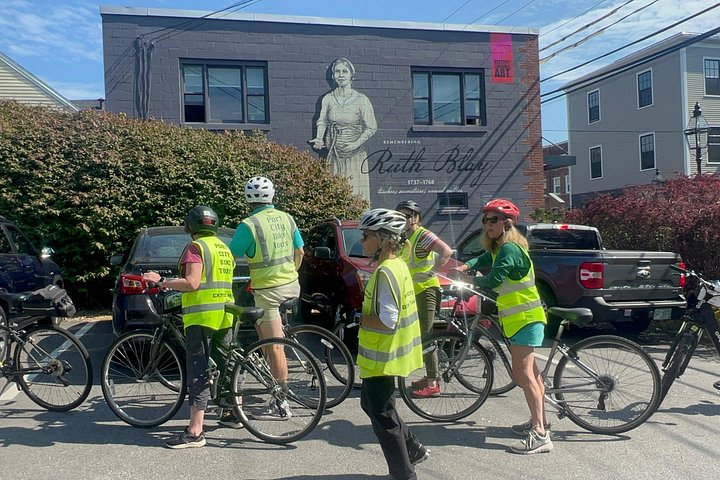
Guided tours and programs are offered at certain times, and the organization hosts events, so check the calendar if you want a guided experience. It pairs naturally with a city bike tour or a historic house visit, and makes the rest of the town's architecture more meaningful.
What to expect
The experience
A self-guided walking trail through central Portsmouth that marks sites tied to enslaved and free Black residents, anchored by the African Burying Ground Memorial.
Best time
Daylight hours in any season; quiet mornings suit reflection.
How long
One to two hours.
Tips
Get a map from the nonprofit, treat the memorial as a burial site, and combine the walk with the Moffatt-Ladd House.
Quick picks
- Best for
- Visitors who want a fuller, more honest picture of colonial Portsmouth.
- Families
- Suitable for older children with a sensitive introduction to the history.
- Couples
- A reflective walk in the old town.
- Pair with
- Moffatt-Ladd House, Strawbery Banke and the city bike tour.
- Time needed
- One to two hours.
Good questions
What is the African Burying Ground Memorial?+
A memorial on Chestnut Street dedicated in 2015 to the Black residents buried there in the eighteenth century, after remains were found in 2003.
Is the trail free?+
Walking the sites yourself is free; guided programs may have their own fees.
How long does it take?+
About an hour or two depending on how many markers you read.
Who runs the trail?+
The Black Heritage Trail of New Hampshire, a nonprofit that researches and marks sites.
Is it appropriate for children?+
Generally yes for older children, with adult guidance on the subject of slavery.