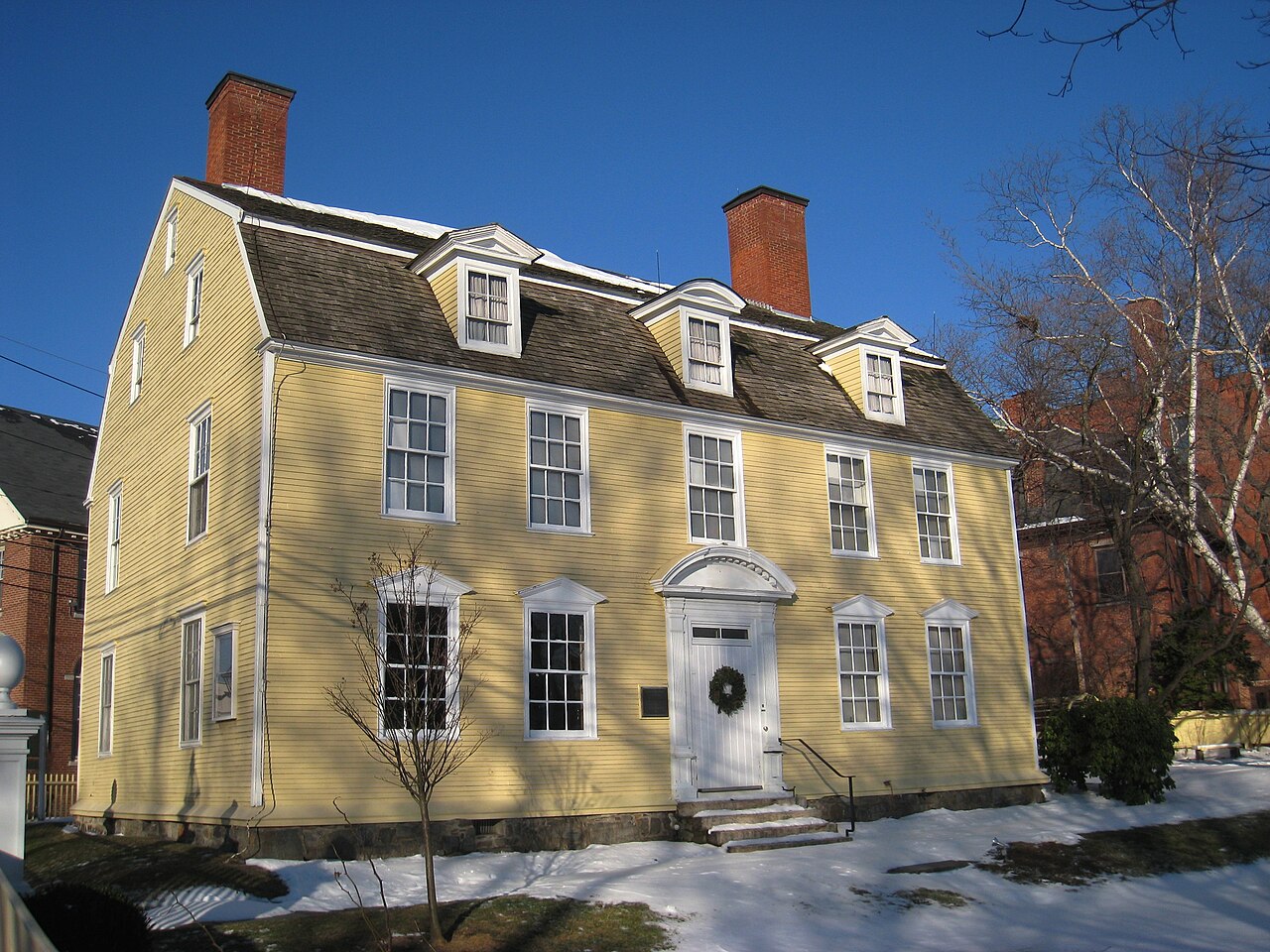
If you want to understand what money looked like in colonial Portsmouth, walk through the front door of the Moffatt-Ladd House. Built in 1763 by the merchant John Moffatt for his son Samuel, the three-story Georgian mansion on Market Street was a statement of wealth and taste, with a grand central staircase, painted wall panels, and ornate woodwork. Its later best-known resident was William Whipple, a Portsmouth merchant and ship's captain who signed the Declaration of Independence for New Hampshire and married into the family. The house remained in family hands for generations and is now a National Historic Landmark, operated as a museum by the National Society of the Colonial Dames of America in New Hampshire. Visitors tour the principal rooms with a guide, see original furnishings, family portraits and decorative arts, and hear stories that include the people who labored in the household, among them Prince Whipple, an enslaved man who served the family and appears in local Black heritage history. Behind the house, a terraced garden preserves a nineteenth-century layout, with an old horse chestnut tree and blooming beds in season. The museum is seasonal and closed in the winter months, so confirm the schedule. The visit takes about an hour and a half with the garden.
The architecture is the first draw. Georgian houses in New England were designed to impress, and the Moffatt-Ladd interior does so with a wide central hall and a staircase that sweeps up past a large arched window. The paneling, mantels and plasterwork show the best of Portsmouth's skilled carpenters and joiners.
In the chambers, you can see how the family lived, from the formal dining room to the bedrooms, and imagine the social life of a merchant house during the years of the Revolution. Several rooms are interpreted for particular moments, and the guide links the furnishings to families and trade networks.
The story is more complicated than a simple house tour. The Moffatt and Whipple families profited from the Atlantic economy, including trades linked to slavery, and the house's interpretation addresses this directly through the lives of enslaved people such as Prince Whipple. That inclusive approach makes the Moffatt-Ladd visit particularly rewarding when combined with the Black Heritage Trail, which marks sites across town. The garden, one of the oldest continuously maintained gardens in the region, adds a living layer, with roses, perennials and old trees that make a cool, quiet pause on a hot day.
Planning
The house is within a ten-minute walk of most downtown sights, but it sits on Market Street just beyond the busiest shopping blocks, so it is usually quiet. Tours are timed and led by guides, so check the schedule, arrive a few minutes early, and ask about combination tickets with other historic houses. Photography rules inside can vary, and the old building has stairs that limit accessibility. In spring and summer the garden is the best part for many visitors, and special events and garden days add variety.
After the visit, walk to Prescott Park or have lunch nearby to keep the day flowing. Visitors often remark on how much more they notice in the second half of the tour, once the guide has set out the family connections, so ask questions early. Children who are interested in history will enjoy hearing about Whipple's travels and the war years, while garden lovers can linger among the older plantings after the house tour ends.
What to expect
The experience
A guided tour of a 1763 Georgian mansion with period rooms and a terraced garden, linked to Declaration signer William Whipple and to the enslaved people of the household.
Best time
Seasonal, usually late spring through fall. The garden peaks in early summer.
How long
About an hour to an hour and a half.
Tips
Check the tour schedule, ask about combined tickets with other houses, and note that stairs limit accessibility.
Quick picks
- Best for
- Architecture and history fans who want the merchant-class view of colonial Portsmouth.
- Families
- Best for older children who can follow a guided tour; the garden helps.
- Couples
- A quiet garden and house visit in the heart of the old town.
- Pair with
- The John Paul Jones House, Strawbery Banke and the Black Heritage Trail.
- Time needed
- About ninety minutes.
Good questions
Who was William Whipple?+
A Portsmouth merchant and sea captain who signed the Declaration of Independence for New Hampshire and lived at this house.
Is the garden included?+
Yes, the terraced garden is part of the visit and is especially lovely in early summer.
When is it open?+
Seasonally, usually in the warmer months. Confirm hours before you go.
Does the tour cover enslaved people?+
Yes. The interpretation includes the enslaved people of the household, such as Prince Whipple.
Is it wheelchair accessible?+
The historic building has stairs and limited access. Contact the museum about options.