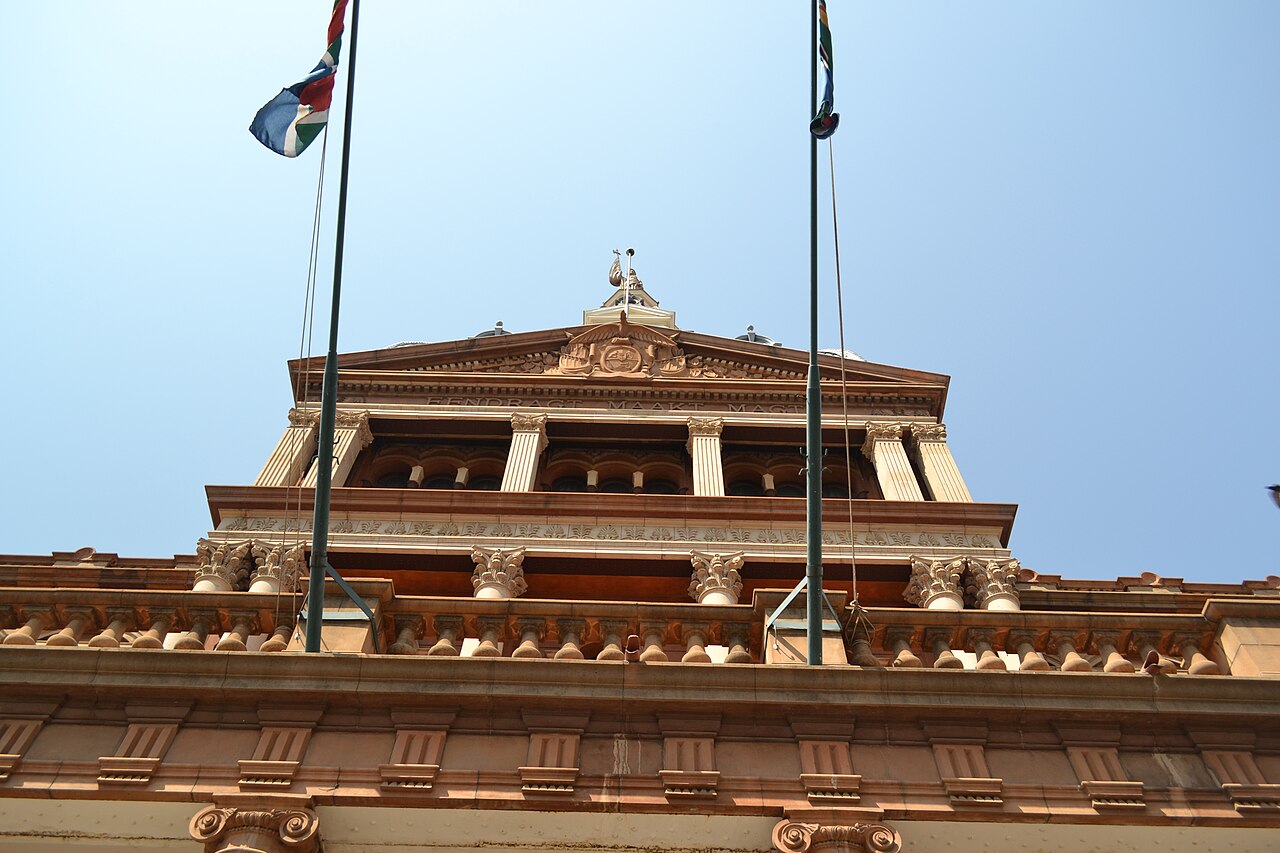
Church Square, known locally as Kerkplein, is the historic centre of Pretoria, a plaza at the junction of the city's main streets that has been the scene of public life since the 1850s. At its middle stands a large bronze statue of Paul Kruger, the nineteenth-century president of the old Transvaal republic, sculpted by Anton van Wouw and surrounded by four bronze figures of burghers. Around the square are some of the capital's most important older buildings: the Old Raadsaal, a sandstone parliament building from the 1890s, the Palace of Justice, the Reserve Bank, the Tudor Chambers and other examples of Dutch, German and British colonial design. The square works as a short history lesson in architecture, with each style marking a different period in the city's life. It is free to visit, easy to reach on foot from central hotels and a natural starting point for exploring the old centre.
The Old Raadsaal, on the north side, once housed the Volksraad of the republic and is among the best surviving examples of the style used for public buildings in late nineteenth-century Pretoria. The Palace of Justice, facing it across the square, was used as a hospital during the Anglo-Boer War and later as a courthouse, and its dome and columns give it a grand look. The Kruger statue itself was unveiled decades after its first casting and has been moved and discussed over the years, a sign of the shifting attitudes towards symbols in the city.
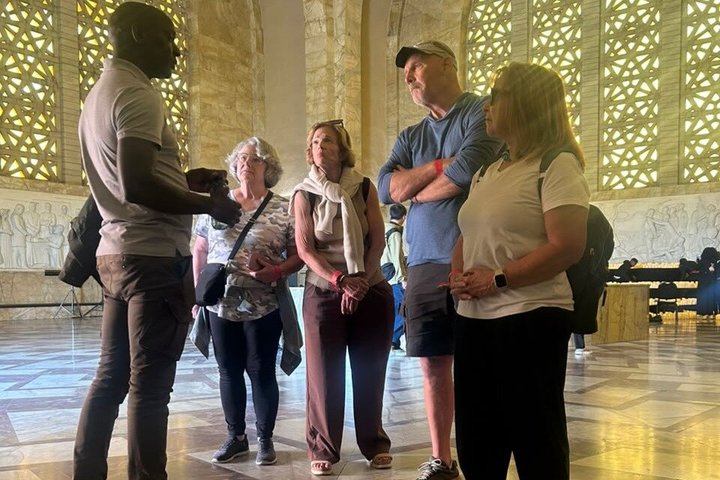
Walking is the best way to see the area. From the square, short routes lead to Burgers Park, to Strijdom Square, to the old Capitol Theatre and to Paul Kruger's former home, now a museum. Walking tours of the inner city are offered by local guides, and organised half-day tours generally include the square.
Keep valuables out of sight and stay aware of your surroundings as you would in any inner-city area, and do the walk in daylight for ease and comfort. Weekday mornings are busy with workers and traders, while weekends are quieter, with fewer cafes open.
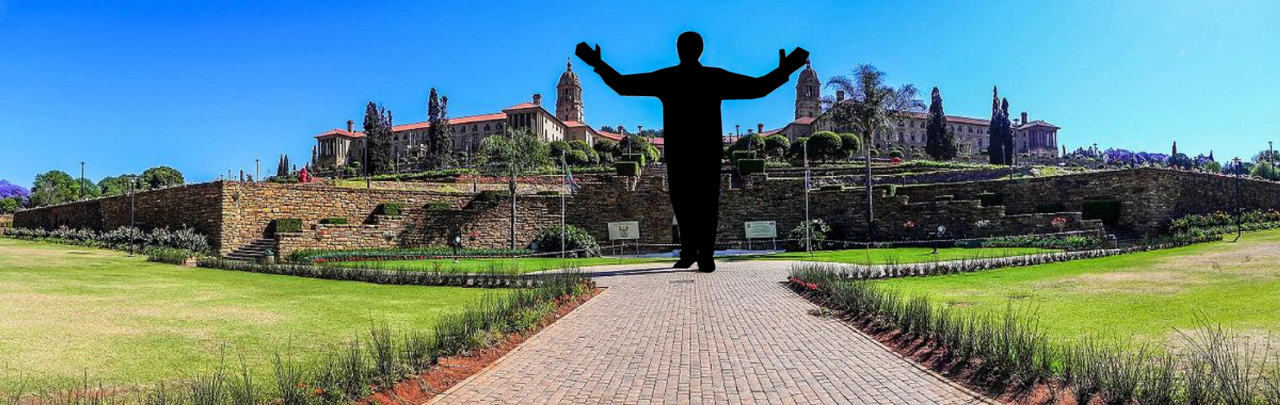
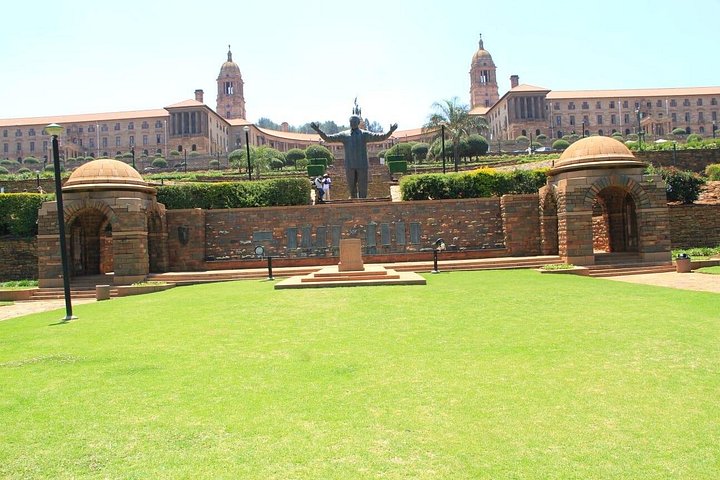
The square can be combined with the Union Buildings and the monuments for a half-day circuit. Coffee shops around the edges and in nearby arcades give a place to rest, and several lunch spots serve traditional dishes such as bobotie and pap with braai meat. The square's role as a gathering place has changed over time, and visitors often find it more atmospheric early on a weekday, when light catches the sandstone buildings and the pace is calm.
What to expect
The experience
Self-guided walk around the square, with optional museum stops in nearby buildings.
Best time
Weekday mornings for light and activity; weekends for fewer crowds.
How long
Under an hour for the square, longer for the surrounding streets.
Tips
Visit in daylight, keep valuables out of sight and combine with a guided inner-city walk.
Quick picks
- Best for
- Architecture and history enthusiasts and anyone arriving in the city centre by Gautrain or bus.
- Families
- Open space and statues are fine for children but there is little to do beyond looking.
- Couples
- A pleasant daytime stroll followed by lunch in a nearby cafe.
- Pair with
- The Union Buildings and a guided city tour.
- Time needed
- One hour, or half a day on foot.
Good questions
What is the Old Raadsaal?+
A sandstone parliament building from the 1890s that once housed the Volksraad of the old Transvaal republic.
Who is the statue of?+
Paul Kruger, a nineteenth-century president of the Transvaal republic, sculpted by Anton van Wouw.
Is the square safe to visit?+
Visit in daylight, keep valuables out of sight and stay aware of your surroundings as you would in any inner-city area.
Can I take a tour?+
Yes, local guides offer inner-city walking tours and most half-day city tours stop at the square.
Is there an entry fee?+
No, the square itself is free to visit.