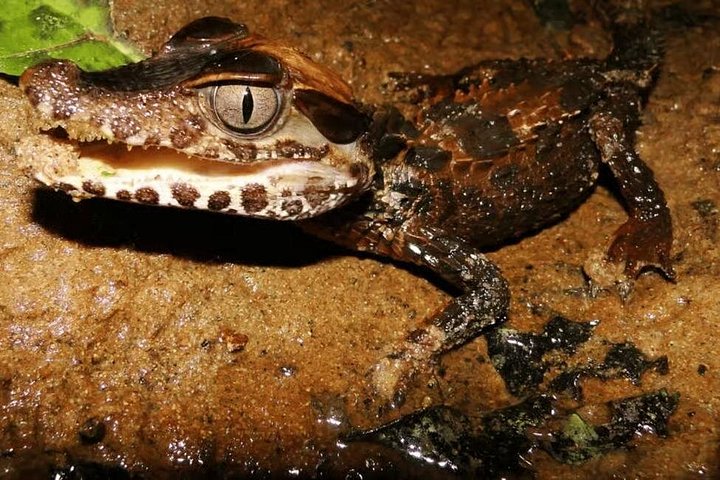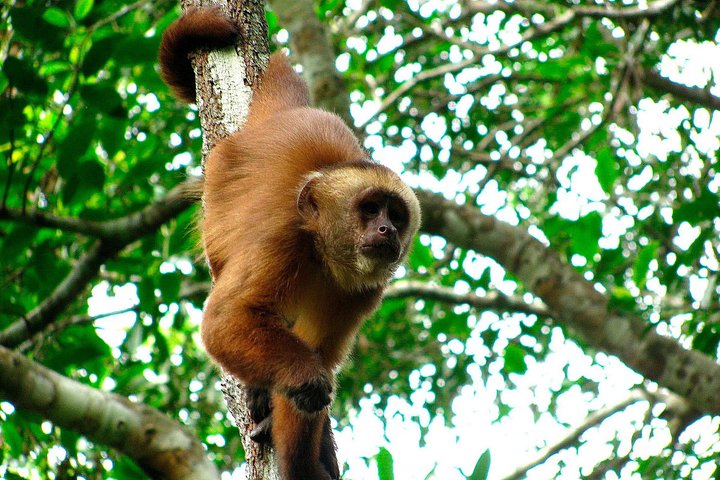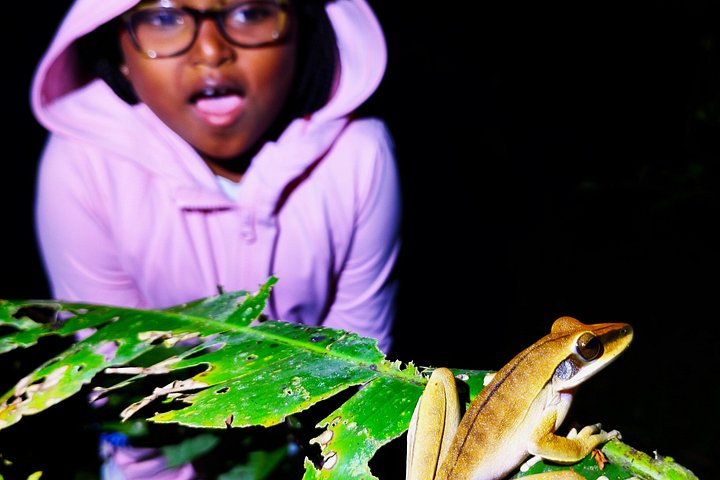
By night the forest has an entirely different cast. A guided night walk near Puerto Maldonado takes you onto a trail after dark, with torches and sharp-eyed guides, to look for the creatures that hide or sleep through the day. Tarantulas rest in burrows, tree frogs call from leaves, katydids and stick insects hold perfectly still and sometimes a sloth or other mammal appears in the canopy. It is a small-scale but absorbing experience, and one of the best ways to understand how much life the rainforest holds. Most night walks last a couple of hours, and the guide sets a slow pace so everyone can look closely. The talk is quiet, and a good guide explains what you see with enough detail to make the insects and amphibians interesting rather than frightening. You do not need previous experience, only curiosity and a willingness to share the forest with creatures that look unusual.
Safety and comfort come first. Wear closed shoes with grip, long trousers tucked into socks and a long-sleeved shirt, and apply repellent before you start. Keep to the trail, stay with the group and look before you touch any plant or tree, because ants, spiny trunks and stinging insects are common. A head lamp with a red light setting is helpful if you have one, since red light disturbs animals less.
What you find is unpredictable. Some nights are rich with frogs after rain, while dry nights can be quiet. The guide can explain why, and the contrast is part of the education. Even on a slow night, the sounds, smells and darkness add a sense of place that a daytime walk cannot match. Respect the animals by observing without handling, and avoid flash photography that stresses nocturnal species.
This outing suits people who are curious about the small and strange, including older children who are not squeamish. If you have a strong fear of spiders or insects, think twice. Check where the walk takes place, how you are transferred and what time you return, and combine it with a daytime trip so that the evening feels like a natural extension of your stay. Details can change with the operator and the season, so confirm them when you book.
Planning notes. A night walk works best as part of a larger plan, whether a lodge stay or a day in town, because it takes place after dinner and demands some energy. Eat first, drink water and apply repellent before you set off. Bring a head lamp with fresh batteries, and if possible a red-light setting, plus a rain layer, since showers can arrive quickly. Hold your own light low and follow the guide, who will point out the animals.
Resist the urge to touch anything, because many insects and plants have defenses. Take it slowly and enjoy the quiet moments between sightings, when the sounds of the forest at night fill the air. Tell the guide if you are nervous about spiders or snakes, and they will adjust the pace and talk you through what you see. After the walk, allow time to wash and rest, since the evening is humid. Check the return arrangements before you leave.
What to expect
The experience
A guided evening walk with torches, looking for tarantulas, frogs, insects and any animals active after dark.
Best time
After rain, when frogs and insects are most active; the wetter months can be especially lively.
How long
Two to three hours in the evening.
Tips
Wear closed shoes and long clothing, avoid touching trees and plants and skip flash photography.
Quick picks
- Best for
- Curious travelers who want to see the small and strange side of the Amazon.
- Families
- Good for older children who are comfortable in the dark; confirm age rules.
- Couples
- An unusual shared evening with plenty to talk about afterward.
- Pair with
- A sunset caiman trip or a daytime lake excursion.
- Time needed
- An evening.
Good questions
Will I see a sloth?+
Possibly, but sloths are hard to spot at night. Frogs, tarantulas and insects are more likely.
Is a night walk dangerous?+
Guides know the trail and the risks. Follow instructions and wear proper clothing.
Are spiders handled?+
Responsible guides observe without handling, and you should not touch animals.
What should I wear?+
Closed shoes, long trousers, long sleeves and repellent.
Can I take photos?+
Yes, but avoid flash, which can stress nocturnal animals.