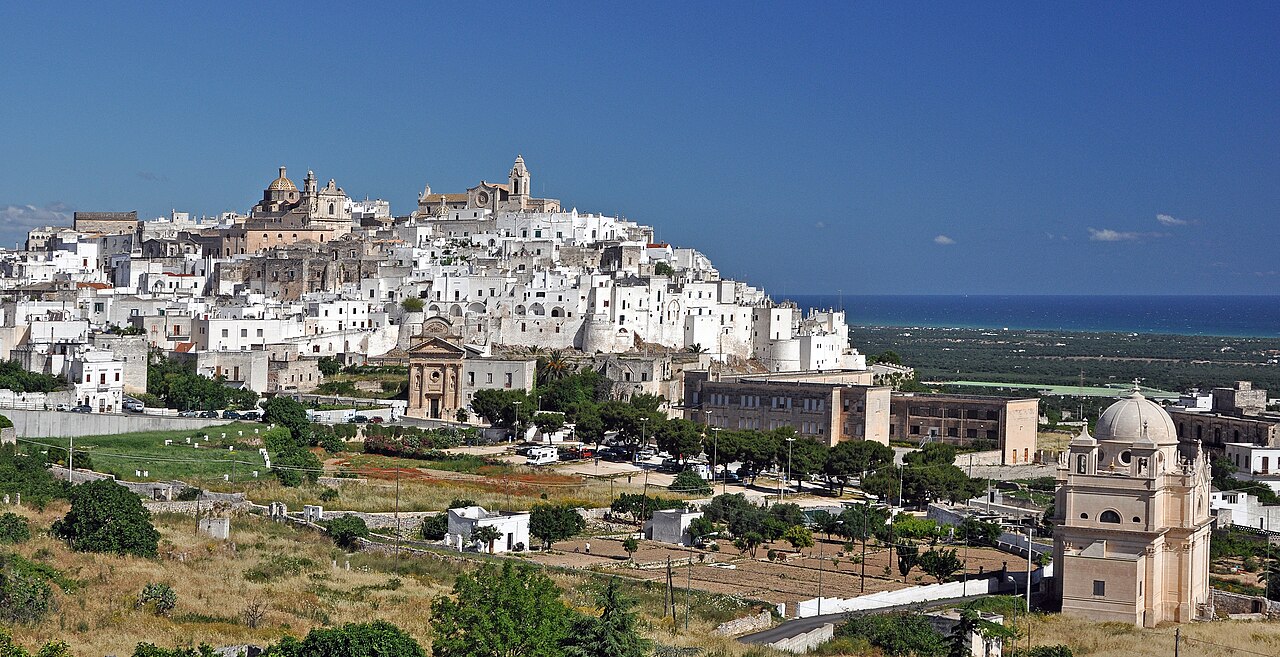
Ostuni is known as La Citta Bianca, the White City, because its old centre is whitewashed from top to bottom. It sits on three hills a few kilometres from the Adriatic, with views across a sea of ancient olive trees to the coast. The old town is a labyrinth of narrow lanes, steep stairways, arches and tiny squares, with terraces and doorways painted in blue and green, and every corner seems to offer a photograph. At the top stands the Gothic cathedral with a richly carved facade and a rose window, and the lanes around it hold small museums, wine bars and craft shops. Ostuni is free to explore on foot, and the best way to enjoy it is to wander without a plan, climb to the viewpoints and stop for aperitivo as the evening light turns the walls gold. It makes an easy day trip from Bari or a base for a night or two.
The town's look comes from centuries of whitewashing, a tradition that was both practical and hygienic. The lanes wind upward in curves and steps, and the arches that span some of them are part of the charm. At the top, the cathedral is a good example of late Gothic architecture, and the square nearby has terraces and cafes. Look for the viewpoints that open over the olive groves and out to sea, especially in late afternoon when the white walls glow.
Ostuni is hilly and the paving is polished by feet, so wear comfortable shoes. Summer afternoons are hot and the lanes are busy, so aim for morning or evening. The town is lively in the evening, with restaurants and wine bars in the old centre, and quieter in the colder months when some places close, so check opening times if you visit in winter. A local tourism page provides practical background on the town and its surroundings.
Ostuni is about an hour from Bari by car, with trains on the coastal line to a station a few kilometres below the old town, and a shuttle or taxi to climb the hill. Many visitors combine it with Locorotondo, Alberobello or the coast at Polignano a Mare and Monopoli, and a stay in a historic palazzo or masseria nearby is a highlight of a Puglia trip. Because the town is free, it is a great way to balance a trip that includes paid sights.
What to expect
The experience
A self-guided walk through the whitewashed old town, up to the cathedral and the viewpoints over the olive groves and the sea.
Best time
Late afternoon into sunset, when the walls glow and the temperature drops.
How long
Two to four hours, longer if you stay for aperitivo or dinner.
Tips
Wear shoes with grip for polished stone and steep stairs, avoid the hottest hours in summer and check restaurant opening days in winter.
Quick picks
- Best for
- Couples and photographers who like hilltop towns and long evenings.
- Families
- Children enjoy the maze of lanes and stairs; strollers struggle on the steep steps.
- Couples
- Aperitivo at a rooftop or terrace as the sun sets over the olive groves.
- Pair with
- Locorotondo and Alberobello inland, or Monopoli on the coast.
- Time needed
- A half day, or an overnight stay for the evening atmosphere.
Good questions
Why is Ostuni called the White City?+
Its old centre is whitewashed, a tradition that makes the hill glow in sunlight. The name La Citta Bianca is used by everyone in Puglia.
Is it free to visit?+
Yes, walking the old town and its viewpoints costs nothing. Museums and the cathedral may have their own opening hours or fees.
How do I get to Ostuni from Bari?+
It is about an hour by car, or by train to Ostuni station followed by a short taxi or shuttle up the hill. Check the return timetable before you go.
When is the best time to visit?+
Late afternoon and evening are the best, and spring and autumn are comfortable. Summer middays are hot and winter can bring quiet evenings.
Is it suitable for people with limited mobility?+
The old town is steep with many steps and polished stone, so it can be challenging. The lower town and a few terraces are easier to reach.