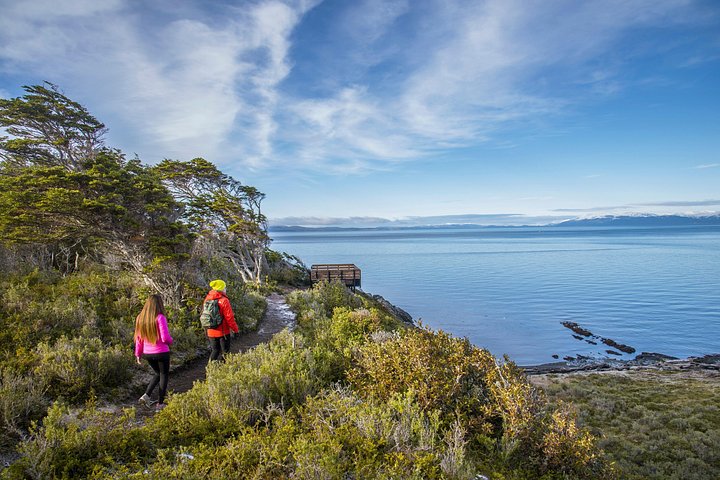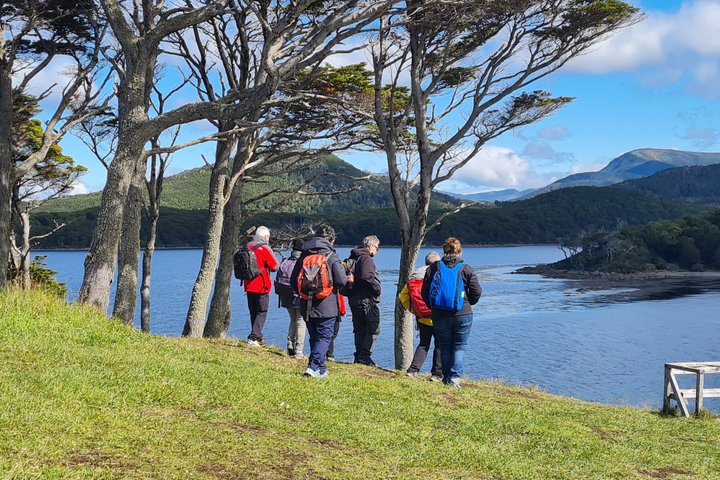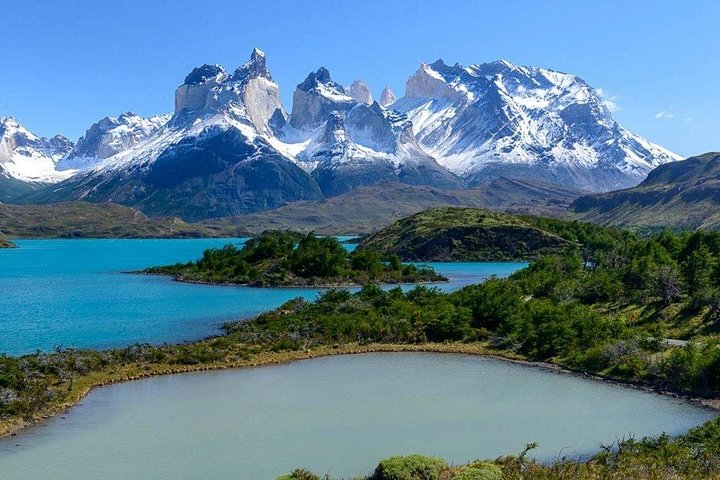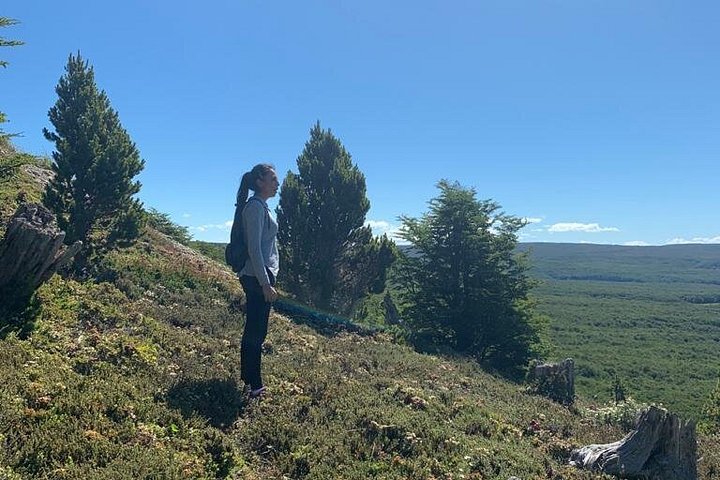
Magallanes National Reserve covers the forested hills immediately west of Punta Arenas, and it is where locals go for a walk, a picnic or a day on the snow. Rivers tumble through valleys of southern beech, paths climb to miradors with views over the city and the Strait of Magellan, and on a clear day the outline of Tierra del Fuego is visible on the horizon. Its location, a short drive from the centre, makes it the easiest way to experience Patagonian forest without a long journey, and it is a good choice for a half-day when time is short. Guided tours usually combine a forest walk with a city tour, so you get a taste of both nature and urban history in a single morning or afternoon. The trails are mostly short and gentle, passing through lenga forest, along streams and beside the old wooden structures that recall the logging and water-supply works that once served the city. In winter the area around Cerro Mirador attracts skiers and snowshoers, a reminder that the reserve is a year-round playground. It is a protected area managed by Chile's forestry authority, and small fees may apply.
The forest is the main attraction. Lenga, coihue and ñire trees form a mosaic of colour, bright green in summer and gold or red in autumn, and moss and lichens cover the trunks. Birdwatchers may spot the Magellanic woodpecker, the austral parakeet, the chucao tapaculo that sings from the undergrowth, and in open areas the occasional condor or chimango caracara.
The rivers, which once provided the city's water, add sound to the walk, and wooden bridges and boardwalks make the going easy. Some routes lead to Laguna Parrillar, a peaceful lake farther south, while others climb to viewpoints that justify the effort.
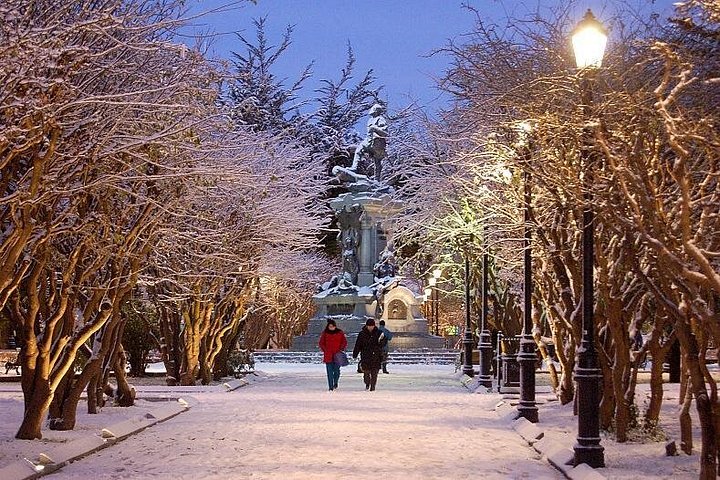
What you do depends on the season. In spring and summer, the tracks are dry and the days long, so hikers can extend their walk or join a guided trek of a few hours. In autumn the colours draw photographers, and in winter the reserve turns white, with a small ski area and trails for snowshoeing. Weather changes quickly, so carry a rain jacket and extra layers whatever the forecast. Boots with grip are useful because paths can be muddy, and the wind funnels through the valleys.
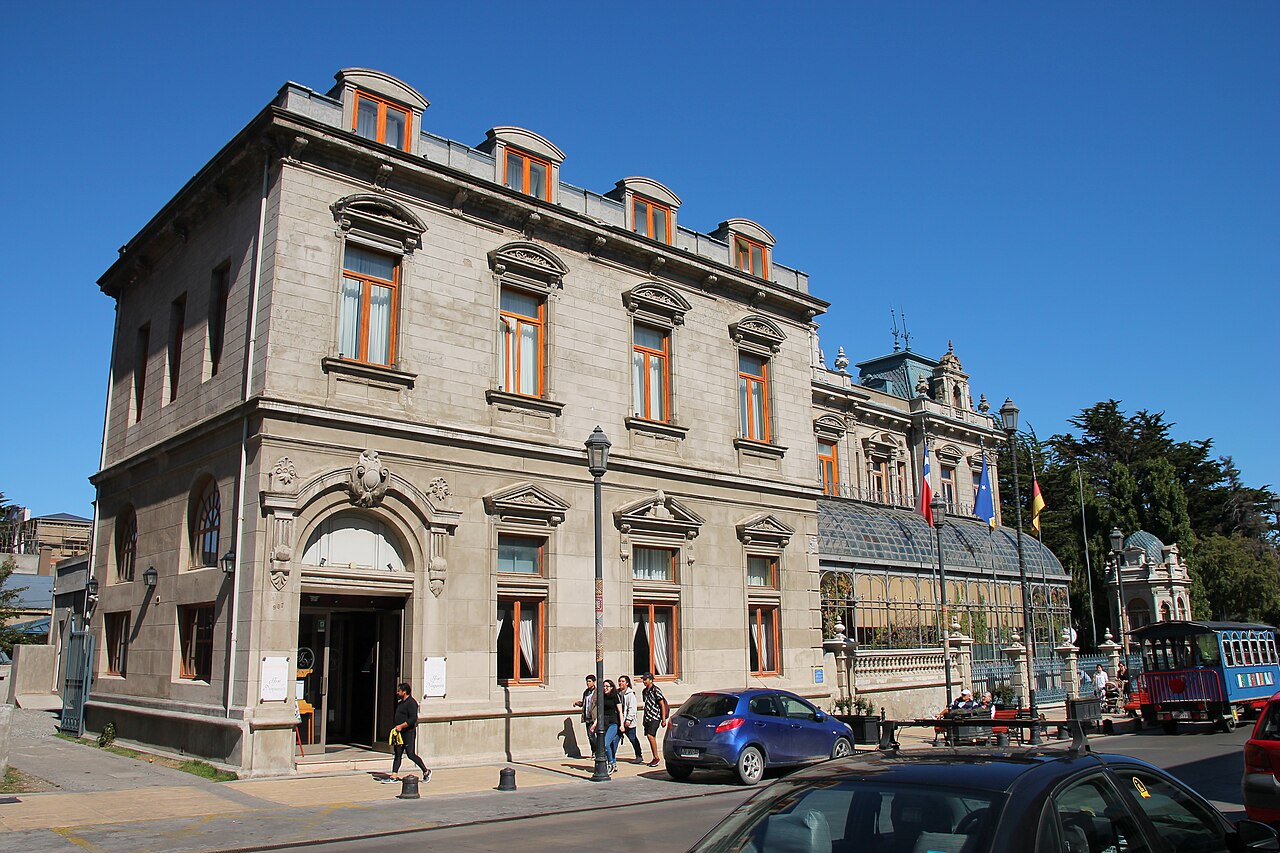
If you are travelling with children, shorter loops near the entrance are the best choice.As a half-day outing, the reserve is easy to fit around other plans. Many visitors combine it with the city tour so that a single guided trip covers the plaza, the cemetery, the museum and a forest walk. Those who prefer independence can reach the reserve by taxi or hire car, although public transport is limited. Because the reserve is close to town, it is also the sensible fallback when wind or sea conditions cancel a boat trip.
Allow time for a hot drink afterwards in the city, where cafes serve strong coffee and cakes that suit a cold afternoon. If you value quiet green spaces and honest exercise rather than headline wildlife, this is your outing.Combine the reserve with local food for a complete outing. After a walk, Punta Arenas offers hearty regional dishes such as roast lamb, king crab and stews, along with local craft beer, all of which taste better after a cold morning in the forest.
What to expect
The experience
A guided half-day that combines a forest walk in the reserve with a city tour, or a self-guided hike from the reserve entrances.
Best time
Summer for long days, autumn for colour, winter for snow sports. Morning light is often clearest.
How long
Four to five hours with a guided tour; shorter loops take an hour or two.
Tips
Carry a rain jacket and layers, wear boots with grip, and bring water. Small entry fees may apply.
Quick picks
- Best for
- Travellers who want a real walk in Patagonian forest without a long drive.
- Families
- Short, gentle loops and a ready-made picnic setting.
- Couples
- Quiet trails and views over the strait.
- Pair with
- Fuerte Bulnes for history or the city centre for coffee and museums.
- Time needed
- Half a day.
Good questions
How far is the reserve from Punta Arenas?+
It lies just west of the city, a short drive from the centre.
Can I visit without a tour?+
Yes. A taxi or hire car works well, and trails are marked. A guide adds context on the forest and wildlife.
Is there skiing in winter?+
A small ski area operates on Cerro Mirador in winter when snow allows, and snowshoeing is also popular.
Is the reserve suitable for children?+
Yes, especially the shorter loops near the entrance.
What is Laguna Parrillar?+
It is a lake in a neighbouring reserve to the south, reached by a separate trail and road, popular for a longer hike.