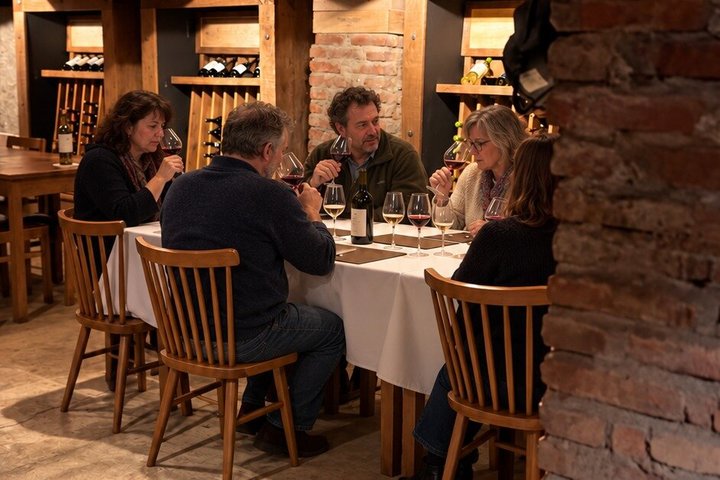
Punta Arenas is about as far from Chile's vineyards as it is possible to get without leaving the country, and that distance is what makes a cellar tasting here so pleasant. In a cool underground space, a host pours a selection of Chilean wines, explains where each comes from and serves them with a board of regional cold cuts, cheeses and bread. The wines usually span the country's styles, perhaps a crisp white from a cooler coastal valley, a fruit-forward carmenere and a structured cabernet from the central region, so you get a short education in what Chile does well. The setting adds charm, with brick or stone walls, low light and the quiet that comes from being underground, and groups are small enough for conversation. It is an easy activity that does not depend on weather, and it fits neatly into a day of walking, a museum visit or a post-boat-trip evening. The format is relaxed, with plenty of time to ask questions and to compare the wines side by side. Anyone who enjoys wine, whether a newcomer or an enthusiast, will find a reason to linger.
What will you taste? Chile's wine map runs from the dry north to the cool south, and the tasting typically offers a cross-section. Carmenere, the grape that was once thought lost in Europe and found flourishing in Chile, is often the star, alongside cabernet sauvignon, syrah, sauvignon blanc and chardonnay. The host explains how climate, altitude and the Pacific influence shape each wine, and how to look, smell and taste with attention. The regional charcuterie gives a sense of local flavour, with cured meats, cheeses and spreads that sit well beside the wines.
The experience is also a way to meet people. Small groups mean you share a table with other travellers, which often leads to tips about where to go next, from restaurants to tours. If you travel as a couple, it makes a calm evening plan after a day outdoors. If you are alone, it is a friendly way to spend an hour. Always pace yourself and drink water between glasses, particularly if you have an early start or a long drive the next day.
Practical points are simple. Check the start time and duration when you book, mention dietary restrictions, and consider whether the tasting suits your schedule, since some sessions are limited to evenings. Dress warmly, because underground spaces can be cool even in summer. If you enjoy the wines, ask whether bottles are available to buy and how to ship or carry them home. Tasting notes from the host are a helpful reminder of what you liked. Combine the session with dinner at a nearby restaurant for a complete evening in the city.
For a good tasting, consider a few simple habits. Look at the colour against a white surface, swirl gently, smell before sipping, and take notes on what you like so that you can find similar bottles later. Do not worry about using technical vocabulary, because the best descriptions are the ones that make sense to you. If you are visiting in the colder months, a cellar is a welcoming refuge from the wind, and a glass of red wine with cured meats is a fitting way to warm up.
What to expect
The experience
A small-group tasting of several Chilean wines with regional charcuterie, led by a host in an underground cellar.
Best time
Evenings, or any wet or windy afternoon.
How long
About one and a half to two hours.
Tips
Mention dietary needs, dress warmly and pace yourself if you have an early start.
Quick picks
- Best for
- Wine lovers and anyone wanting a cosy indoor evening.
- Families
- Adults only for the wine, though the setting is relaxed.
- Couples
- Intimate and unhurried.
- Pair with
- Dinner nearby or the cooking class on another night.
- Time needed
- About two hours.
Good questions
What wines are poured?+
Usually a selection of Chilean wines such as carmenere, cabernet and a white, though the lineup varies.
Is food included?+
Yes, regional charcuterie and bread are typically served alongside.
Can I buy bottles?+
Ask the host. Some venues sell bottles or can suggest where to buy.
Is it cold underground?+
It can be cool, so bring a layer.
Do I need wine knowledge?+
No. The host explains the basics.