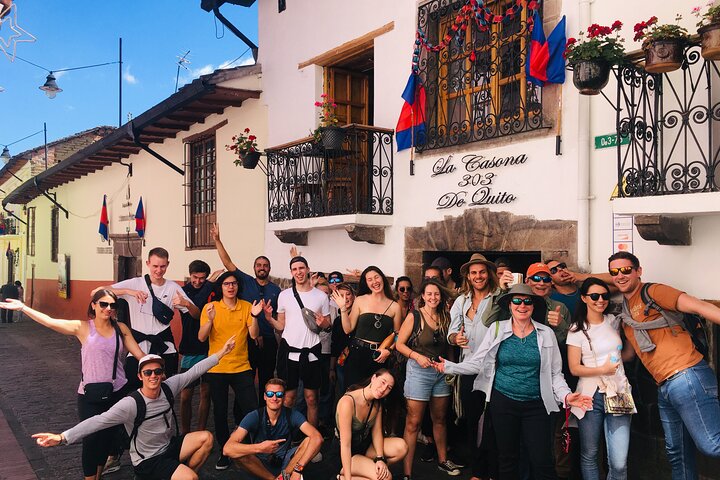
Quito is famous for its gilded colonial churches, but a different city lives on its walls. A street art tour takes you into neighbourhoods where murals, stencils and large-scale paintings tell stories about Andean identity, protest, humour and everyday life. The tour linked here is a guided walk focused on that art, which gives you context you would rarely get by wandering alone: who painted what, what a piece means and how the scene has grown. Street art suits Quito well. The city is steep and layered, and murals climb walls, stairways and the sides of apartment blocks, often facing a view of the valley. Themes range from indigenous symbols, volcanoes and condors to political commentary and playful characters, and many pieces were made with the agreement of residents. Walking with a guide turns an interesting backdrop into a conversation about the city and the people who live in it.
What to expect
A guided walking route, usually in a part of the city away from the main colonial plazas, with stops in front of significant murals and time for photographs. Guides explain techniques and artist backgrounds, point out new works and sometimes share how pieces are commissioned or maintained. The exact route and neighbourhoods are decided by the operator and can change, so confirm the meeting point, the length and the languages offered when you book.
Why do it
It is a good second or third day activity, once you have covered the Historic Centre and want to understand the modern city. It is also a strong choice for photographers and for anyone travelling with teenagers, who often respond to street art more than to church interiors.
Because it happens outdoors and on foot, it pairs well with a coffee stop, a market visit or a late lunch in a neighbourhood you might not otherwise reach. Tips: wear comfortable, grippy shoes because some streets are steep, and bring a light jacket, sun protection and water. The altitude makes uphill stretches slower than you expect, so pace yourself.
Keep your phone and camera secure in the usual way, and follow the guide's advice about where to stop. Ask before photographing people, and if you are interested in a particular artist or theme, tell the guide at the start, since many are happy to adapt the route.
What to expect
The experience
A guided walk through Quito's murals and street art, with stories about the artists and the neighbourhoods.
Best time
Morning or early afternoon, in good light.
How long
Around two to three hours on foot.
Tips
Wear comfortable shoes, pace yourself on slopes and confirm the meeting point and language when you book.
Quick picks
- Best for
- Curious travellers, photographers and repeat visitors who have seen the churches.
- Families
- Works well with teenagers; younger children may tire on the slopes.
- Couples
- A relaxed, visual walk that ends well with coffee or lunch.
- Pair with
- The Old Town food walk or a visit to a neighbourhood market.
- Time needed
- Two to three hours.
Good questions
Is it different from the Old Town walking tour?+
Yes. It focuses on contemporary art and neighbourhood stories rather than colonial history, and often visits different streets.
Is it a lot of walking?+
Expect a few hours on foot with some slopes. The altitude makes hills feel steeper than usual.
Can I take photos?+
Yes, photography is a big part of the tour. Ask before photographing people.
Is it safe?+
Guided groups follow a planned route and the guide will advise on where to stop. Keep valuables discreet as in any capital.
Do I need to book ahead?+
It is sensible to reserve, since walking tours run in small groups.