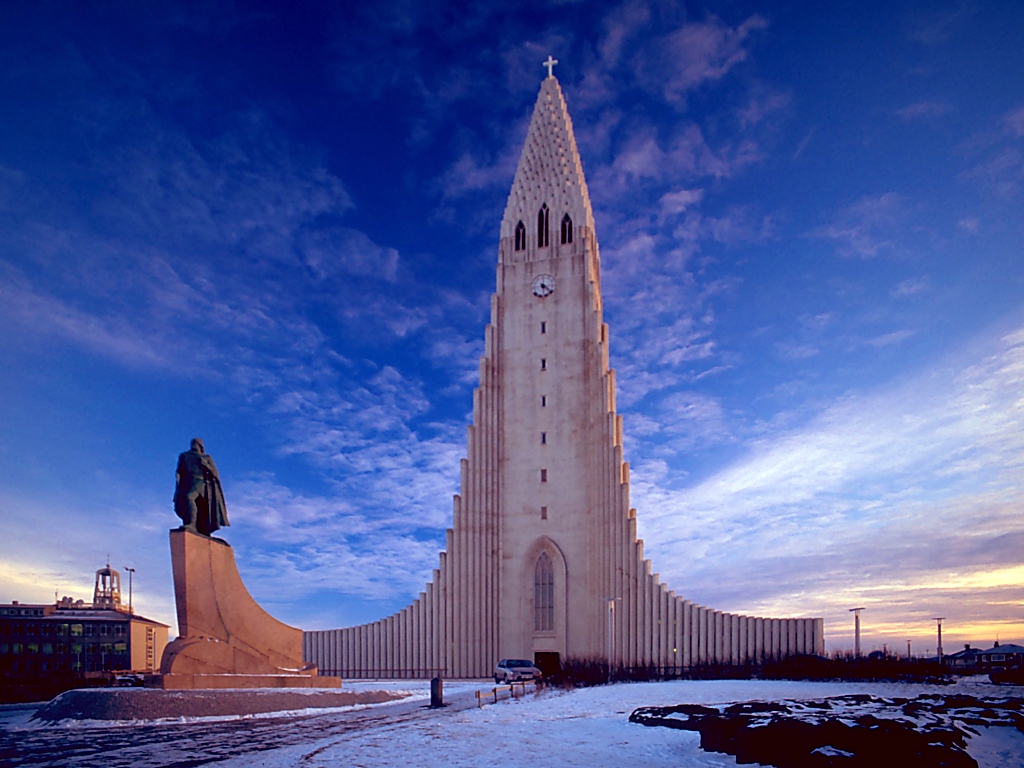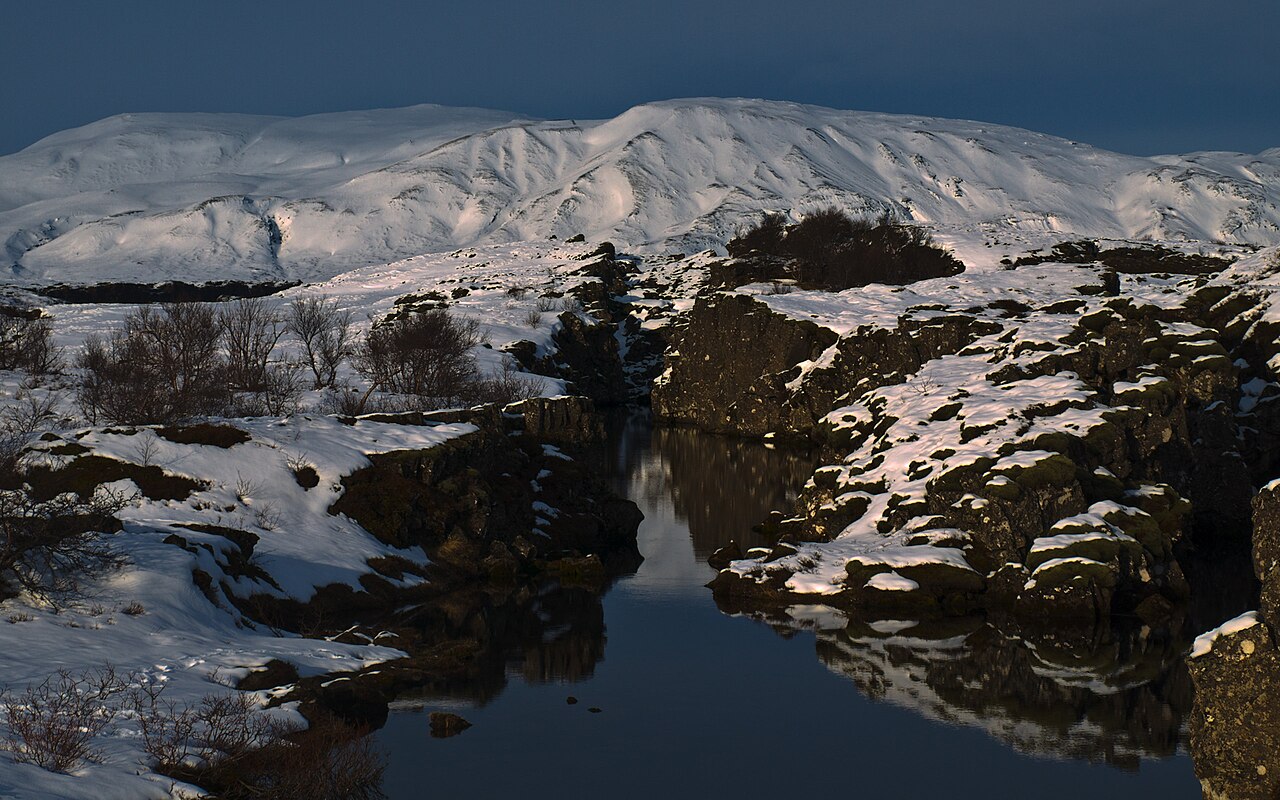
The National Museum of Iceland is the country's memory and the context machine every Iceland trip underrates: the purpose-built museum by the university pond — its permanent exhibition, Making of a Nation, runs the whole 1200-year arc in one continuous, superbly edited sweep: the settlement age (the ninth-century farmsteads' artifacts — swords, brooches and the pagan grave goods; the DNA-and-tephra science of dating the landnám; the drum-shaped bronze of the Þór statuette that is the era's icon), the conversion and medieval centuries (the museum's masterpiece: the Valþjófsstaður door, the 13th-century carved church door whose lion-and-knight roundels are Iceland's single most famous object; the medieval church art, the bishops' vestments, the manuscripts' orbit), the long Danish centuries (the trade-monopoly hardships, the turf-house material culture — the museum's domestic objects tell the poverty-and-endurance story the sagas skip), and the modern arc (independence 1944, the fishing-boom transformation, the museum's 20th-century rooms running to the Björk-era present). The museum's craft is the editing: one floor-through route, objects over text walls, the audio guide's saga-literate storytelling, and the 90-minute pace that leaves the afternoon free — plus the practical virtues (central location walkable from Tjörnin and Hallgrímskirkja's quarter, the good café, the rainy-day reliability). The honest frame: Iceland's landscapes tell you what the country looks like; this is the hour that tells you what it IS — the Golden Circle's Þingvellir (the roster's entry) lands differently once the parliament-on-the-plain story has its objects. Fit: first trips (the context hour), families (the Viking rooms and the museum's kids' trail), culture travelers, and every itinerary's weather bench.
The collection's anchors deserve names
The Valþjófsstaður door (c. 1200 — the carved roundels tell the Le Chevalier au Lion romance: the knight, the rescued lion, the dragon — medieval Iceland's connection to European chivalric culture in one oak plank), the Þór statuette (the tiny seated bronze from c. 1000, hammer in lap — the conversion era's ambiguous icon, pagan or Christian by the viewer's choice), the settlement-age graves (the boat burials' swords and beads, the science sidebars dating them by volcanic ash layers), the medieval church hoard (the Grund chalice, the bishops' crosiers), and the drinking horns' carved genealogies.
The upper floor's modern sweep earns equal time: the trade-monopoly rooms' material poverty, the 19th-century independence movement's print culture, the 1944 republic's founding documents, and the fishing-century transformation that built modern Reykjavík.
The visit craft
Take the audio guide (the storytelling carries non-readers), run the route chronologically (the editing rewards order), give the Valþjófsstaður door its five minutes (the roundels' story reads bottom-up), and use the kids' trail for families (the museum runs genuinely child-aware). The pairing structure: the museum sits by the university pond ten minutes from Tjörnin — the city-walk day (Hallgrímskirkja, the pond, the harbor) absorbs it naturally, and the Golden Circle's Þingvellir visit (before or after) completes the parliament story the settlement rooms begin. The Culture House note: the museum's manuscript-era sibling venues rotate — check current exhibitions for the saga-manuscript displays that complete the medieval picture.
Practicals and fit
Suðurgata by the university (10 minutes' walk from Tjörnin), about 90 minutes, audio guide the move, café solid. Fit: first trips' context hour, families via the kids' trail, and the weather bench's most nourishing seat.
What to expect
The experience
Iceland's whole 1200-year story in one edited floor-through sweep — settlement swords and the Þór statuette, the carved Valþjófsstaður door, the Danish centuries' endurance and the republic's birth — objects over text, audio guide carrying the sagas.
Best time
Early in the trip — the context pays compound interest at Þingvellir and beyond; rainy days fill it, mornings run quietest.
How long
About ninety minutes chronologically; the café extends it.
Tips
Give the Valþjófsstaður door its five minutes — the lion-and-knight roundels read bottom-up. The kids' trail makes the Viking rooms work for families. Pair with the city-walk day; it sits ten minutes from Tjörnin.
Quick picks
- Best for
- The context hour — the landscapes show you Iceland; this tells you what it is.
- Families
- Viking swords, boat burials and the kids' trail — the history at treasure-hunt register.
- Couples
- A quiet shared ninety before the café — the civilized morning of the city day.
- Pair with
- Þingvellir on the Golden Circle completes the parliament story; Hallgrímskirkja and Tjörnin walk from it.
- Time needed
- One chronological ninety, early in the trip.
Good questions
What is the one must-see object?+
The Valþjófsstaður door — the 13th-century carved church door whose roundels tell a chivalric lion-and-knight romance: Iceland's most famous single object, worth its five unhurried minutes.
Is it good for kids?+
Better than its name suggests — the settlement rooms run swords-and-boat-burials, the kids' trail gamifies the route, and the 90-minute pace fits family stamina.
How does it pair with the Golden Circle?+
Perfectly in either order — the settlement rooms set up Þingvellir's parliament-on-the-plain story, and the museum's objects give the empty landscape its people.
How long is the visit?+
About ninety minutes for the full chronological sweep with the audio guide — central enough to slot into the city-walk day, ten minutes from Tjörnin.
What about the saga manuscripts?+
The manuscript displays rotate through the museum's sibling venues — check current exhibitions; the main museum's medieval rooms carry the era's church art and the door either way.