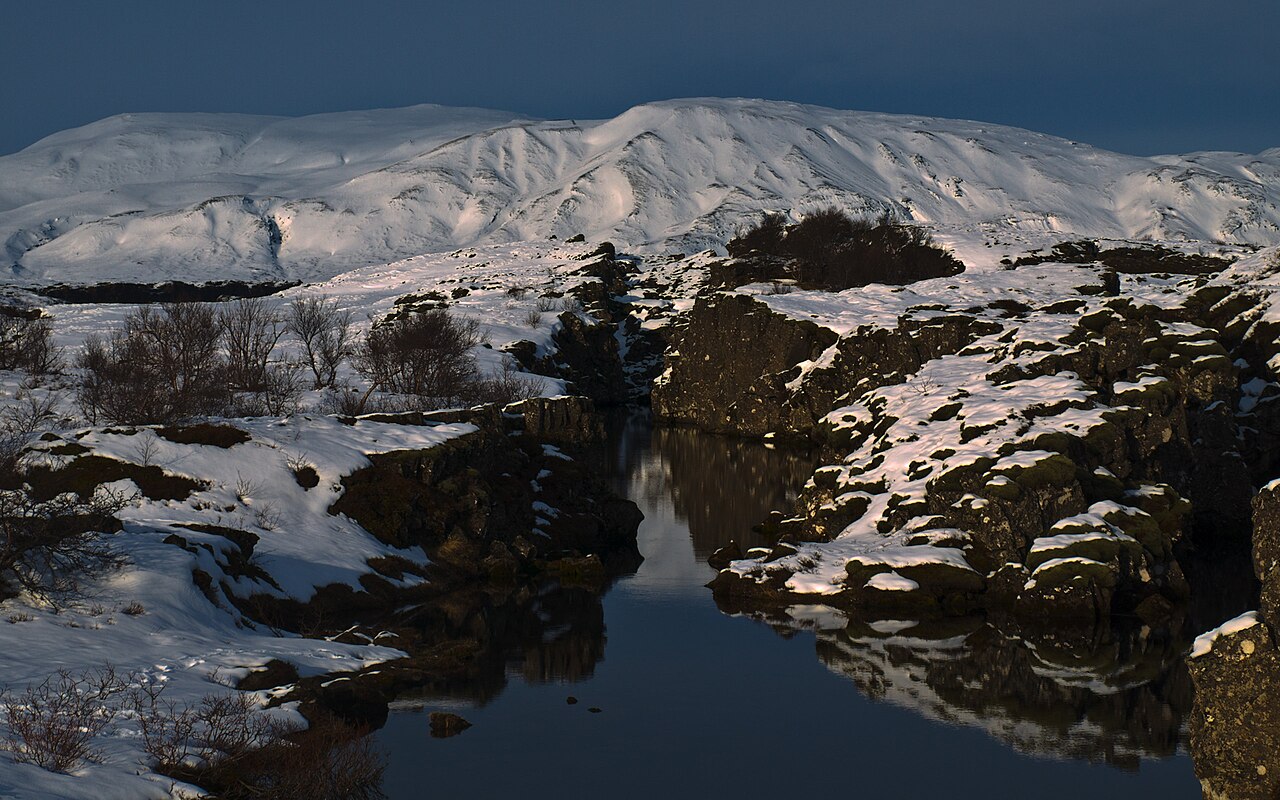
Silfra is a fissure in Thingvellir National Park where the North American and Eurasian plates are slowly pulling apart, and the crack has filled with meltwater that spent decades filtering through porous lava from the Langjokull glacier. The result is the clearest water most people will ever see in. Visibility regularly passes one hundred meters, the colors run from deep blue to glowing green over pale sand and algae, and a snorkeler can drift above the gap with an arm out toward each continent. The water holds about two degrees Celsius all year, which sounds alarming until the drysuit goes on: a thick insulated suit, hood, gloves and a mask leave only the face exposed, and most people are comfortable for the thirty to forty minutes of the swim. The current carries you gently along the fissure from the first narrow passage through the cathedral and the lagoon, so there is very little paddling involved. Guides handle fitting, safety and the short briefing, and many departures include photos taken in the water. The tour is a half-day from Reykjavik, usually with pickup, and it is open year-round, which makes it one of the few big adventures that works as well in January as in July. Swimmers need to be comfortable in water and meet the age and health requirements the operator sets, but no diving certificate is needed for the snorkel version.
The geology is what makes Silfra more than a cold swim. Thingvellir sits on the Mid-Atlantic Ridge, and the park's cliffs and cracks are the visible edge of the plates drifting apart by roughly two centimeters a year. Silfra is the only place where you can put your face in that gap, and the story is told by the water itself.
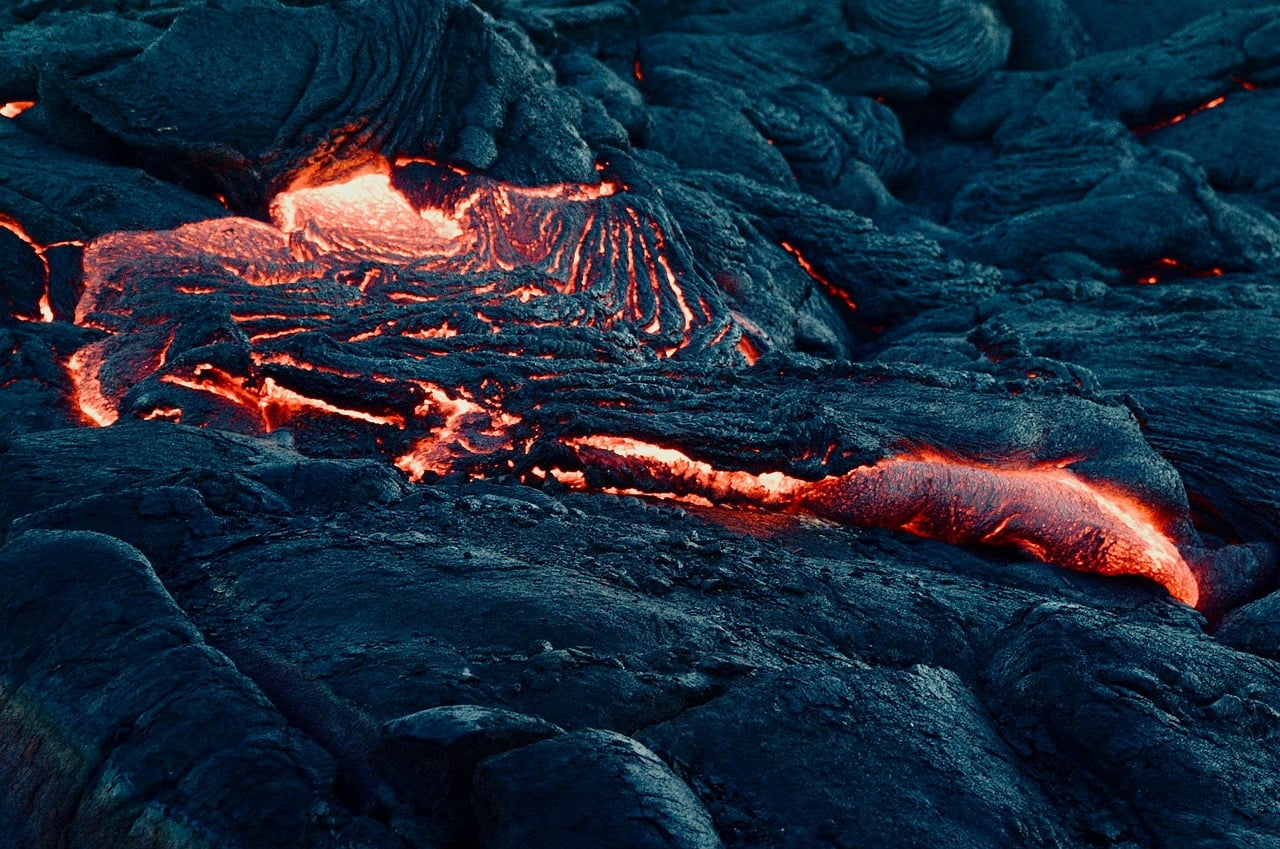
Rain and snowmelt sink into the lava fields north of the park, filter through the rock for several decades, and surface here as cold, mineral-light water with almost nothing suspended in it. That filtering is the reason the view down into the fissure looks less like a lake and more like an aerial photograph.
The swim follows a set route. After the suit fitting and a briefing on the platform, the group enters down a short ladder and floats through Silfra Hall, the widest section, then through the narrow Silfra Cathedral where the walls rise on both sides, and finally into the Silfra Lagoon, where the water opens and turns an almost fluorescent blue over white sand.
Guides lead from the front and watch from behind, and the current does most of the work. Because the suit traps air, the swimmer floats high and has little to do but look. Expect cold hands and a numb face for a few minutes, then a quiet sense of wonder; the taste of the water, safe to sip, is a favorite detail afterward.
Planning matters. Tours run in all seasons, but morning departures in summer can be crowded and afternoon light is gentler for photos, while winter days are short and the surrounding park may be dusted with snow. Wear warm layers underneath the suit, bring a swimsuit for the changing area, and ask about contact lenses and beards, which affect mask seal. Several options pair Silfra with Golden Circle stops, a Sky Lagoon soak or the Raufarholshellir lava tunnel, which is a smart way to warm up.
Divers with a drysuit certificate can choose the scuba version instead for a deeper view of the fissure walls. Either way, book early in high season because group sizes are small and safety rules are strict. Safety is taken seriously throughout. Groups are kept small, guides carry rescue equipment and the route is checked before each departure, and anyone who feels uncomfortable can exit at the platforms along the way.
What to expect
The experience
A guided drysuit snorkel through the Silfra fissure at Thingvellir, with suit fitting, a safety briefing, a drift through the hall, cathedral and lagoon, and a warm drink afterward.
Best time
Year-round. Summer gives long daylight and easy roads; winter brings snow-framed scenery and fewer crowds. Morning slots are busiest.
How long
3-4 hours.
Tips
Wear warm base layers and thick socks under the suit, and ask about photo options before you go. Keep your hands close to your chest to stay warm, and take the hot drink offered at the end.
Quick picks
- Best for
- Travelers who want one big, memorable adventure that is unique to Iceland.
- Families
- Usually restricted by age and height, so check the operator's minimums before booking; teenagers who swim well often love it.
- Couples
- A shared experience that sits well between a Golden Circle day and an evening soak.
- Pair with
- Thingvellir National Park, Geysir and Gullfoss, or the Sky Lagoon for a warm finish.
- Time needed
- Half a day including transfers.
Good questions
Do I need to be able to dive?+
No. The snorkel version needs only basic swimming comfort and the willingness to float in a drysuit. A separate scuba tour exists for certified drysuit divers.
Is the water really that cold?+
It stays close to two degrees Celsius, but the drysuit keeps your body dry and warm. Only your face, and sometimes your hands, feel the chill, and it fades quickly.
Can I drink the water?+
Yes. Silfra is among the cleanest natural water sources in the country and guides encourage a sip once the swim is under way.
Is it open in winter?+
Yes. It runs year-round, and winter swims are often quieter, though extreme weather can cancel departures. Check conditions close to your date.
What if I wear glasses or have a beard?+
Contact lenses are usually fine under the mask, and glasses are not. Facial hair can break the seal on the mask, so mention it when booking so the guide can advise.