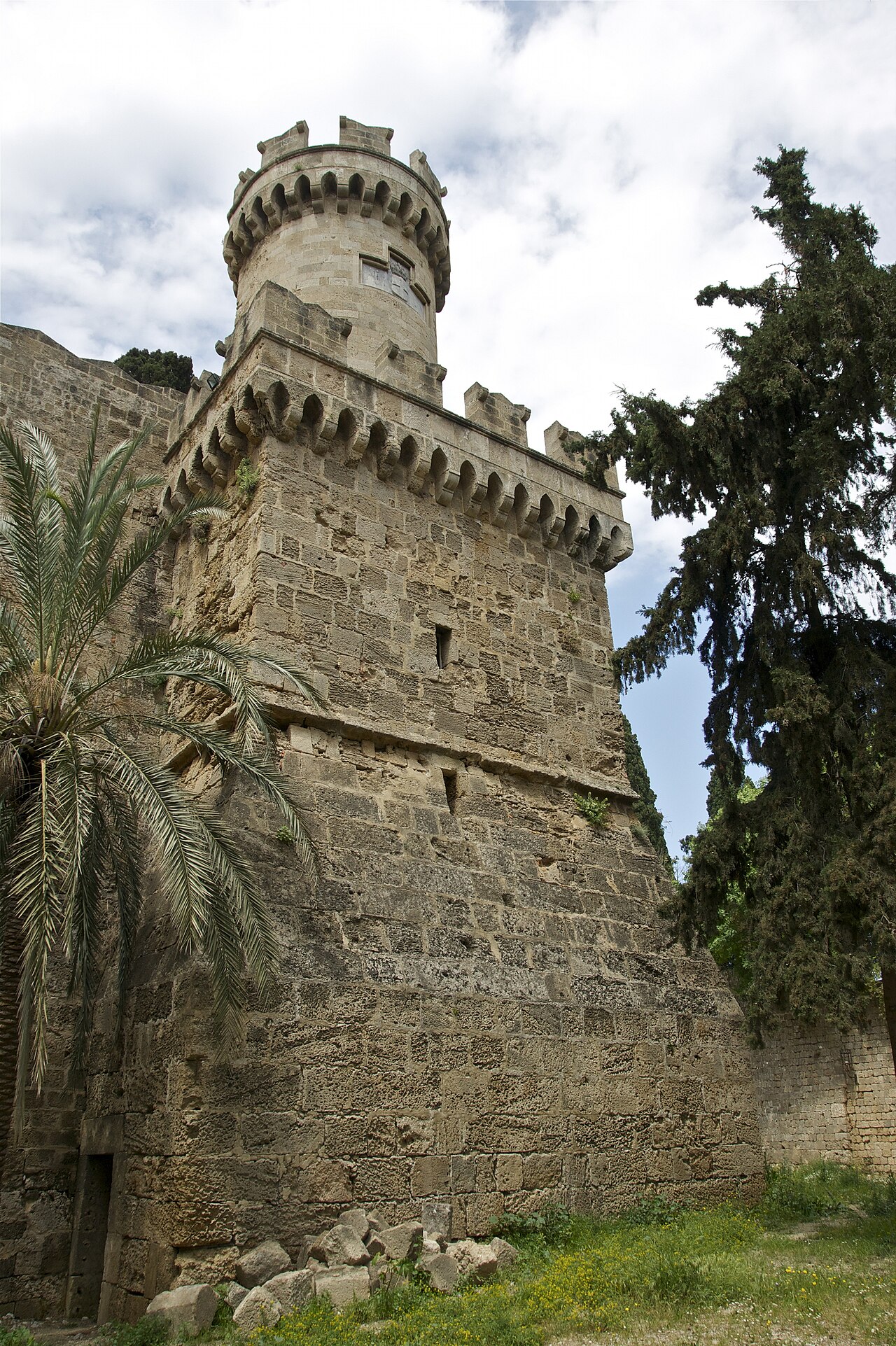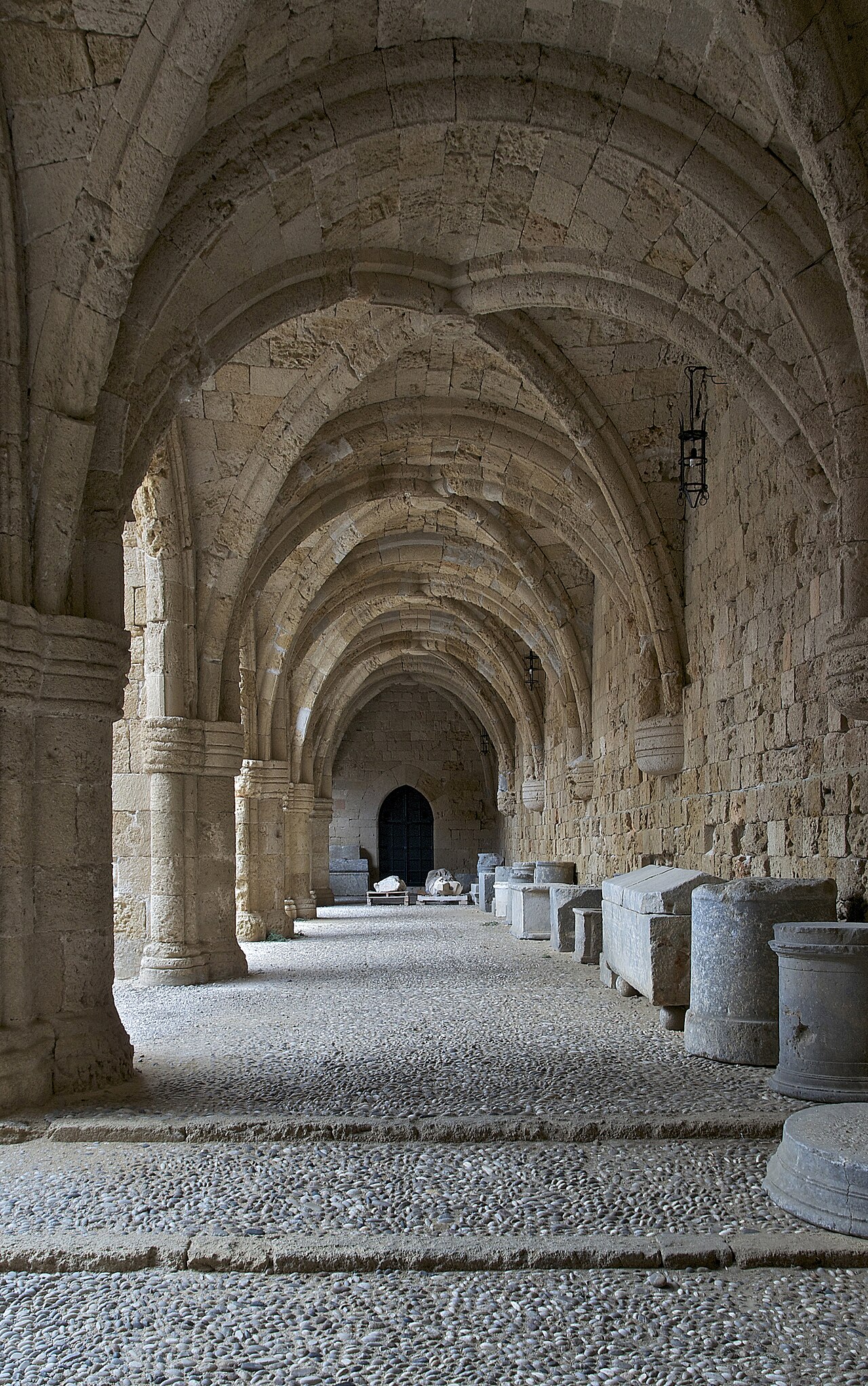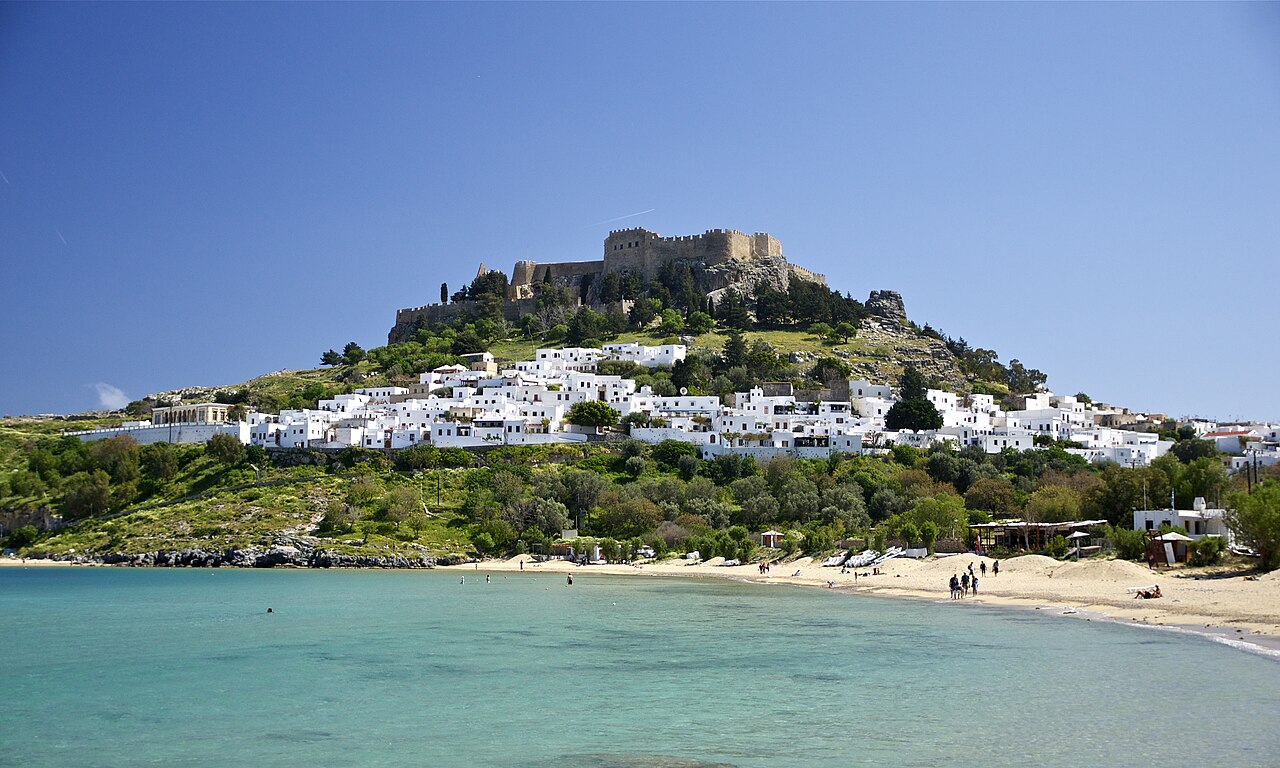
Lindos is the sight that earns the island its reputation. A village of whitewashed houses, flat roofs and narrow lanes climbs a hillside above a deep blue bay, and above them all stands a rocky acropolis topped by golden walls. The acropolis was a sacred place of ancient Lindos, one of the three great cities of Rhodes, and the temple of Athena Lindia occupied the summit. A Hellenistic stoa and a monumental staircase were added later, and the Knights of St John built a fortress around the whole hill. The village below is a maze of lanes, courtyards and captains' houses, many with pebble-mosaic floors, and tiny churches. Below the acropolis, on the sea side, is the almost enclosed St Paul's Bay, a calm, photogenic cove said to be where the apostle landed.
The climb to the acropolis takes around fifteen to twenty-five minutes up a stepped path, and it is steep and exposed. There are donkey rides for part of the way, and the steps can be slippery. At the top you walk through the Knights' gate, up a long stairway to the temple platform and along a Hellenistic stoa, and get a view over the village, the bay and the Aegean.
The ticket with a digital guide, sold online, helps you understand what you are looking at. On a clear day the horizon seems endless. Allow about an hour at the top, plus time in the village.
Hours change with the season. The site keeps long daily hours in the main season, but it shuts earlier in winter, often around the mid-afternoon, so check the current schedule if you travel between November and March, and go early. Lindos is about fifty kilometres from Rhodes Town, roughly an hour by road. Public buses run from Rhodes Town, with thinner winter timetables, and many people book a guided tour or a day trip. Parking in the village is limited, so use the car parks at the edge.
In summer Lindos is crowded and hot, and the village is full of shops and restaurants. In winter it is much quieter, and the whitewashed lanes feel like a different place, but many restaurants and shops close from late autumn and the beach bars are shut. That is part of the appeal for walkers and photographers: the light is good, the acropolis is open, and you can climb without queues. Wear sturdy shoes, take water and a hat in sunny weather, and allow a half day at the least.
What to expect
The experience
A guided or self-guided visit: a steep stepped climb to a temple and a Knights' fortress, plus a wander through the whitewashed village and down to St Paul's Bay.
Best time
Early in the day, before the heat and the tour buses, and in the cooler months for comfortable climbing.
How long
Three to four hours including the climb and the village.
Tips
Buy the ticket with a digital guide in advance, wear shoes with grip, carry water and check the winter closing time.
Quick picks
- Best for
- Everyone who comes to Rhodes; it is the island's single best day out.
- Families
- Older children enjoy the climb and the bay, but the steps are hard work for buggies and toddlers.
- Couples
- Stay for a late lunch in the village and watch the light change on the acropolis.
- Pair with
- St Paul's Bay, the Old Town of Rhodes and the Seven Springs on the way back.
- Time needed
- Half a day, plus the drive.
Good questions
How hard is the climb to the Lindos Acropolis?+
Fifteen to twenty-five minutes up a stepped path, steep and exposed. Donkeys carry visitors part of the way, but the final stairway is on foot.
How do I get to Lindos from Rhodes Town?+
By car, public bus, organised day tour or in season by boat. It is about fifty kilometres, roughly an hour by road.
Is Lindos open in winter?+
The acropolis is open year-round, with shorter winter hours, but many restaurants, shops and beach bars close from late autumn. The village is quiet and photogenic.
Is the ticket for the acropolis a timed entry?+
Tickets are sold online with a digital guide, and you can check availability for your day. Arriving early avoids both heat and crowds.
Where is St Paul's Bay?+
A small, almost enclosed cove just below the acropolis on the sea side, reached on foot from the village.