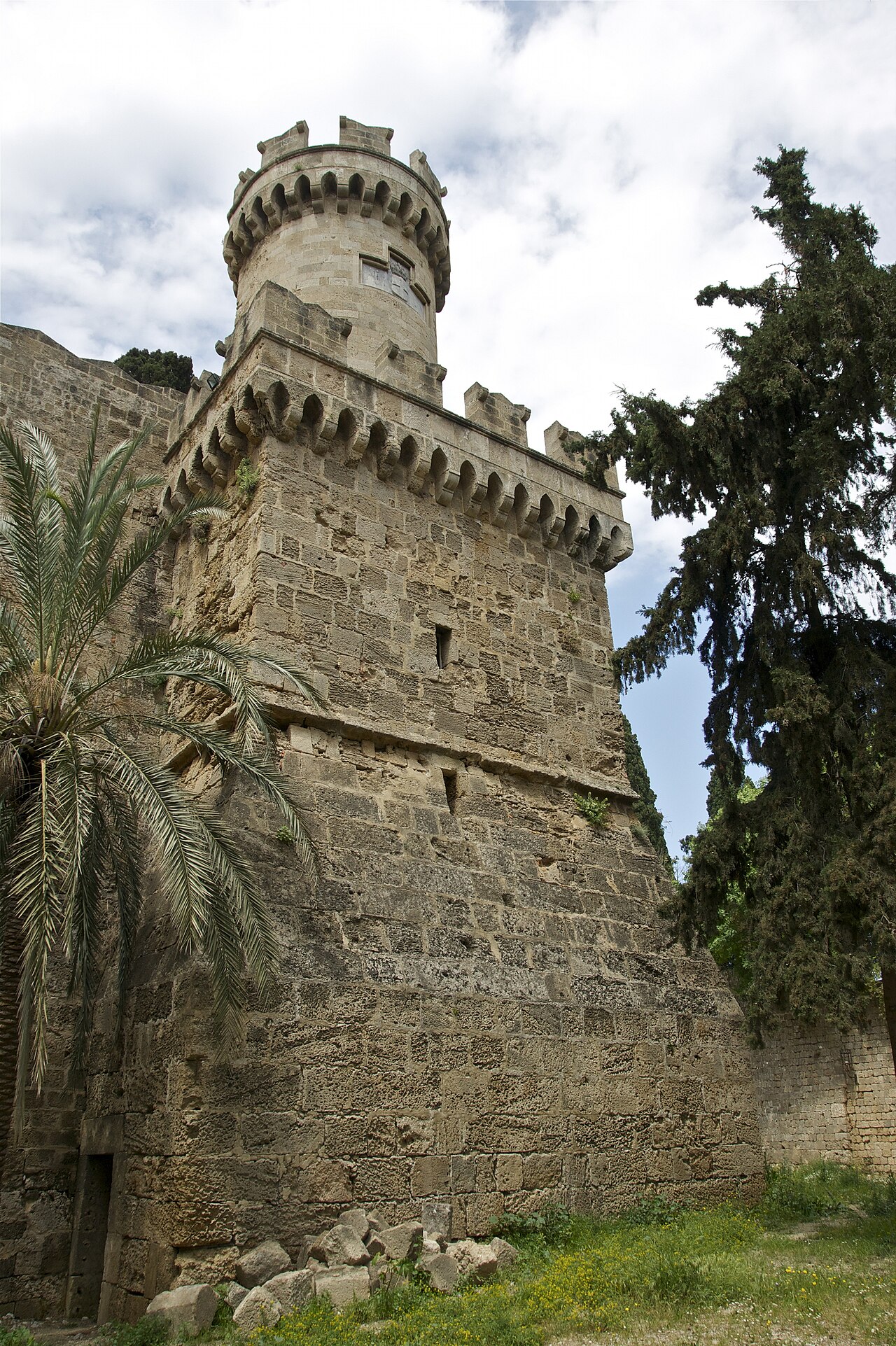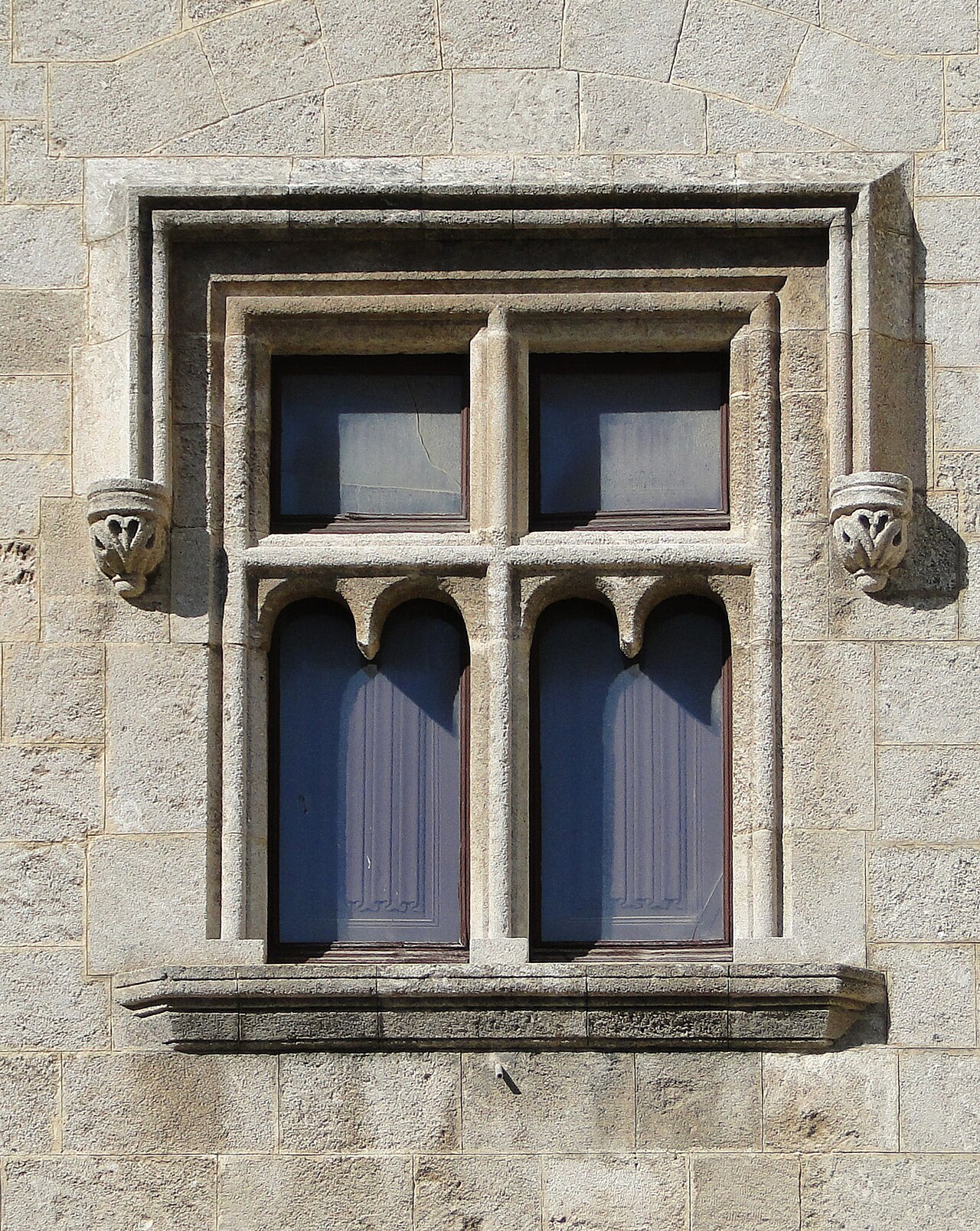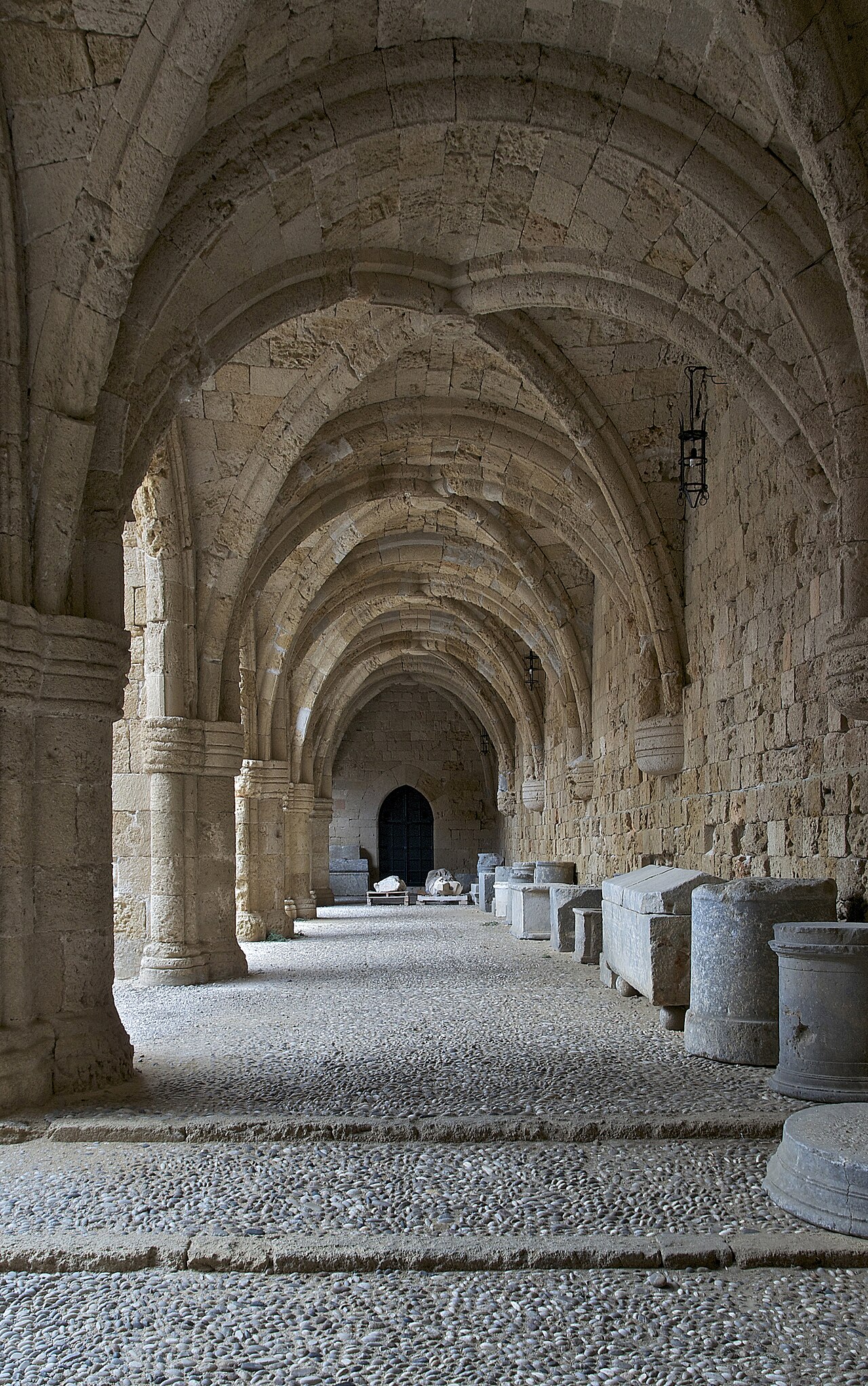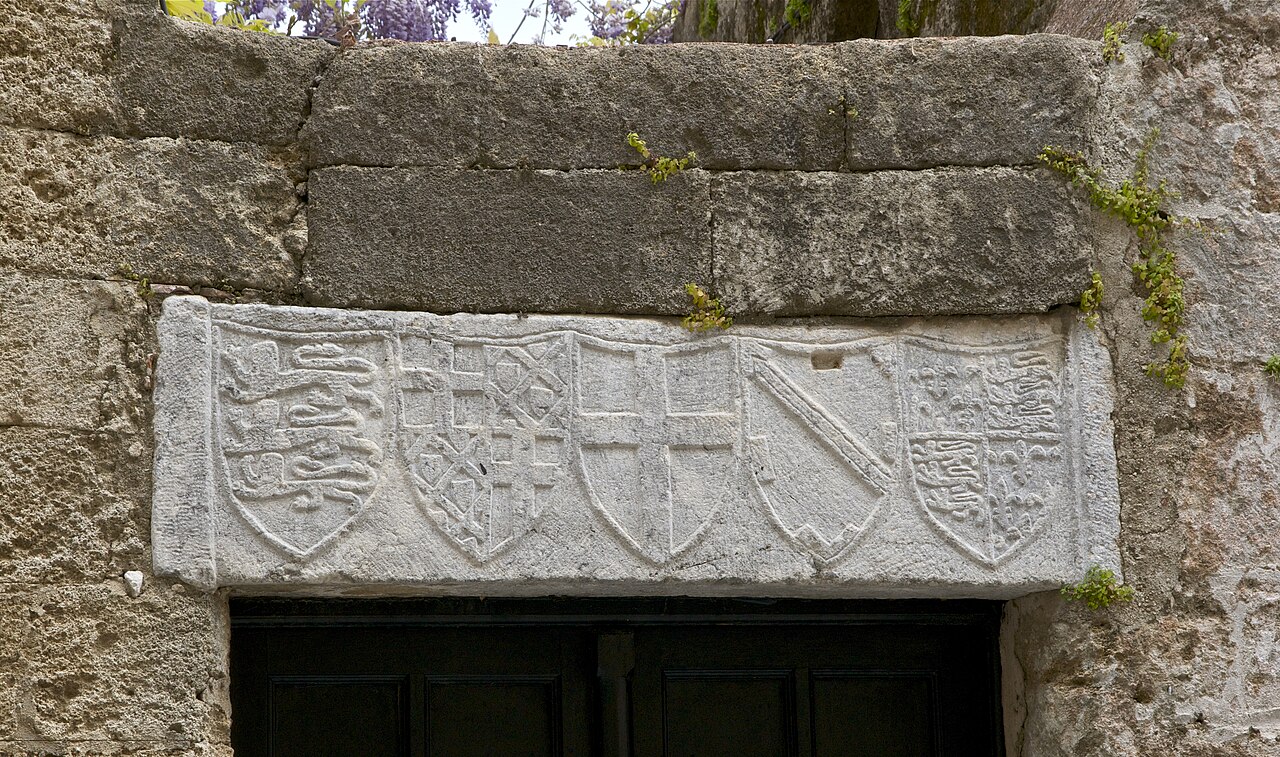
Ippoton Street, the Street of the Knights, is the most photographed lane in Rhodes, and it deserves it. It climbs gently from the Hospital of the Knights, now the Archaeological Museum, to the gate of the Palace of the Grand Master. On either side stand the inns of the Order's tongues, the national groups into which the Knights of St John were divided, each marked by a coat of arms and a plain, buttressed facade. Behind the walls were refectories, chapels and the residences of officers. Restored to its medieval form in the early twentieth century, the street has a rare unity: stone fronts, small pointed doors, carved emblems and the thin strip of sky overhead. It is a quiet street, partly because few shops and no through traffic disturb it, and this is its charm. You walk where armed monks once walked, to the same fortress they defended.
Walking the street takes ten minutes but the best visit takes longer. Start at the bottom, at the museum, and read the carved shields on the facades as you climb. Look for the inns of France, Italy, Spain and England; the inn of the tongue of France is one of the grandest, with a fine facade. Peek through open doorways to catch courtyards and gardens. The street is paved with cobbles that are polished smooth, so grip matters, especially in damp winter weather.
Timing matters. At midday in summer the street fills with tour groups, and the narrow width makes crowds feel tighter than they are. Go early, before the palace opens, or late in the afternoon when the light turns the stone gold, or in the evening when the lamps come on and the lane is almost empty. In winter you will often have it to yourself, though the bright, low sun can make the best photographs of the year.
Practicalities
The street is free and open at all times, because it is a public lane. The buildings along it are mostly closed to visitors, with a few used by cultural institutions, but the exteriors are the attraction. It is a gentle slope rather than a climb, but it is cobbled and uneven, so wheelchairs and buggies struggle.
Combine the walk with the Palace at the top and the Archaeological Museum at the bottom for a complete medieval morning, and then drop down through the lanes of the Old Town to lunch. If you take a guided walking tour, the guide will usually include the street and explain the heraldry.
What to expect
The experience
A free, self-guided walk along a short, gently sloping cobbled street of medieval stone facades and carved coats of arms.
Best time
Early morning, late afternoon or after dark, when it is quiet and the light on the stone is at its best.
How long
Ten minutes to walk, thirty to sixty minutes with photographs and details.
Tips
Wear shoes with grip, look up for the carved shields, and visit before tour groups arrive around late morning.
Quick picks
- Best for
- Anyone who wants the quintessential medieval Rhodes photograph.
- Families
- A short, car-free walk that children can manage, though the cobbles are rough for buggies.
- Couples
- A lamplit evening stroll, ending with dinner in an Old Town courtyard.
- Pair with
- The Palace of the Grand Master at the top and the Archaeological Museum at the bottom.
- Time needed
- Under an hour.
Good questions
Is the Street of the Knights free?+
Yes. It is a public lane, open at all hours, and walking it costs nothing. Only the museum and the palace at either end charge admission.
Why is it called the Street of the Knights?+
It was lined with the inns of the Knights of St John, who were grouped by language or tongue, plus the residences of officers and the Hospital at the bottom of the street.
Can I go inside the buildings?+
Mostly not. The facades are the attraction, but the Archaeological Museum at the bottom is in the old Hospital of the Knights, and the palace is at the top.
How long does the walk take?+
About ten minutes end to end, but plan thirty to sixty minutes if you stop to read the heraldry and take photographs.
When is the best time to visit?+
Early morning or evening, and in winter any time of day, as the tour groups thin out. Take care on the smooth cobbles when wet.