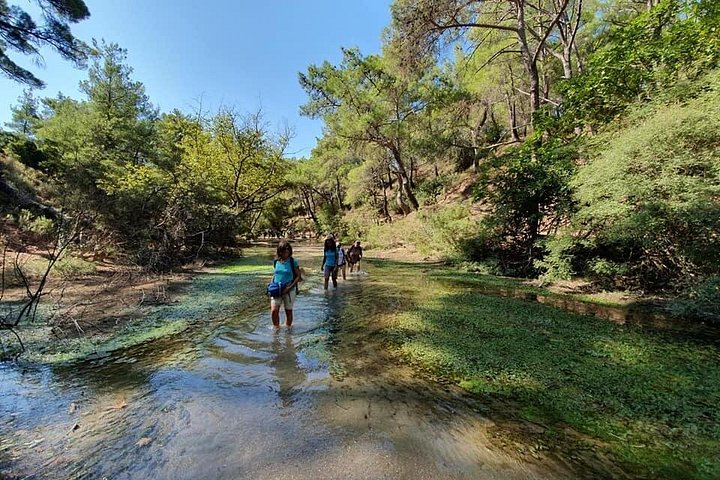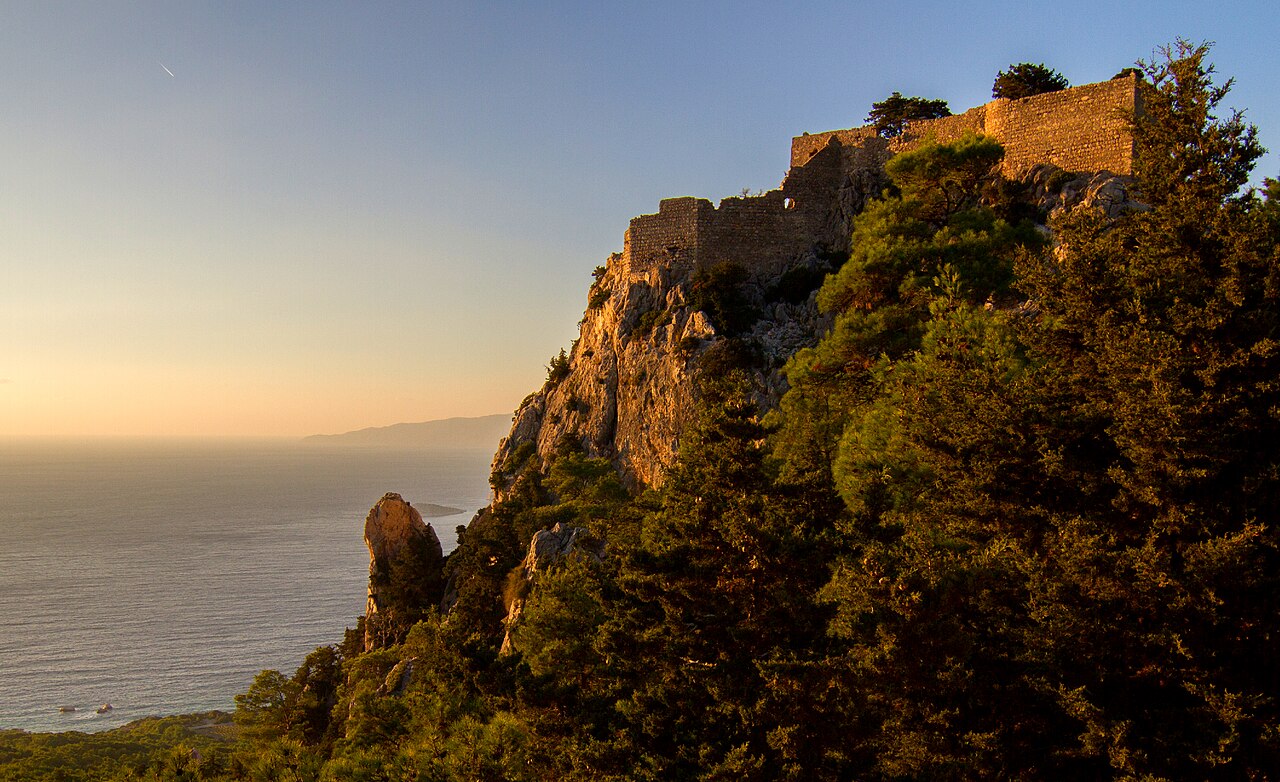
Most visitors see Rhodes from a coach window on the main coast road, which means they miss the real interior: pine and cypress forests, dry stone terraces, hill villages where the coffee house is the social centre, and mountain tracks with views down to the Aegean. A 4x4 safari fills that gap. You travel in a convoy of off-road vehicles, either driving yourself or riding with a guide depending on the product, and follow unpaved roads to places that need real ground clearance. It is a lively, slightly dusty day out, popular with couples, friends and families with teenagers who would rather feel the island than look at it through glass.
The north route, which the product is named after, usually heads inland from the north-west of the island, climbing through woods and farmland toward high viewpoints and remote chapels. Stops tend to include a village for a drink or a snack, a taste of local produce, and a swim or a paddle at a quiet bay before returning.
Exact stops vary with the season and the state of the tracks, so treat any route you read as a guide rather than a promise. Guides brief you on the day, hand out maps or radios where needed, and look after route-finding so you can focus on the scenery.
The terrain is rough but not extreme. Expect gravel, dust, ruts and some steep sections, driven at low speed behind a lead vehicle. You do not need off-road experience, but a licence is needed if you drive, and the operator will normally check it at the start. Passengers can ride in the vehicle, and it is often possible to share the driving. Closed shoes, sunglasses, a hat and a scarf or buff for the dust are all sensible, and a swimsuit under your clothes makes the beach stop easy.
A typical safari runs for most of a day, with a pick-up from the main resort areas or a meeting point near the start. Lunch or a meal stop is common in a village taverna, and drinks and water are often part of the offer. Check the description when you book, because inclusions vary from one product to another, and ask about minimum ages for drivers and passengers, since rules differ.
Why choose a safari over a coach tour? The coach tour is more comfortable and more informative about history. The safari is looser, more physical and much better at showing you the scale of the island: how empty the interior is, how quickly the landscape changes from olive terraces to forest, and how close the sea always is. It also reaches places that a coach cannot, which makes it a good complement to a visit to Lindos or the Old Town rather than a replacement.
Seasons
The safari is at its best in spring, when the hills are green and the wildflowers are out, and in early autumn, when the heat has eased. In midsummer, start early and plan for a hot, dusty day with plenty of water. In wet weather the tracks can be slippery and routes may be altered or cancelled, so keep the day flexible. Do not bring valuables you would hate to cover in dust, and keep your camera in a sealed bag.
What to expect
The experience
A convoy day on unpaved tracks through the pine forests and villages of the interior, with food and swim stops.
Best time
Spring and early autumn; start early in midsummer.
How long
Most of a day, including stops.
Tips
Wear closed shoes, bring sunglasses, a hat, a swimsuit and a dust scarf, and carry a driving licence if you plan to drive.
Quick picks
- Best for
- Active travellers who want to see the interior of Rhodes rather than just the coast.
- Families
- Good for families with teenagers; check minimum ages for drivers and passengers.
- Couples
- A fun shared adventure with a village lunch and a quiet swim.
- Pair with
- A relaxed beach day or the Old Town the next morning.
- Time needed
- A full day, with pick-up if offered.
Good questions
Do I need off-road experience?+
No. The convoy moves at low speed behind a guide, and the briefing covers the basics. You will need a valid licence to drive.
Is the safari suitable for children?+
Often yes for older children as passengers. Minimum ages differ by operator, so check when you book.
Where do the tracks go?+
Mainly through forests, farmland and hill villages in the interior. Routes change with the season and conditions.
Is food included?+
Many versions include a meal or snack stop in a village. Check the inclusions when you book.
What if it rains?+
Wet tracks can be slippery, so routes may change or the trip may be cancelled. Keep your plans flexible.