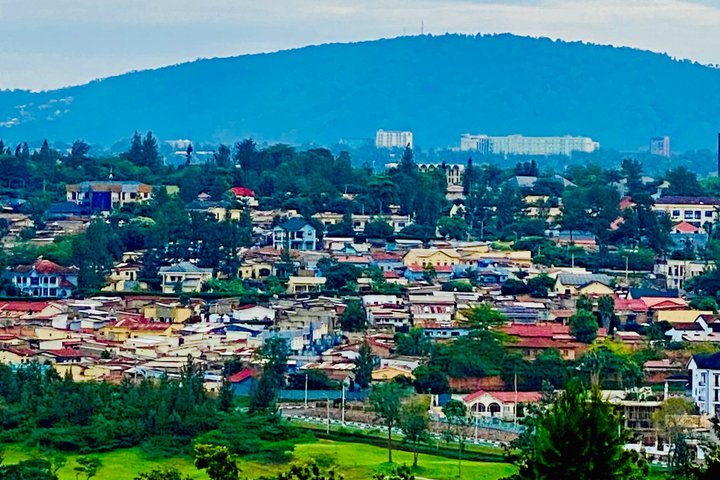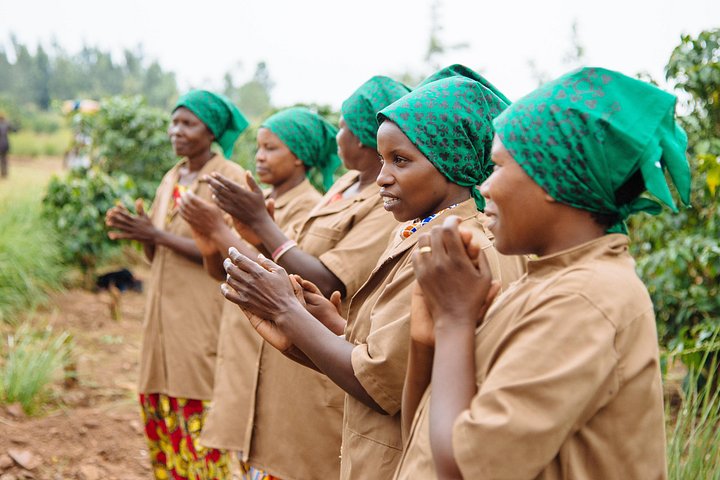
Coffee is one of Rwanda's great success stories, and most of it is grown by smallholders on steep hillsides, in plots of a few hundred trees tended by families and cooperatives. This guided trek takes you onto a coffee farm led by local women and walks you through the whole process in a relaxed, hands-on way. You learn how the trees are planted and pruned, how to recognise a ripe cherry, how the beans are picked, washed, dried and sorted and, depending on the day and the season, how they are roasted and brewed. The walk itself is on farm paths through green hills, with views over banana groves and neighbouring plots, and your hosts explain how the cooperative works and how coffee income supports their households and children. The tour finishes with a tasting, so you can compare the flavour of freshly made Rwandan coffee with what you drink at home. It is a good way to meet people in a setting that is not a museum or a memorial, and it supports a community enterprise directly. The exact farm, route and activities depend on the operator and the time of year, so read the description carefully when you book.
The coffee story
Coffee arrived in Rwanda over a century ago, and after the genocide the sector was rebuilt with an emphasis on quality, washing stations and cooperatives, many of them led by women. Rwandan coffee is typically Arabica of the Bourbon type, grown at altitude, and tends to be bright and fruity with a sweet, floral finish. A visit to a farm lets you taste the difference between a well-processed cup and an average one, and you will leave with a better understanding of why specialty buyers pay attention to the country.
Seasons
The main harvest generally runs through the drier months, with picking and processing at its busiest from roughly April or May into July. If you visit then, you may see cherries being picked, floated, pulped and laid out on raised drying beds. Outside the harvest, the farm is quieter, but you still see the trees, the plots and the washing station, and you can still taste coffee prepared by your hosts. Ask your operator what to expect on your date.
What to bring
Sturdy shoes for farm paths, a hat, sun protection and a light jacket for cool mornings. Paths can be slippery after rain, and you may be walking on slopes, so a walking stick can help. Bring small notes for buying bags of roasted beans or crafts made by the cooperative, which are a good souvenir and a direct way to support the group. Allergies and dietary needs should be mentioned when booking, particularly if a meal is included.
Fitting it in
Coffee farm visits are usually a morning or half-day activity, so they pair well with a city tour, the Nyamirambo food walk or a market visit. They also combine neatly with a trip to Lake Kivu, whose hills are covered in coffee, and with the King's Palace and Huye route, where coffee options are common. If you love coffee, buy a bag to take home and ask your hosts how to brew it so that it tastes the way it did at the farm.
Who it suits
Curious travellers, couples, families with older children and anyone who prefers a gentle cultural activity to a strenuous hike. The pace is easy, and the conversations, rather than the scenery, are the highlight.
What to expect
The experience
A guided walk through a women-run coffee farm, covering growing, picking, processing and brewing, usually ending with a coffee tasting.
Best time
Mornings, and the harvest months from about April or May into July if you want to see picking and processing.
How long
A few hours, often a morning or half-day activity.
Tips
Wear sturdy shoes, bring sun protection, and buy beans from the cooperative to support the group.
Quick picks
- Best for
- Coffee lovers and travellers who want a gentle, community-focused cultural activity.
- Families
- Suitable for children who enjoy walks and hands-on activities.
- Couples
- A relaxed morning with views, conversation and a good cup at the end.
- Pair with
- A Kigali city tour or the Nyamirambo food walk.
- Time needed
- A morning or half day.
Good questions
What happens on the coffee farm trek?+
You walk through a coffee farm with local women, learn how the crop is grown, picked, processed and brewed, and usually finish with a tasting.
When is the coffee harvest in Rwanda?+
The main harvest runs through the drier months, roughly April or May into July. You can visit at other times and still see the trees and the process.
Is it a hard walk?+
No. It is an easy to moderate walk on farm paths, though hills can be steep and slippery after rain.
Can I buy coffee to take home?+
Often yes. Cooperatives and farms commonly sell roasted beans, and buying directly supports the group.
Is it suitable for children?+
Yes, for children who enjoy walking and hands-on activities. Check the operator's guidance on age and timing.