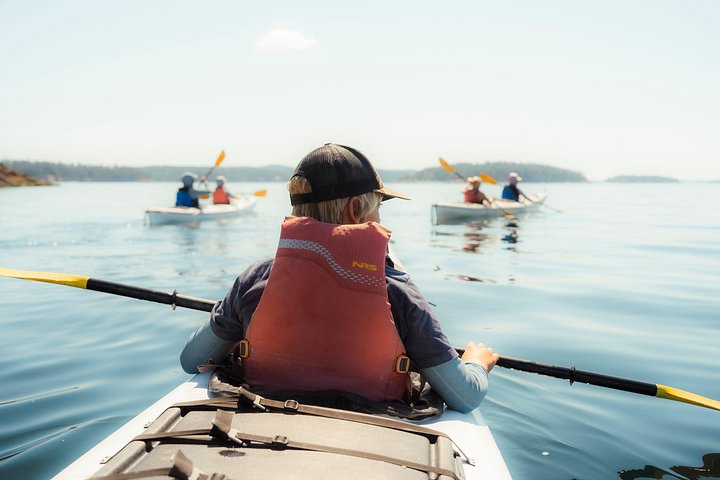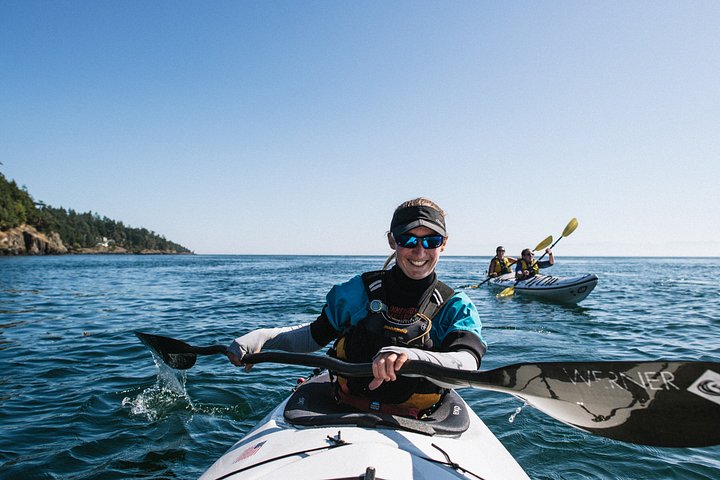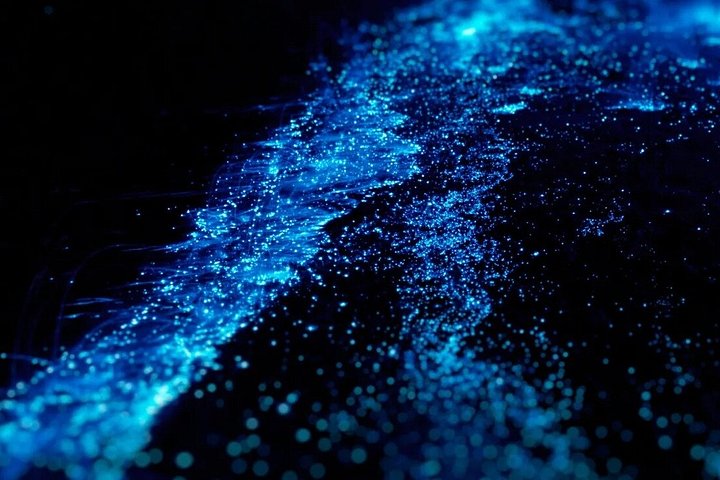
A bioluminescence kayak tour is one of the most magical experiences in the archipelago, and also one of the most dependent on luck. After dark, in warm months, certain microscopic marine organisms known as dinoflagellates can produce a faint blue-green glow when disturbed. When a paddle dips into the water, the plankton flash, so that each stroke leaves a trail of sparkling light and your hand, trailing over the side, seems to be dusted with stars. The effect is strongest on moonless nights in sheltered bays, when there is little ambient light to wash it out. This guided tour takes place in the evening, with a leader who knows where the display tends to be strongest and how to find calm water. The route is usually short, so even beginners can manage, and the pace is slow, to let your eyes adjust to the dark. Expect to meet the group at dusk, receive a safety briefing, put on life vests and head out in double or single sea kayaks. As the sky darkens you may see the Milky Way, the lights of distant boats and the silhouettes of trees along the shore, and you may hear the soft exhalations of seals. Even if the plankton are not strong that night, the trip is a peaceful night paddle in a spectacular setting, but be prepared for the possibility of a modest show. The operator can usually say how the season has been going and what the recent conditions have been like.
Timing is critical. Bioluminescence in the Salish Sea tends to appear in late summer and early fall, when water temperatures peak and plankton blooms are common, though it can vary from year to year. The best nights are dark ones, around the new moon, with calm wind. A bright full moon can wash out the effect, though the moonlit paddle has its own beauty.
Ask the operator when the tour runs, how they judge conditions and what happens if the plankton are absent. Some companies offer a discount or alternate date if there is no glow, while others treat it as a night paddle with the chance of lights.
What to wear and bring
Warm clothing in layers, since the evening air is cold on the water; a hat and gloves in fall; water-ready shoes; and a small waterproof bag. Leave your phone behind or keep it sealed, because photography of the glow is difficult and the experience is better without a screen. Headlamps are used sparingly because bright lights reduce the glow, and the guide will tell you when to use them. Remain alert, follow instructions and avoid sudden movements, since the water is cold and the darkness can be disorienting.
Fit and pairing
It is ideal for couples, adventurous families with older children and anyone who has already done a daytime paddle and wants something different. Pair it with an early dinner in Friday Harbor, and allow time to drive back in the dark on island roads, watching for deer. If you are traveling in summer, check the sunset time, because tours begin only when the sky is dark enough.
What to expect
The experience
A guided evening sea kayak tour aimed at finding glowing plankton in sheltered island waters.
Best time
Late summer to early fall on dark, calm nights; the glow cannot be guaranteed.
How long
Two to three hours starting around dusk.
Tips
Dress warmly in layers, keep lights low and ask the operator about the glow outlook and no-show policy.
Quick picks
- Best for
- Anyone who wants a once-in-a-lifetime night on the water.
- Families
- Best for older children who can sit still in the dark.
- Couples
- Romantic, quiet and unusual.
- Pair with
- An early dinner in Friday Harbor.
- Time needed
- An evening.
Good questions
What causes the glow?+
Microscopic plankton called dinoflagellates emit light when the water is disturbed.
When does it happen?+
Usually late summer to early fall, on dark nights, but it varies year to year.
Is it guaranteed?+
No. Plankton levels vary, so ask what the operator offers if there is little glow.
Do I need experience?+
No. The paddles are usually gentle and in sheltered water.
Can I take photos?+
Photographing the glow is difficult. Most people put the phone away and enjoy it.