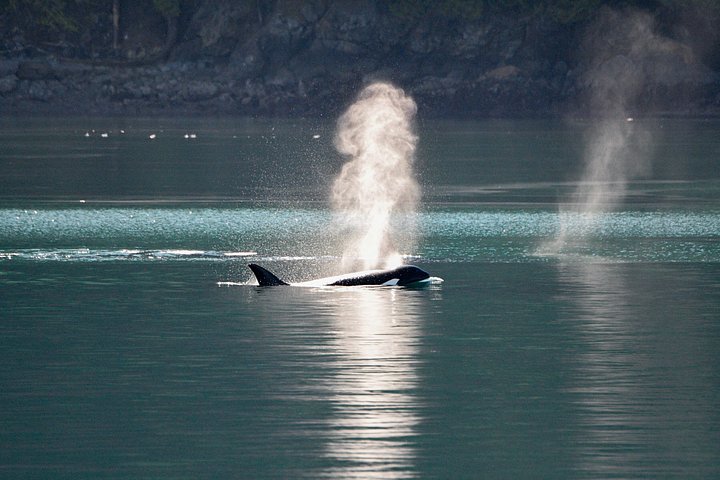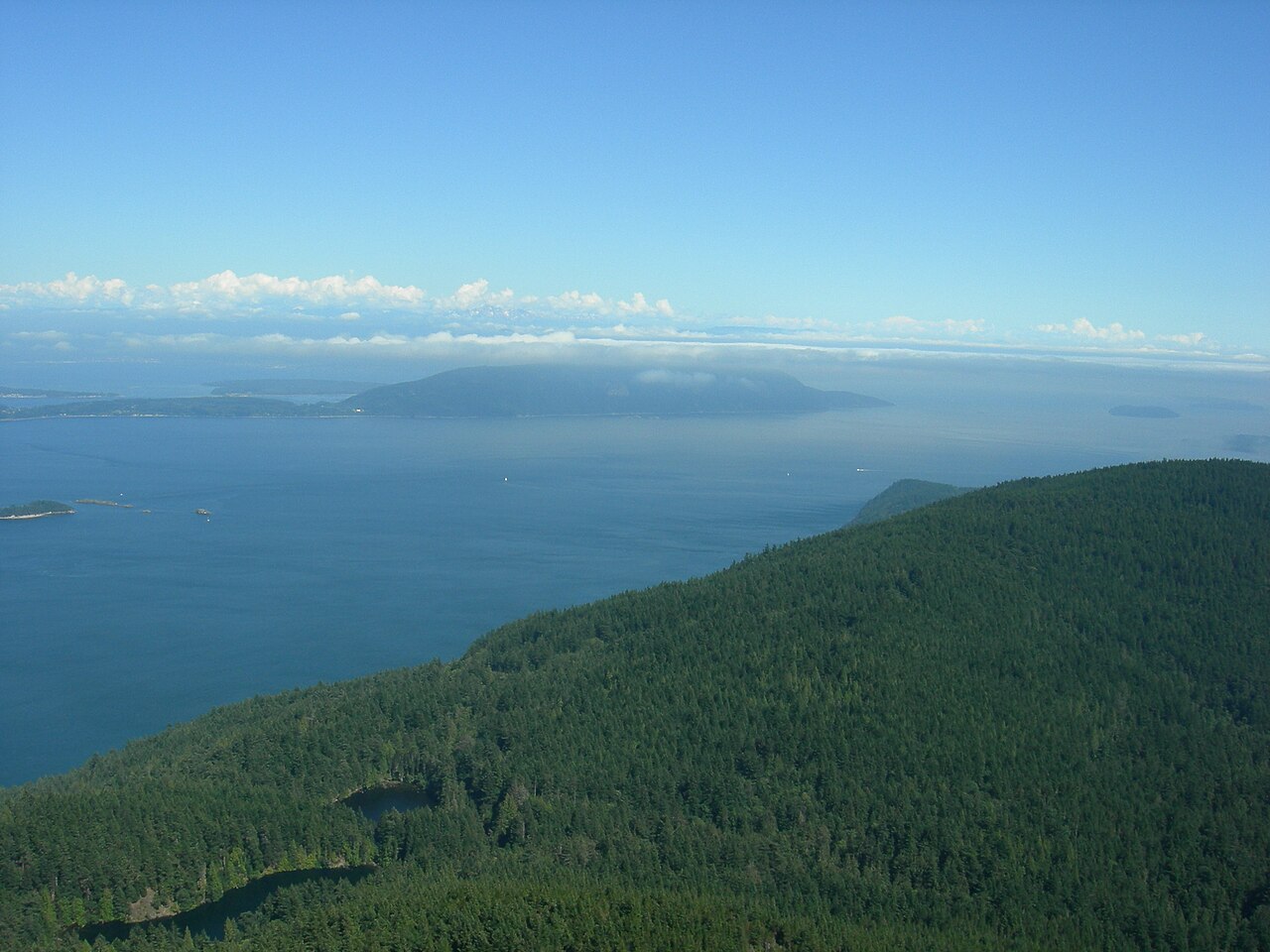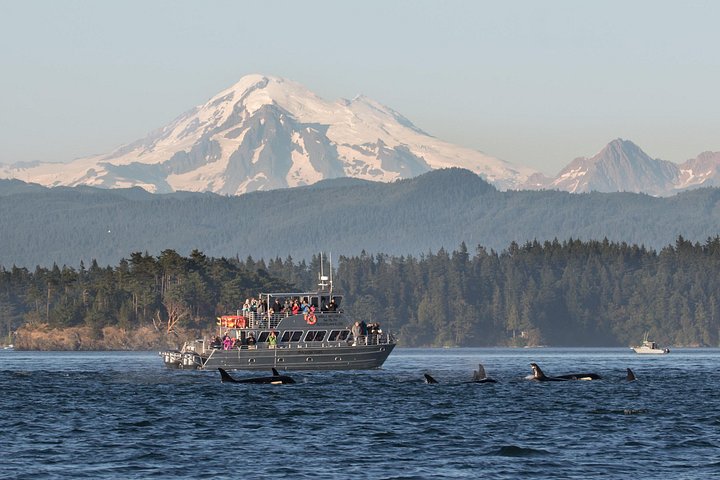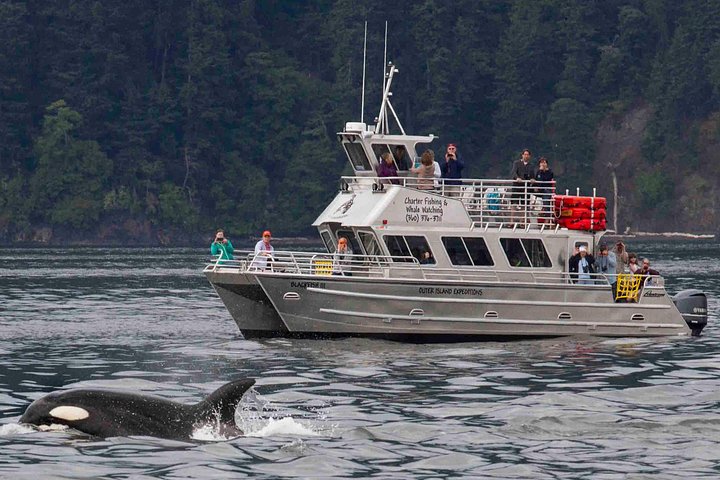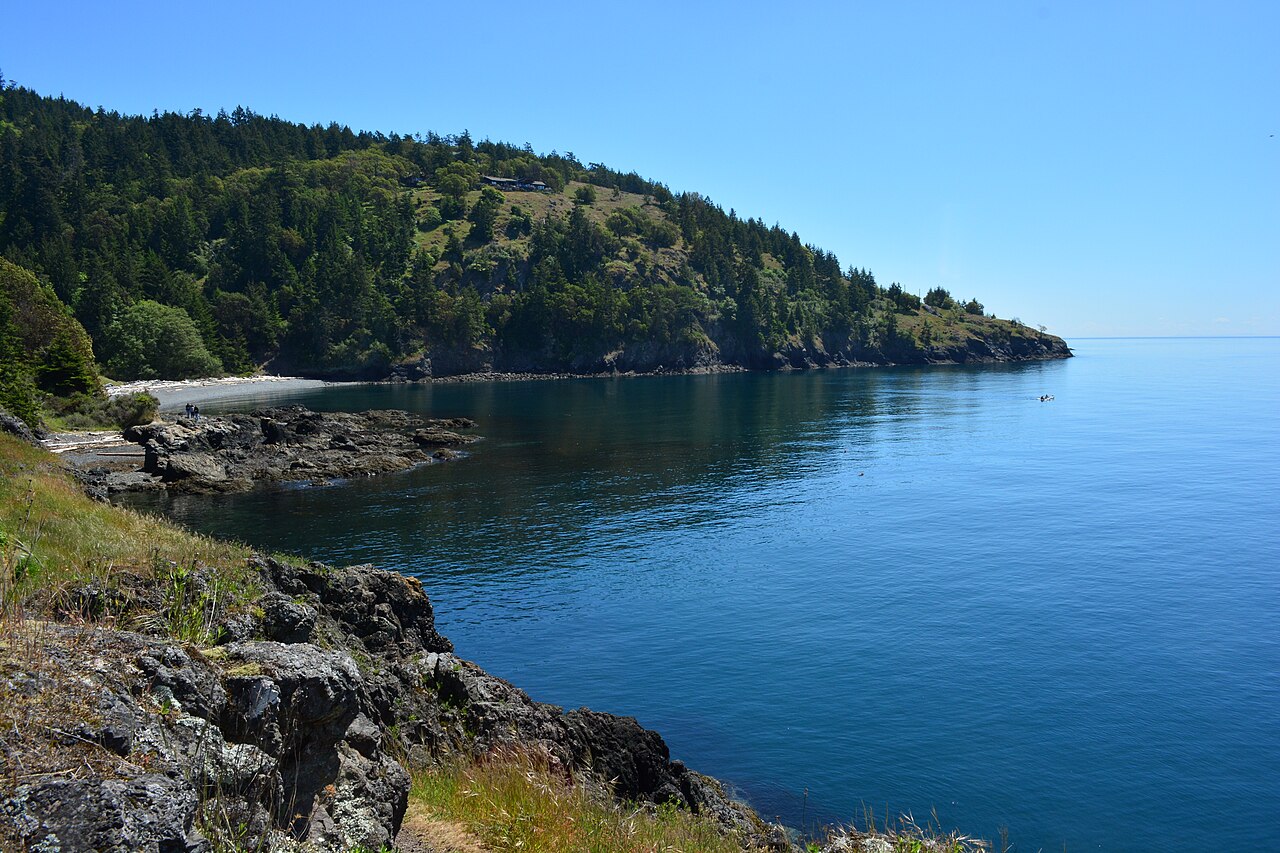
Lime Kiln Point State Park occupies a rocky shelf on the west side of San Juan Island, facing Haro Strait and the mountains of Vancouver Island beyond. It is often called Whale Watch Park, and it earns the nickname: the water just offshore drops off quickly, bringing salmon and the orcas that follow them within a few hundred feet of the rocks. Visitors stand on smooth bluffs or on the grassy lawn near the lighthouse, binoculars and cameras ready, waiting for a spout or a dorsal fin. The best months are typically May through September, when salmon runs concentrate in the strait, though no day is guaranteed. The park is small, with a short loop of trails through madrone and Douglas fir, interpretive signs explaining the area's geology and history, and a handsome white lighthouse built in the early twentieth century. The name recalls the lime kilns that once burned local limestone, an industry that shaped the island's economy and that you can learn about at nearby Roche Harbor. Entry to the park itself is free, though vehicles need a Discover Pass or day-use fee for parking. There is no food service, so bring water, snacks and warm clothing, since the exposed headland can be windy even when the interior is sunny. Rangers and volunteers sometimes help visitors identify animals, and there are benches and viewing spots arranged along the shoreline for comfortable watching. It is also a superb place for sunset, when the light turns the strait copper and the sky behind the lighthouse glows.
Patience is the visitor's main tool. Unlike a boat tour, the park cannot chase animals, so the day may deliver orcas, humpbacks, porpoises, seals and eagles, or just a restful afternoon by the sea. Sit down, scan the water in wide sweeps and listen for the sharp exhalation of a surfacing whale; it carries across calm water.
Dall's porpoises often show early in the day, and harbor seals bob near the rocks. A lighthouse keeper's building and interpretive displays tell the story of the light and the research done here. Scientists study the movements of the Southern Resident orcas from this point, and the park has been a favorite of researchers for decades.
Safety matters on the cliffs. The rocks can be slippery, drop-offs are steep, and waves can surge unexpectedly, so keep to the trails and keep children close. Pets must be on a leash, and drones are not appropriate near wildlife. Parking is limited and fills quickly on summer weekends, particularly around sunset; arrive early or later in the evening, and consider cycling or taking a shuttle if one operates. Allow at least one to two hours, longer if you are waiting for whales. Pack layers, a hat, binoculars and a thermos of something hot.
Fit and pairing
This is a must for nature lovers, photographers and anyone who wants a no-cost wildlife experience. It pairs well with a morning visit to English Camp or Roche Harbor, a whale watching cruise from Friday Harbor and a picnic dinner on the rocks. In winter the park is quiet and wild, and while whale sightings are less frequent, storm watching and empty trails have their own appeal. Check the park's website for any seasonal hours, trail closures or lighthouse access updates before you go.
What to expect
The experience
A small state park on a rocky headland with a lighthouse, short trails and viewpoints facing Haro Strait.
Best time
May to September for whales; sunset year-round for light and views.
How long
One to two hours, or longer if you are waiting for whales.
Tips
Bring binoculars, layers and water. Arrive early on summer evenings because parking is limited, and keep to the trails on the slippery rocks.
Quick picks
- Best for
- Watching orcas from land at no cost.
- Families
- Families can wander the short trails and picnic on the lawn.
- Couples
- A sunset spot with ocean views.
- Pair with
- Roche Harbor and English Camp, or a whale watching cruise.
- Time needed
- Two hours.
Good questions
Why is it called Whale Watch Park?+
The deep water close to shore draws salmon and the whales that hunt them, making it one of the best places in the world to watch orcas from land.
Is there an entrance fee?+
The park is free to enter, but vehicles need a Discover Pass or a day-use fee for parking.
When are whales most likely?+
Late spring through early fall, especially May to September, though sightings are never guaranteed.
Is the lighthouse open to visit?+
You can view the lighthouse from the grounds. Check the park for any current access or tour information.
Are there facilities?+
Basic restrooms and interpretive signs are available, but there is no food service, so bring your own water and snacks.