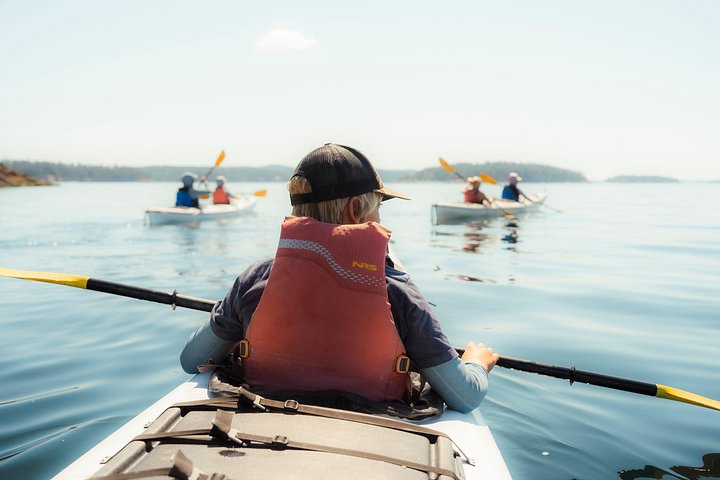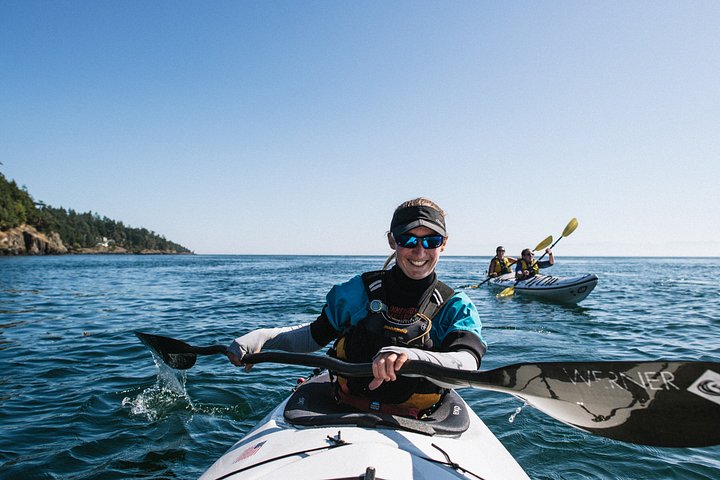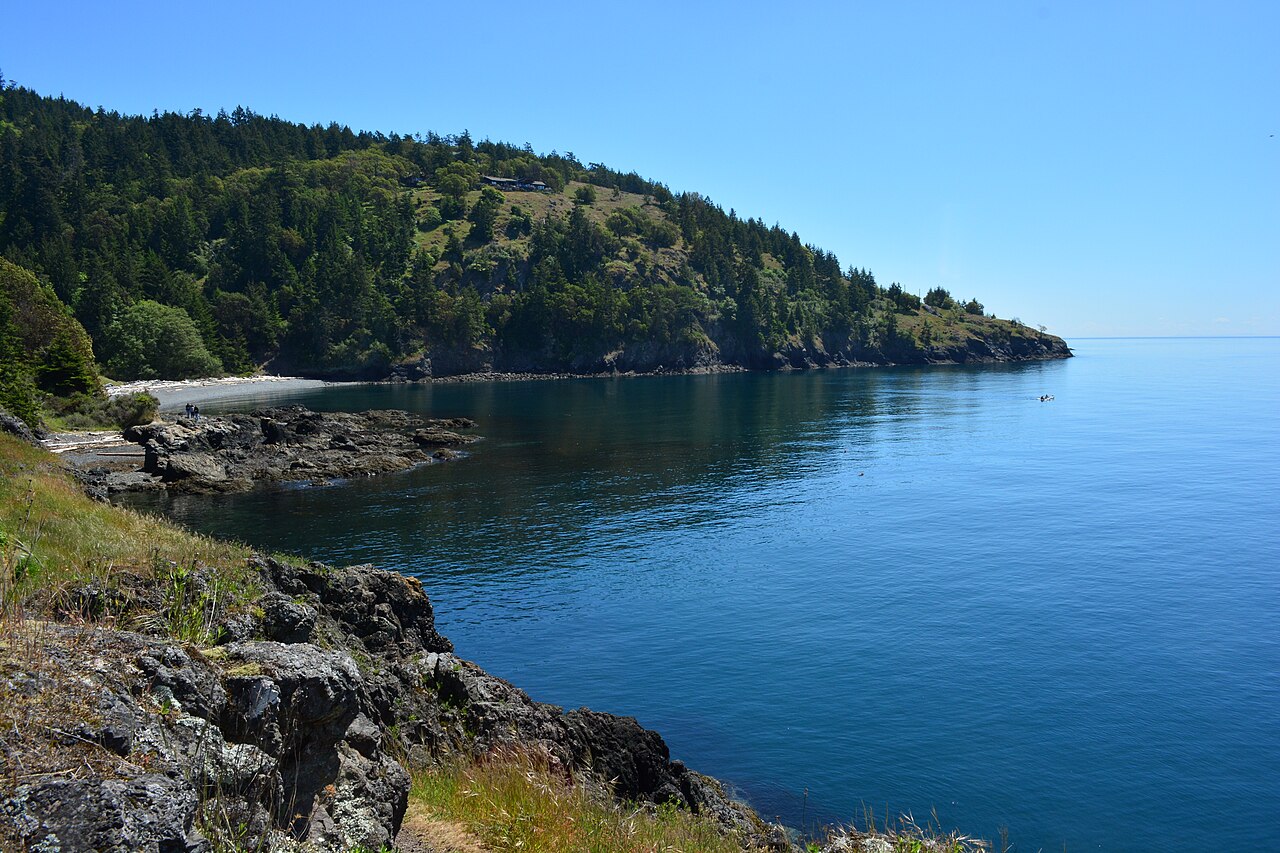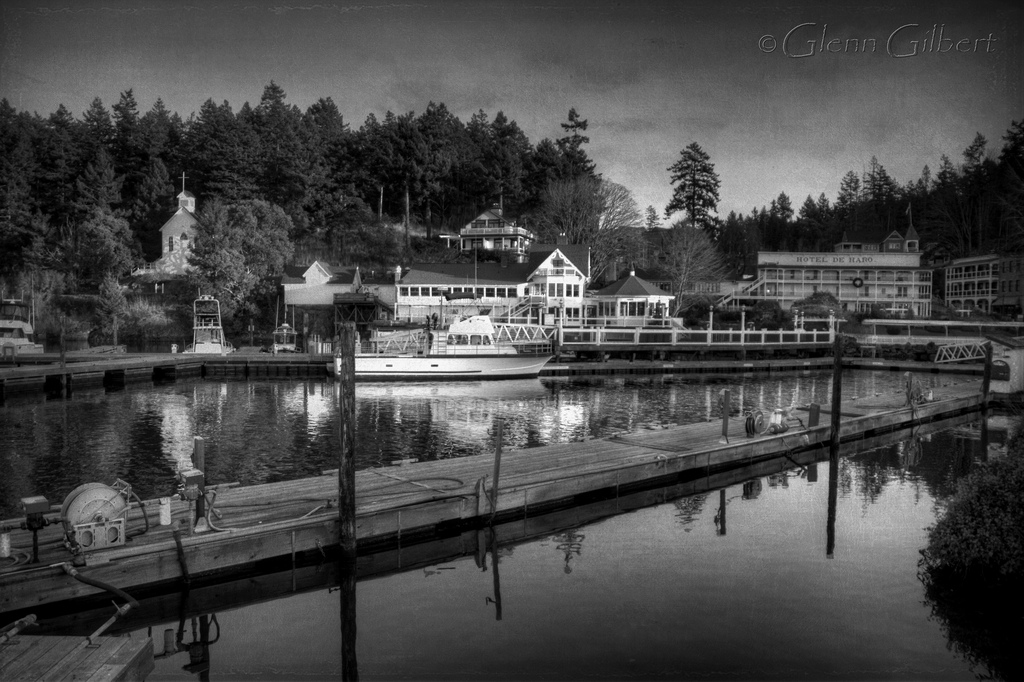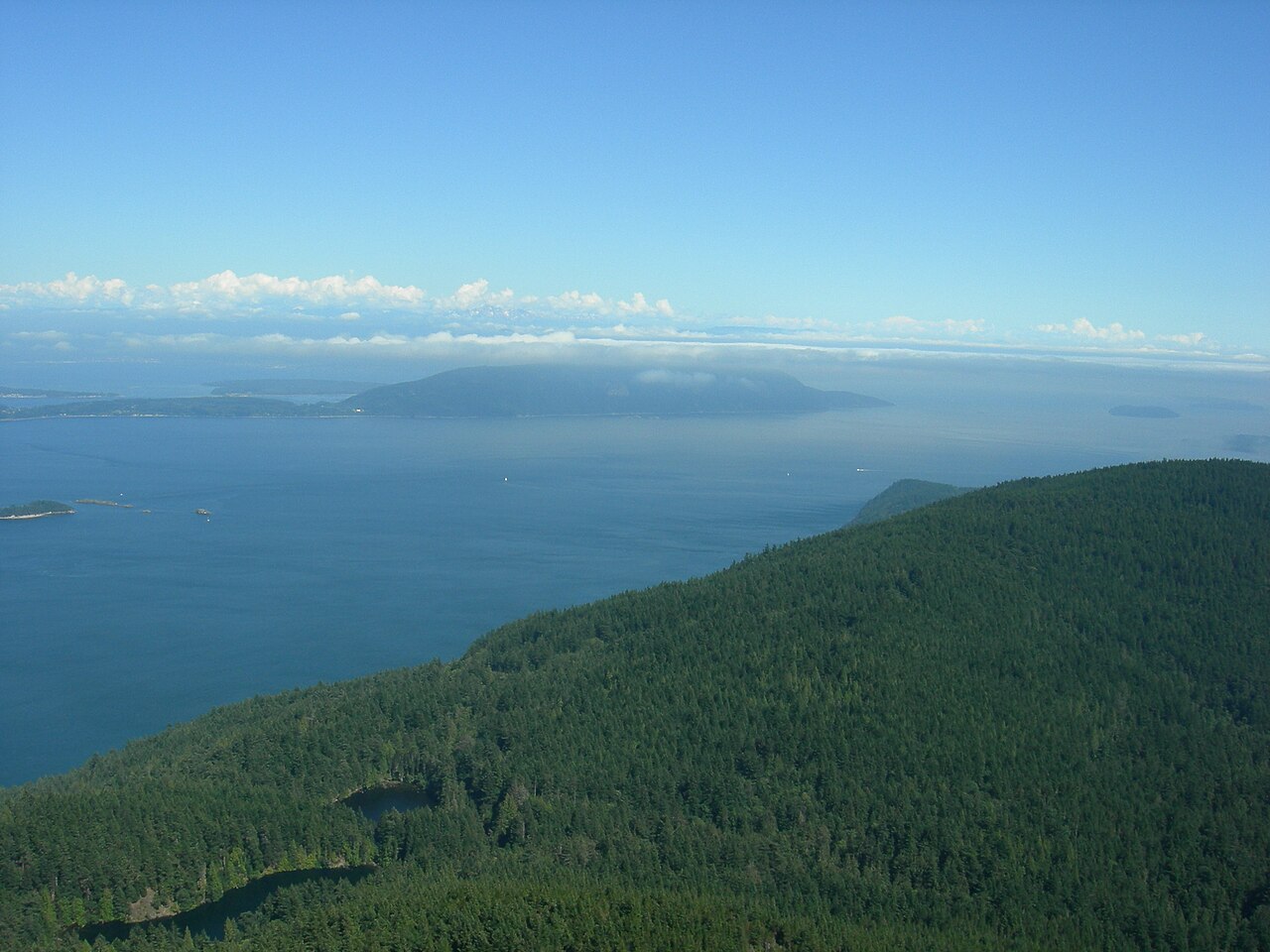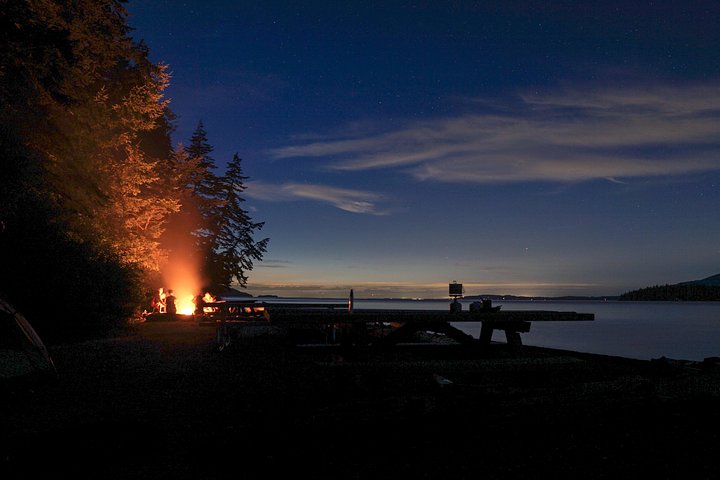
A day paddle gives you a taste of the San Juan Islands, but a night on the water gives you the archipelago. This two-day, fully catered kayak camping trip is built for travelers who want to wake up beside the Salish Sea without carrying a pile of gear or planning a menu. Guides lead the group between islands and coves, set up camp, cook the meals and handle the tides and currents that make these waters tricky for first-timers. You do the paddling, the watching and the lingering. The islands are an ideal training ground for sea kayaking. Channels are sheltered compared with the open coast, harbor seals haul out on the rocks, bald eagles perch in the fir trees and, in the right season, orcas and minke whales pass through the larger channels. A longer trip lets you slow down, drift quietly and notice the details that a two-hour paddle skips: the sound of a seal surfacing near the boat, the smell of the madrona trees, the way evening light turns the water the color of pewter. The price is higher than a day tour because it includes guiding, food, camping arrangements and equipment, and it is the best option in this guide for people who want to spend the night outdoors.
What the trip involves
Most days start with a briefing on paddling strokes, safety and the weather, followed by loading the boats and setting off. Expect several hours on the water each day, with breaks for snacks, wildlife watching and stretching on the shore. Camp is usually set up on a state park or marine park site, and the guides handle cooking, so meals are hearty and meant to be shared. Confirm exactly what is provided, including tents, sleeping pads and drinking water, when you reserve.
Conditions
The waters are cold even in summer, and wind and tidal currents can change a plan quickly. Guides choose routes and landing sites based on the forecast, and they may adjust the schedule or turn back if conditions are poor. Wear quick-drying layers, avoid cotton, and bring a warm jacket for the evening, a rain shell and a hat. A dry bag for your phone and camera is a good idea, and insect repellent helps in the early summer.
Wildlife and etiquette
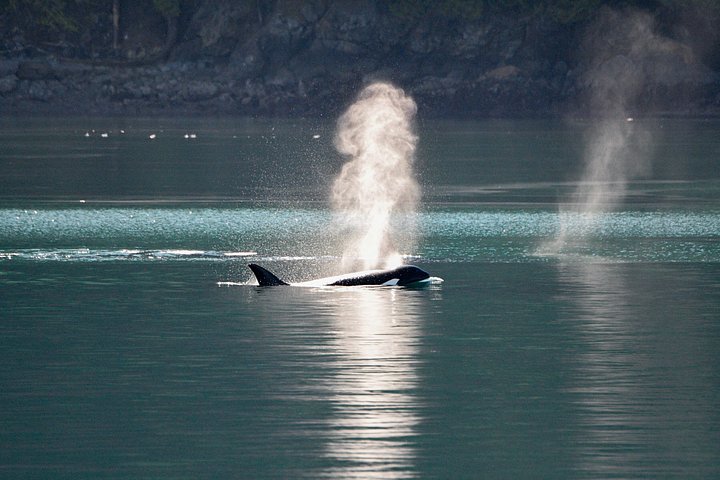
Keep a respectful distance from seals, sea lions, birds and whales, and follow your guide on viewing rules. Federal and state regulations require boats and paddlers to stay well back from the resident orcas, so sightings are usually distant. Pack out everything you bring, use designated camp areas and treat the shoreline as a shared place.
Who it suits
Active adults and fit teenagers who are comfortable outdoors, enjoy basic camping and can paddle for several hours. No previous sea kayaking experience is usually required, although you should be able to swim and be willing to learn. Anyone with limited mobility or serious concerns about camping may prefer one of the day paddles from Friday Harbor in this guide.
Planning
The best weather runs from late spring through early autumn, with July to September the driest. Trips fill early in summer, so reserve ahead. Build in time for the ferry, since you may need to arrive at the islands the day before. Ask about the meeting point, the gear list, dietary options and the cancellation policy. Combine the paddle with a whale watching trip or a day on Orcas Island to see the archipelago from both the land and the water.
What to expect
The experience
A guided two-day sea kayak trip with a night of camping and catered meals.
Best time
Late spring to early autumn, with July to September the driest.
How long
Two days and one night.
Tips
Dress in layers, avoid cotton and confirm what camping gear is supplied.
Quick picks
- Best for
- Active travelers who want to sleep beside the water.
- Families
- Better for fit teenagers than for small children.
- Couples
- A memorable shared adventure for active couples.
- Pair with
- A whale watching trip on another day.
- Time needed
- Two days, plus ferry time.
Good questions
Do I need kayaking experience?+
Usually not. Guides give instruction, but you should be able to swim and paddle for several hours.
Are meals included?+
The trip is described as fully catered, so meals are prepared for you. Ask about dietary needs when you reserve.
Will I see orcas?+
Possibly, but sightings are not guaranteed and rules keep paddlers well back from whales. Seals and eagles are far more likely.
What if the weather turns?+
Guides adjust the route or schedule for wind, tides and fog, and may turn back for safety.
Is camping gear supplied?+
Confirm exactly what is provided, such as tents and sleeping pads, when you reserve.