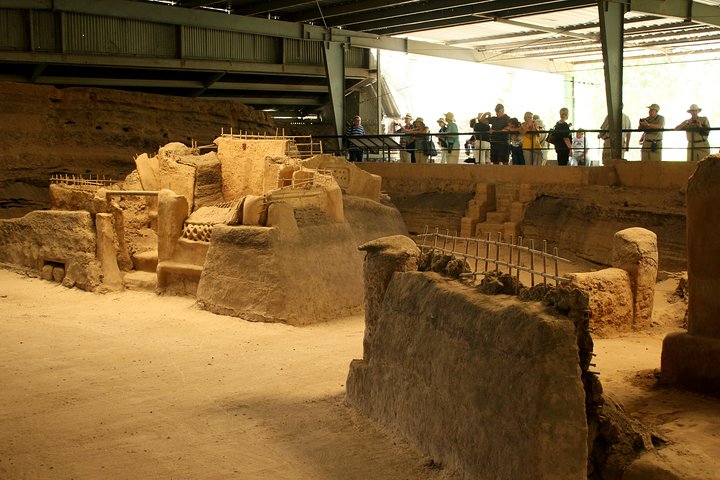
Joya de Cerén is one of the most unusual archaeological sites in the Americas. Instead of temples and palaces, it shows how ordinary people lived: a small Maya farming village from around the seventh century that was buried under about five metres of ash when the Laguna Caldera volcano erupted. The ash sealed houses, storerooms, kitchens and a communal building almost as they were left, giving archaeologists a rare look at daily life, and the site earned UNESCO World Heritage status in 1993. A tractor clearing ground for grain silos exposed part of a house in 1976, and later work by Payson Sheets and colleagues revealed the scale of the find. Today visitors walk on raised paths past protected structures with roofs over them, and the setting among fields north-west of San Salvador is peaceful. Because the village was a working farming community, the story it tells is gentle and human, which many travellers find more moving than monumental ruins.
What you will see
The protected structures include living quarters, storage buildings and a large communal building, shown under shelters so the clay walls and thatch traces remain visible. Guides explain how the eruption caught residents unaware and how crops, tools and pots were found in place. An on-site exhibit area adds context, and the interpretation is best with a guide because the buildings are modest and the details are easy to miss on your own.
Practical information
The site is generally open Tuesday to Sunday during the day and closed on Mondays, with a modest entry fee that is higher for non-resident foreigners than for Salvadorans. Check current hours before you travel, as holiday schedules vary. Shade is limited, so bring a hat and water, and allow about an hour on site.
Getting there
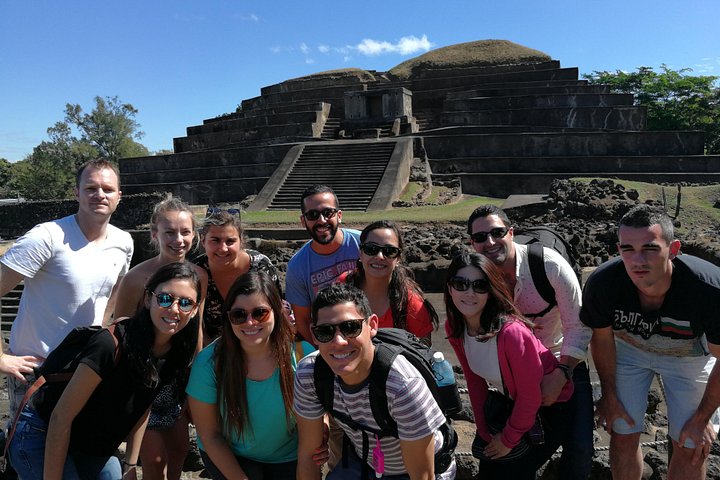
Joya de Cerén is in the department of La Libertad, roughly 35 kilometres from the capital, and a tour is the simplest way to see it. The Maya route day tours usually add San Andrés and sometimes Tazumal, which makes sense because they sit on the same road west. Doing it before or after the MUNA museum in the capital gives the best context. Combine it with a Santa Ana or Ruta de las Flores trip for a longer western loop.
What to expect
The experience
A guided walk along raised paths past protected village structures, usually as part of a Maya route day tour from San Salvador.
Best time
Morning, before the heat builds and the sun is strongest on the open site.
How long
About an hour on site, three to five hours with transport and other stops.
Tips
Take a guide if you can, bring a hat and water and confirm that the site is open that day.
Quick picks
- Best for
- History lovers and anyone curious about everyday Maya life rather than grand temples.
- Families
- Older children who like history will enjoy the story; younger ones may tire in the heat.
- Couples
- A quiet, thoughtful half-day outing that pairs well with Tazumal.
- Pair with
- San Andrés, Tazumal or a Lake Coatepeque viewpoint.
- Time needed
- Half a day.
Good questions
Why is Joya de Cerén called the Pompeii of the Americas?+
A Maya farming village was buried under volcanic ash in the seventh century and preserved in detail. Houses, storerooms and tools were found almost as the residents left them.
When did it become a UNESCO site?+
UNESCO inscribed Joya de Cerén on the World Heritage List in 1993.
Is it open every day?+
The site is generally open Tuesday to Sunday and closed on Mondays. Check current hours before you go in case of holiday changes.
How do I get there from San Salvador?+
A day tour is the simplest option, usually combined with San Andrés or Tazumal. The site is roughly 35 kilometres from the capital.
How long do I need?+
About an hour is enough at the site itself. A Maya route tour takes most of a morning or a full day.