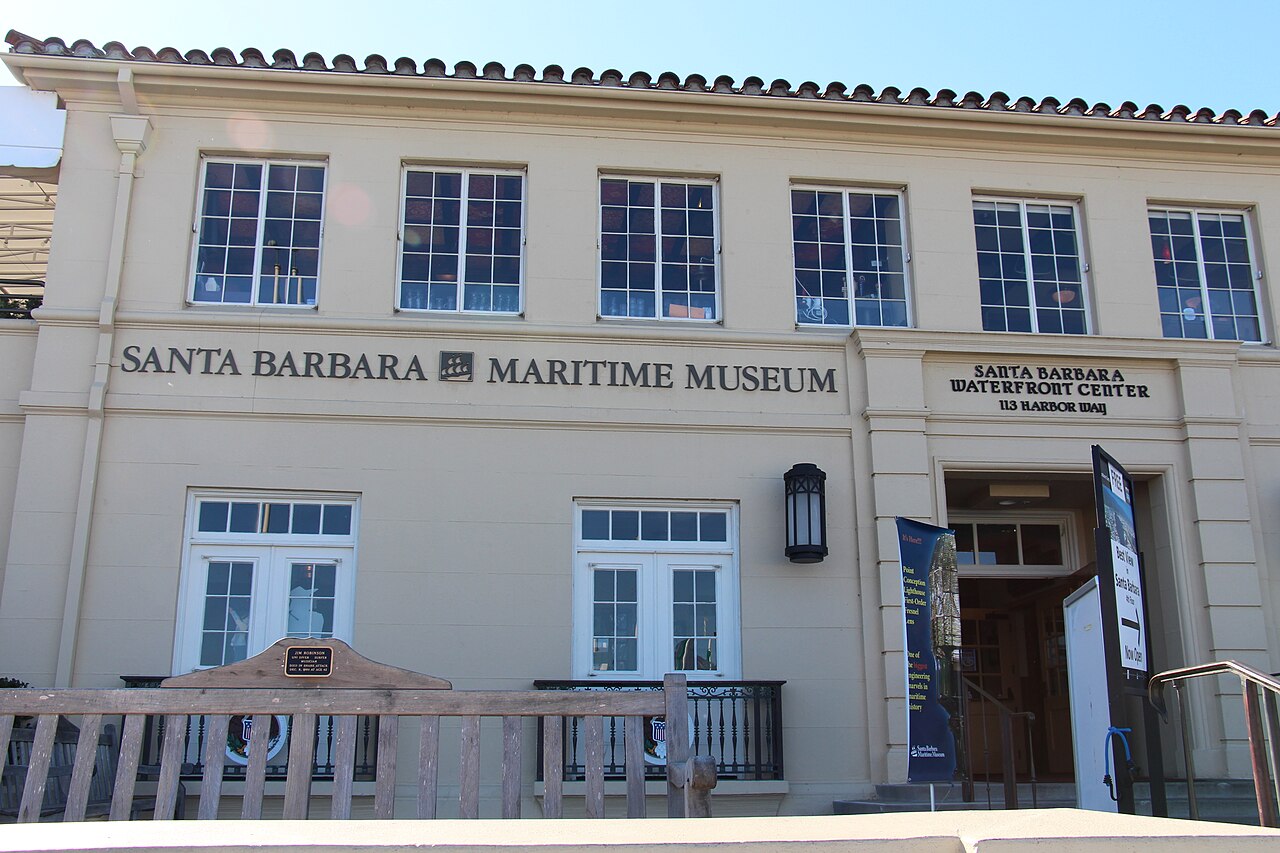
The Santa Barbara Maritime Museum tells the story of the channel you have been looking at all trip, and it does so from the best possible address: the Waterfront Center, the former Naval Reserve building in Santa Barbara Harbor, surrounded by fishing boats, sailboats and the docks where the whale-watching and sportfishing boats leave. The collection spans thousands of years of life on this water. It begins with the Chumash, whose plank canoes, the tomol, crossed the channel to the islands long before European ships arrived, and moves through Spanish exploration, the hide-and-tallow trade, whaling, shipwrecks on the treacherous coast around Point Conception, commercial fishing and diving, the oil platforms offshore, and the region's outsized role in surfing culture. The best exhibits are interactive. A working periscope lets you scan the harbor, the first-order Fresnel lens from the Point Conception lighthouse glows in its own gallery, and hands-on stations for children cover knots, navigation and marine science. The museum is open daily from 10am to 5pm, closed only on Thanksgiving, Christmas Day, New Year's Day and the first Friday in August during Fiesta. Admission is modest by any standard, about twelve dollars for adults with reduced prices for seniors, students and youth, free for children five and under, and free for active military and first responders. It takes about ninety minutes, sits right next to the boats you might ride, and turns a harbor stroll into a story.
The museum's strength is context. Santa Barbara looks like a resort town, but it has always been a working coast, and the harbor exhibits connect the city's leisure image to centuries of labor on the water: Chumash canoe builders using asphaltum from natural seeps to seal their planks, the Yankee traders who came for hides, the fishermen who still land spot prawns and urchin at the docks outside, and the divers and engineers who worked the offshore platforms. The surfing galleries are a highlight for many visitors, tracing how boards and wetsuits evolved on this coast, and the shipwreck displays explain why the waters off Point Conception have been called the graveyard of the Pacific.
Visiting well: give it about ninety minutes, starting on the ground floor with the Chumash and early history and working up to the twentieth century. Children gravitate to the periscope and the hands-on stations; adults linger over the lighthouse lens and the shipwreck stories. Parking is in the harbor main lot nearby. Admission is free for members and reduced to a token amount for families showing EBT or food-assistance cards, and the museum hosts free community days and family events through the year, so check the calendar.
Fitting it into a trip: this is the indoor half of a harbor morning. Walk the breakwater for the view back at the mountains, watch the fishing boats unload, browse the fish market at the docks, then visit the museum before or after a Condor Express whale-watching trip from Sea Landing a few steps away. Shoreline Park's clifftop lawns are a short walk west along Shoreline Drive, and the Funk Zone and Stearns Wharf are a pleasant stroll east along the beach path.
What to expect
The experience
Galleries on Chumash seafaring, exploration, whaling, shipwrecks, fishing, diving and surfing, with a working periscope, a historic lighthouse lens and hands-on children's stations.
Best time
Any day, 10am to 5pm; mornings pair well with a harbor walk. Closed Thanksgiving, Christmas, New Year's Day and the first Friday in August.
How long
About ninety minutes.
Tips
Park in the harbor main lot. Combine with a whale-watching trip from Sea Landing next door. Walk the breakwater before or after. Check the calendar for free community days.
Quick picks
- Best for
- History lovers and families who want the channel's story told beside the boats.
- Families
- The periscope and hands-on stations make it an easy, affordable hour and a half.
- Couples
- A quiet harbor morning: museum, breakwater walk, seafood lunch at the docks.
- Pair with
- Condor Express whale watching and the Shoreline Park bluff walk.
- Time needed
- About ninety minutes.
Good questions
How much does the Maritime Museum cost?+
About twelve dollars for adults, with lower prices for seniors, students and youth. Children five and under, members, active military and first responders get in free.
When is it open?+
Daily from 10am to 5pm, except Thanksgiving, Christmas Day, New Year's Day and the first Friday in August during Fiesta.
Where is it?+
In the Waterfront Center, the former Naval Reserve building, at 113 Harbor Way in Santa Barbara Harbor.
Is it good for kids?+
Yes. The periscope, hands-on stations and harbor setting keep children engaged, and the visit is short enough not to tire them.
What else is nearby?+
The breakwater walk, the fishing docks, Sea Landing for whale-watching trips, and Shoreline Park a short walk west.