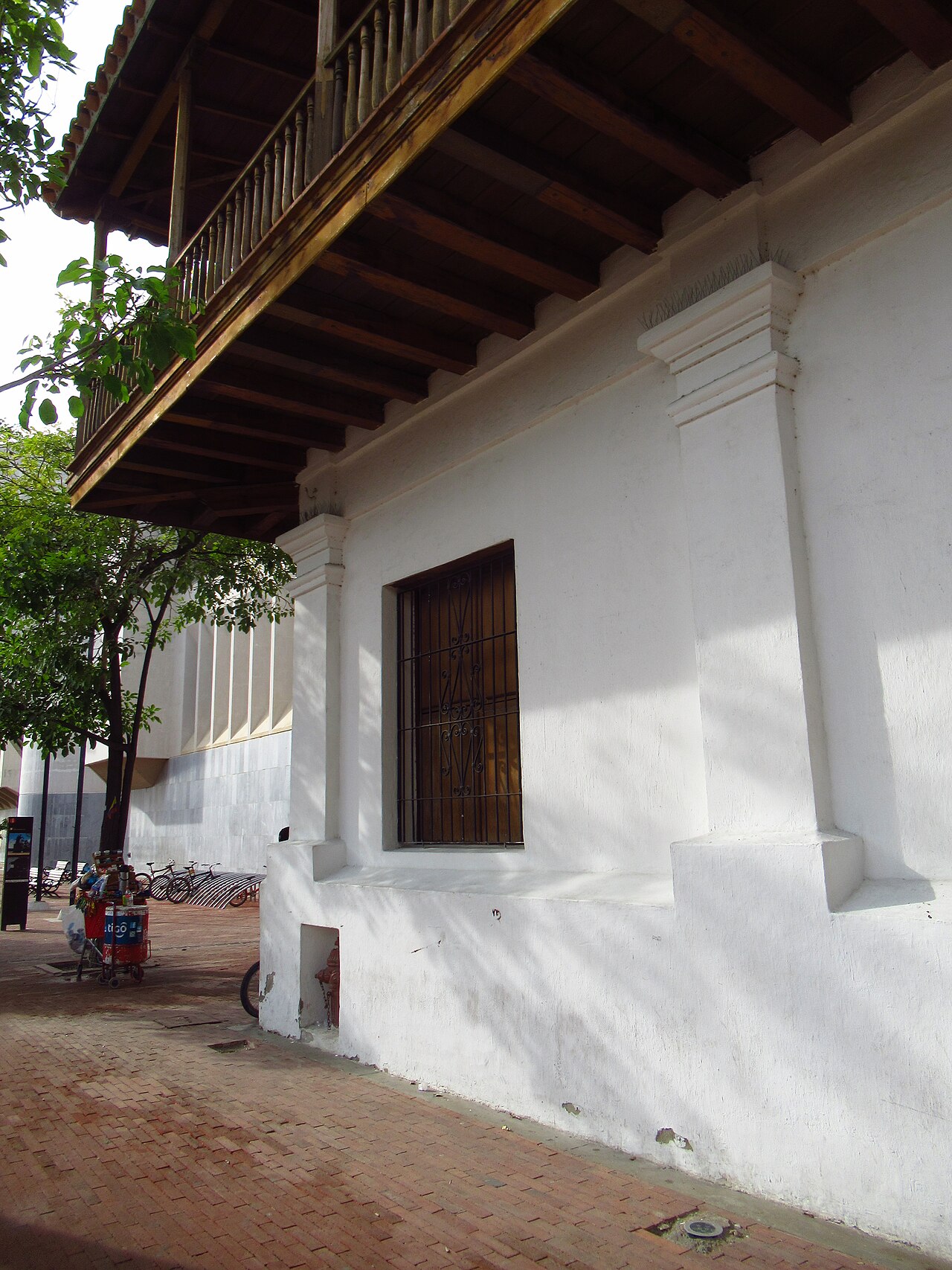
The Museo del Oro Tayrona sits in the Casa de la Aduana, one of the oldest buildings in Santa Marta, close to the bay in the historic centre. It is part of Colombia's network of gold museums, and its collection focuses on the Tayrona, the pre-Columbian people who built the stone terraces of Ciudad Perdida and farmed the slopes of the Sierra Nevada. Displays include gold pendants and nose ornaments, ceramic figures, polished stone beads, tools and models of Tayrona settlements. Labels explain how the Tayrona used goldwork to signal rank and spiritual power, and how their villages were arranged along stone paths and terraces that still lead into the forest today. It is a small museum, easy to see in an hour, and that makes it a good first stop for anyone planning a trek to the Lost City or a day in Tayrona. Walk through the rooms in order and you gain a sense of what you are about to see in the field: the shape of a circular house platform, the skill of a goldsmith, the way that every object connects to a worldview centered on balance with the mountains and sea. The walking tour in this product pairs the museum with a stroll through the old town, so you get both the objects and the streets in which they are now displayed.
The building itself adds to the visit. The Casa de la Aduana is a colonial structure with thick walls, tall doors and a courtyard that keeps the interior cool, and it has served as a customs house and in other roles over the centuries. The setting reminds you that Santa Marta was a trading port, where gold, goods and people moved through for hundreds of years.
If you pause by the windows you can often see the bay and the activity along the waterfront, which gives a sense of how close the museum is to the working life of the city.
Expect a quiet, contemplative visit rather than a high-tech experience. The displays are modest and the lighting is gentle, which suits the small gold objects, and Spanish labels are more complete than English ones, so a guide or a translation app helps a great deal. Opening days and hours can change, and museums in Colombia often close on one weekday, so check before you go and avoid planning the visit for a Monday or a public holiday without confirming. Photography rules vary by room, so look for signs or ask at the entrance.
Visiting the museum before or after a trip to the Sierra Nevada deepens the whole stay. After seeing the goldwork and the models of terraced towns, a hike to Ciudad Perdida or a walk through Tayrona's stone paths feels more meaningful, and a visit to a Kogui or Wiwa community becomes easier to understand. Reserve an hour for the museum, add another for coffee in a nearby plaza, and you have a thoughtful, low-cost half day that balances the beaches and mountains with a little context.
To get the most from a short visit, read the introductory panels first and then look closely at the smallest objects, such as the tiny gold figures and stone beads, which show the greatest craftsmanship. Ask staff or your guide about the meaning of the animal and human forms, many of which relate to ideas that indigenous communities in the Sierra Nevada still hold today. A notebook or a few quick photos where permitted can help you recall details when you reach the ruins or the mountain villages.
What to expect
The experience
A small museum of Tayrona goldwork, ceramics and stone objects in a colonial customs house, often visited with a short guided walk.
Best time
Morning, before the heat, and on a day the museum is open; check the weekly closing day.
How long
About an hour in the museum, plus time for the old town.
Tips
Confirm opening days before you go, bring a translation app if you do not read Spanish and pair the visit with the historic-centre walk.
Quick picks
- Best for
- Travelers who want context for Tayrona, Ciudad Perdida and the Sierra Nevada peoples.
- Families
- Short enough for children who like treasure and artifacts.
- Couples
- A calm, air-conditioned break in the middle of a hot day.
- Pair with
- Santa Marta Historic Centre, the Quinta de San Pedro Alejandrino and the Lost City trek.
- Time needed
- One to two hours.
Good questions
What is in the museum?+
Tayrona goldwork, ceramics, stone beads and models of settlements, with a focus on the culture that built Ciudad Perdida.
Where is it?+
In the Casa de la Aduana, an old customs house near the bay in the historic centre.
How long does a visit take?+
About an hour, or two if you combine it with a walk through the old town.
Is it worth it if I am trekking to the Lost City?+
Yes. The displays give useful background on the people who built the city and help you understand what you see on the trail.
Are labels in English?+
Spanish labels are more complete, so a guide or translation app is helpful.