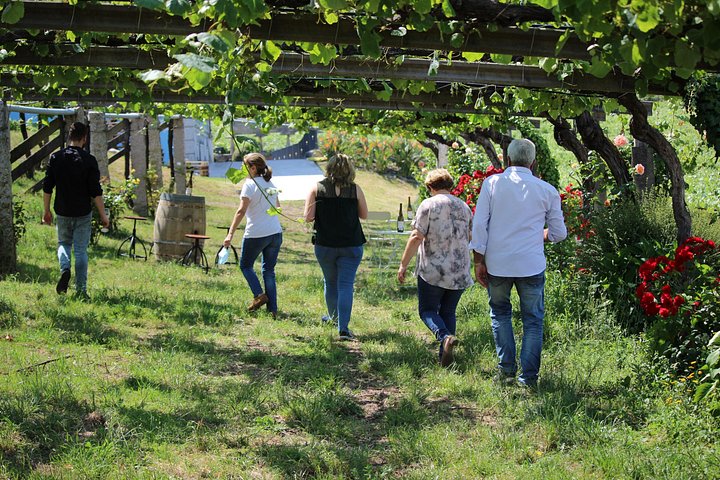
Albariño is the white wine that put Galicia on the world's wine map, a crisp, aromatic variety grown in the damp, green vineyards of the Rías Baixas. Bodegas Granbazán is one of the well-known estates of the Salnés valley, set among vines trained high on granite posts to keep the grapes out of the humidity. A guided visit explains the way the vines are grown, how the wine is made and why the style of the region is so different from other parts of Spain. The winery sits within easy reach of Cambados and Vilanova de Arousa, so it fits neatly into a Rías Baixas day trip. Some visitors go by tour, while others hire a taxi or a car and combine it with the coast.
A typical visit begins in the vineyards, where the guide explains the pergola system known as parra, which lifts the vines above the ground to improve airflow. You then see the press, the tanks and the cellar, and learn how the wines are fermented and aged. The tasting that follows usually includes two or three wines, often poured with a small bite of local food. Albariño pairs perfectly with seafood, and the staff may suggest pairings.
Practical details matter. Visits are generally by appointment, so book ahead and check the language of the tour. Designated drivers should plan carefully, since Spain has strict drink-driving limits, and spitting is acceptable at tastings. Children can usually join the vineyard walk but cannot taste. Wear comfortable shoes for the vineyard and bring a layer, because cellars are cool even in summer.
Seasons change the experience. Spring brings fresh green leaves, summer is warm and busy, and the harvest in early autumn is the most exciting time to visit, with bustle in the vineyards and cellar. Winter is quiet, but the bare vines show the structure of the pergolas. Wines are available to buy at the winery, and shipping options may exist for visitors from abroad. Choose a bottle you cannot easily find at home.
To make the day complete, pair the visit with lunch in Cambados, a stroll along the waterfront and perhaps a stop at a market. Bring a small cool bag if you plan to carry bottles. If you want a deeper experience, ask about food pairings, vertical tastings or a longer private visit. A tour with a driver is the easiest option for those who want to taste freely, and many Santiago operators include this winery in their Rías Baixas routes.
If you cannot visit in person, you can still enjoy Albariño in Santiago itself. Many bars pour it by the glass, and wine shops near the market stock bottles from small producers. Ask the staff to explain the difference between wines from the Salnés valley and those from the other subzones of the Rías Baixas.
Tasting several side by side helps you understand how soil, sea breeze and rain shape the flavour. A winery visit is an excellent way to see the process behind the glass, and it often becomes the most memorable lunch stop of a trip.
What to expect
The experience
A guided winery visit with vineyard walk, cellar tour and tasting.
Best time
Autumn for the harvest, or spring and summer for green vines.
How long
About one to two hours at the winery.
Tips
Book ahead, plan transport and respect drink-driving limits.
Quick picks
- Best for
- Wine lovers and curious food travellers.
- Families
- Children can join the walk but not the tasting.
- Couples
- A romantic wine afternoon.
- Pair with
- Cambados, a Rías Baixas tour and seafood lunch.
- Time needed
- Two hours plus travel.
Good questions
What is Albariño?+
A crisp, aromatic white wine grown in the Rías Baixas.
Do I need to book?+
Yes, visits are usually by appointment.
Can I buy bottles?+
Yes, at the winery.
Is it suitable for drivers?+
Spitting is acceptable, but take care with drink-driving limits.
When is the harvest?+
Typically early autumn, though dates vary with the weather.