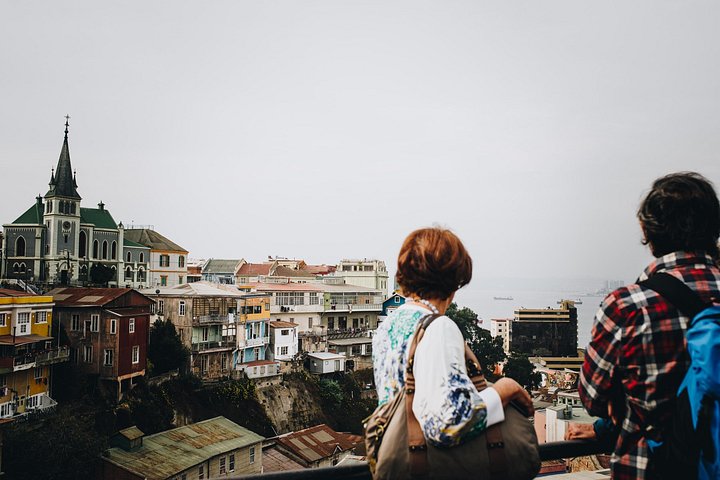
Valparaíso is the city that Santiago visitors most often add to a trip, and it is easy to see why. Founded as the main Pacific port of the Spanish colony and a mandatory stop for ships rounding Cape Horn before the Panama Canal opened, it grew in a rush up a steep amphitheatre of forty-odd hills, and nobody ever tidied it up. The result is a jumble of corrugated-iron houses painted in every colour, steep alleys, staircases and viewpoints, and a skyline of rusting cranes and cargo ships. Its historic quarter has been recognised by UNESCO, and the most photogenic parts are the hills of Cerro Alegre and Cerro Concepción, where old mansions have become boutique hotels, galleries and cafes. Street art covers walls in every direction, from small stencils to enormous murals, and the city feels like an open-air gallery. Ascensores, the century-old funiculars that creak up the hillsides, are as much a part of the experience as the views they open up. The flat district around Plaza Sotomayor and the port holds grand naval and commercial buildings, and below it the sea front is lined with fish restaurants and boat trips around the harbour.
How it works
Valparaíso lies roughly 120 kilometres west of Santiago, and the drive normally takes between an hour and a half and two hours, depending on traffic. Most visitors go on a guided day tour that picks up in Santiago, often combined with Viña del Mar or a Casablanca winery, because it saves the effort of driving and parking. Direct buses also run from the Santiago terminals to the port throughout the day, and a self-guided visit works well if you like to wander at your own pace.
What to expect
Walking is the way to see Valparaíso, so wear comfortable shoes, since the lanes are steep and often cobbled. Expect to ride an ascensor or two, stroll the viewpoints of Cerro Alegre and Cerro Concepción, and spend time simply getting lost among the murals. Down by the harbour, the old naval and port buildings and the water front give a very different feel from the hills.
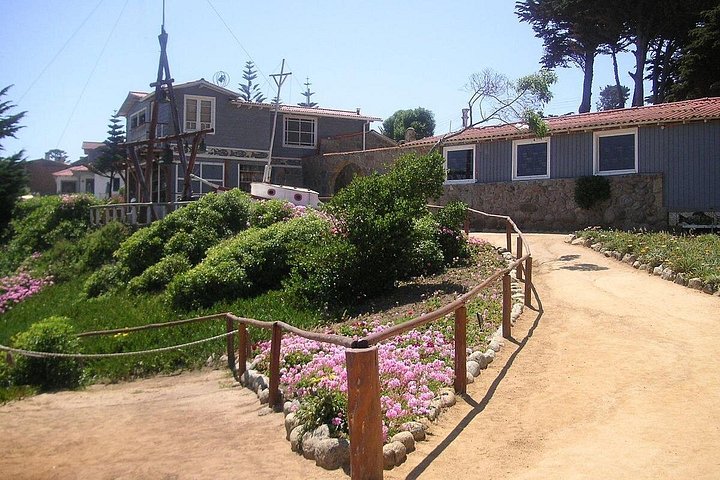
Many tours also point out the house of Pablo Neruda, La Sebastiana, which rewards a longer visit if you have time. Weather on the coast is cooler and cloudier than in Santiago, particularly in the morning.
Making the most of it
Go with a light jacket even in summer, carry little of value and keep your phone out of sight in crowded spots, as in any port city. Visit on a weekday if possible for quieter lanes, and leave time for a seafood lunch before heading back up the highway. If your schedule allows, stay a night in a hilltop guesthouse to see the city at sunset and when the lights come on across the bay.
Good to know
The city’s character comes from its layers of history, from the days when it was the great port on the sailing route round Cape Horn to the earthquakes, fires and migrations that shaped it since. Guides often explain how immigrants from Britain, Germany and Italy built churches, clubs and banks, and why the hills are knitted together by staircases and lifts. Allow extra time if you like photography, because light and colour change all day, and remember that some hills are quieter and less polished than the tourist routes, so stick to the busier streets after dark.
What to expect
The experience
A day in a hillside port city of steep lanes, murals, historic funiculars and harbour views, usually reached by guided tour or bus from Santiago.
Best time
A weekday morning for quieter lanes and the best chance of clear light, followed by a late seafood lunch.
How long
A full day including the road trip, with four to six hours on the ground.
Tips
Wear comfortable shoes, bring a light jacket, keep valuables out of sight and leave time for at least one funicular ride.
Quick picks
- Best for
- Travellers who love street art, old streets and a salty, slightly chaotic port atmosphere.
- Families
- Older children enjoy the funiculars and the murals, but the steep lanes and the long day are hard on small legs.
- Couples
- Linger on Cerro Alegre in the late afternoon for the view, then dine on the hill as the lights come on.
- Pair with
- Viña del Mar for the beaches and gardens, or a Casablanca Valley winery on the way.
- Time needed
- A full day, or an overnight stay for a slower visit.
Good questions
How far is Valparaíso from Santiago?+
It is about 120 kilometres west, usually a drive or bus ride of an hour and a half to two hours, depending on traffic and the day of the week.
Is Valparaíso worth a full day?+
Yes, for most visitors it is the best day trip from Santiago. The hills, murals and funiculars are unlike anywhere else in Chile, and it combines well with Viña del Mar.
Should I take a tour or go by bus?+
A guided tour handles transport and gives context on the history and street art. Independent travellers can take a direct bus from Santiago and explore on foot, which gives more freedom.
What should I wear and carry?+
Wear comfortable shoes for steep, cobbled lanes and bring a layer, as the coast is cooler than Santiago. Carry little of value and keep your phone out of sight in busy areas.
Can I combine Valparaíso with a winery?+
Yes, the Casablanca Valley lies on the highway between the two, so a winery lunch on the way is a popular combination, ideally with a driver or tour.