There is no single best time to visit Sa Pa, because the town offers different things in different months. The honest answer depends on what you want to see. If you want golden rice terraces, go in late September or early October. If you want clear skies and big views with fewer crowds, go in the autumn. If you want a cool escape from summer heat, go in the warmer months and accept the rain. Here is how the year works.
Spring, from March to May
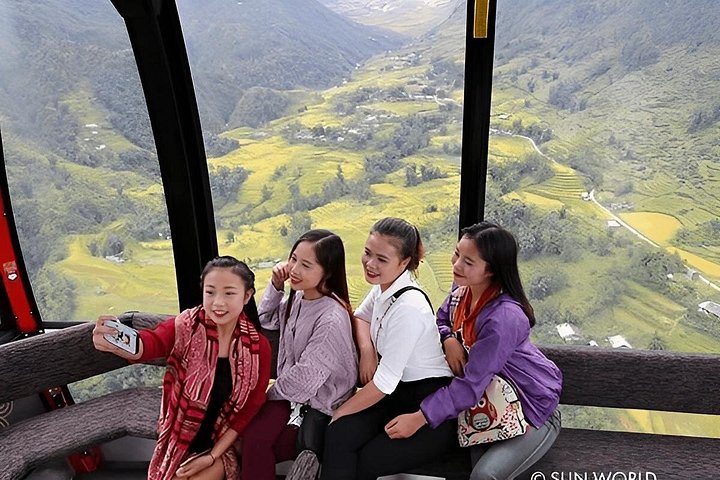
The mountains wake up after winter. Mornings can be misty and cool, with warm afternoons, and the wild flowers and fruit trees bloom in the valleys. Farmers start preparing the terraces, and by May and June the first fields are flooded, so the slopes begin to shine like mirrors in the right light. It is a lovely season for walking, though showers can be sudden and the paths muddy. Cloud often hides the high peaks, so treat the cable car as a gamble.
Summer, from June to August
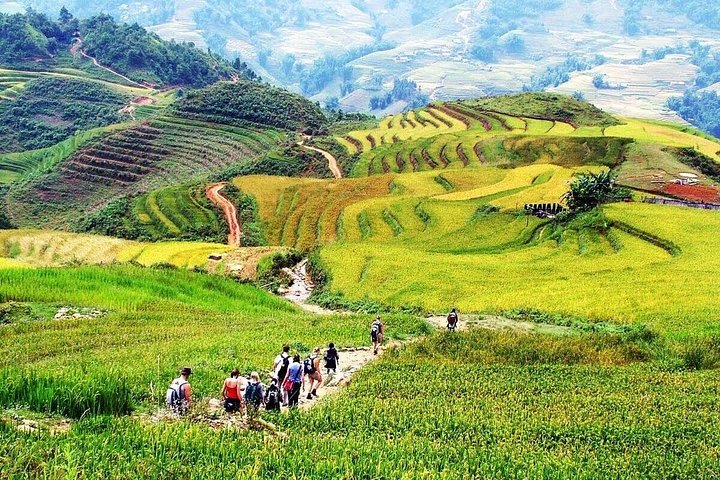
This is the green season, and the terraces are vivid and full of growing rice. The weather is warm in the valleys and pleasantly cool in town, which makes Sa Pa popular with visitors escaping the heat of Hanoi. It is also the rainy season, with heavy afternoon showers, slippery trails and leeches on forest paths, and weekends and school holidays are busy. Pack a good rain jacket, choose shoes with grip and keep your plans flexible.
Early autumn, September and early October
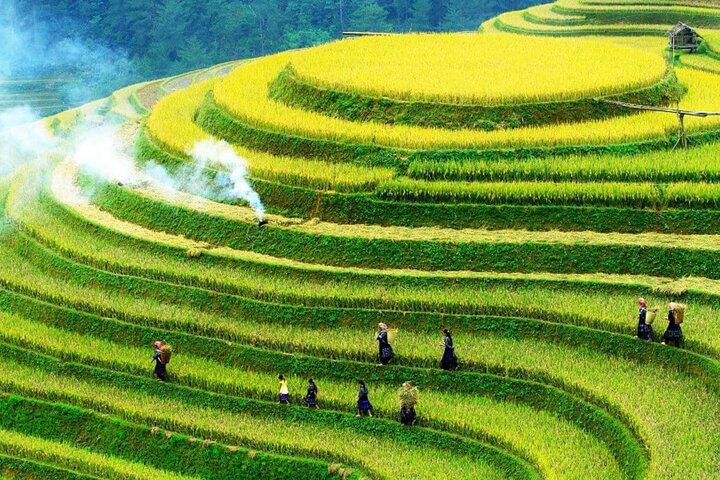
This is the most famous time to come, because the terraces turn gold ahead of the harvest. The weather is generally drier and clearer than summer, and the valley treks are at their best. It is also the busiest and most expensive period, so book hotels, guides and homestays well ahead. If you want the classic golden view, plan for the last week of September and the first days of October, though the exact timing shifts with the weather each year and with the altitude of each valley. The distant terraces at places such as Mu Cang Chai follow a similar calendar.
Late autumn, from mid-October to November
By the end of October the rice has been harvested, so you will see cut stubble and bare earth rather than gold. What you gain is clarity: the air is crisp, the skies are often blue, the views from the cable car and the passes can be the best of the year and the paths are quieter. It is a good time for the Fansipan cable car, the O Quy Ho pass and village walks, as long as you have realistic expectations about the terraces. Days are cool and evenings cold, so bring a fleece and a warm layer.
Winter, from December to February
Winter is cold, often misty and sometimes properly freezing at altitude, and on rare occasions there is frost or even snow on the high ground. The town can sit in cloud for days, and views from the cable car are unreliable. In return you get quiet streets and lower hotel prices. Rooms with good heating, thick blankets and an indoor pool or spa matter a great deal, and you should pack thermal layers, a hat and gloves. Treks are still possible on clear days, but they are colder and the paths can be slippery.
Choosing by priority
For gold terraces, go in the last week of September or early October. For the clearest views and quieter paths, go from mid-October through November. For flooded, mirror-like terraces and warm days, go in late May or June. For the cheapest stay and a snug, misty atmosphere, go in winter. If you can only choose one, late September to early November gives the best balance of weather and scenery.
Practical timing tips
Weekends and national holidays are busier at any time of year, and the cable car queues are longest between about ten and two. Whatever the season, go to the cable car early, check the forecast the night before and keep a spare day. Book guided treks and homestays at least a few days ahead in the busy months. Choose hotel rates with free cancellation when possible, because mountain weather can change your plans at short notice.